TL;DR
- 660 kcal · 69.2 g protein per serving
- Ready in 80 min · serves 4
- High protein
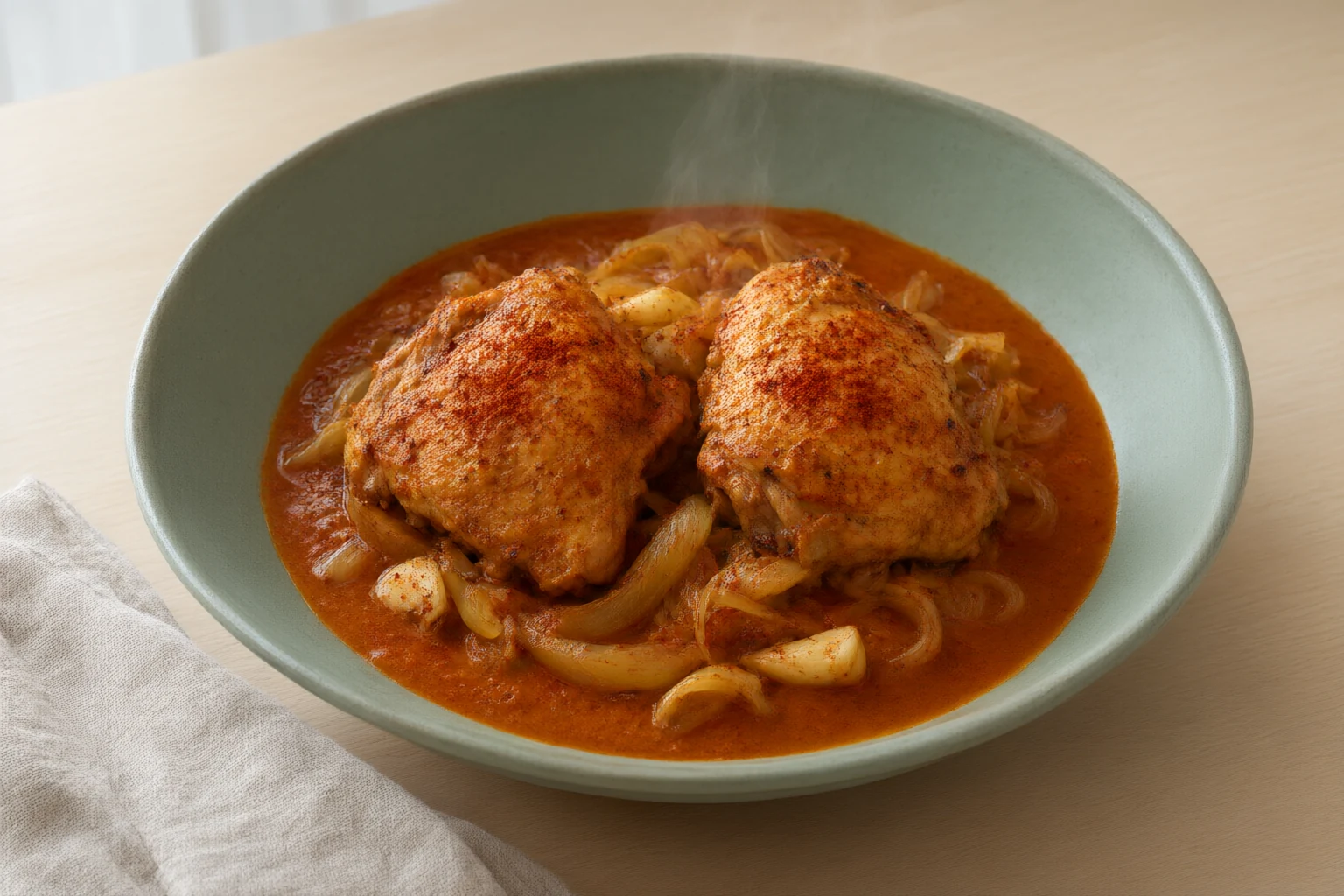
Chicken paprikash — csirkepaprikás in Hungarian — is one of those dishes that tastes like a warm hug on a cold evening. It's a cornerstone of Hungarian home cooking, a cousin to goulash but distinctly its own: where goulash is a soup-like stew built on beef and caraway, paprikash is a braise, its soul in the sweet, fragrant Hungarian paprika that gives the sauce its deep rust-red color and its gentle, smoky warmth. The dish likely evolved in the 19th century as paprika became a staple of the Hungarian pantry, and it spread from the countryside into Budapest's bourgeois kitchens, where it was often served with nokedli (small dumplings) or, in more rustic settings, simply with crusty bread for soaking up every last drop of sauce. For the home cook, it's a forgiving, deeply rewarding meal: a single pot, a handful of ingredients, and time do the work.
For anyone tracking calories, paprikash is a genuinely smart choice. The protein comes from the chicken itself — dark meat stays juicy and flavorful through the long simmer, and a single serving delivers a substantial, satiating portion of lean protein. The sauce is built on onions and paprika, which add enormous flavor for very few calories, and the sour cream, while rich, is used in moderation — you get the creamy, tangy finish without the dish becoming a calorie bomb. The result is a meal that feels indulgent but is actually well-balanced, especially if you serve it with a generous portion of vegetables on the side or keep the starch portion modest. It's also naturally gluten-free as written here — we thicken the sauce with a simple reduction and a touch of sour cream rather than flour, which is both traditional and celiac-friendly.
A few things I've learned the hard way: first, do not skimp on the paprika, and do not let it burn. Hungarian paprika is the entire flavor profile of this dish — use a good-quality sweet (edes) variety, and add it to the pot off the heat or over the lowest possible flame, stirring constantly, for just a minute before adding liquid. Burnt paprika turns bitter and ruins the sauce. Second, the sour cream must be tempered. If you stir cold sour cream straight into the simmering pot, it will curdle into an unappetizing mess. Take a ladleful of hot sauce, whisk it into the sour cream in a bowl, then pour that mixture back into the pot — this raises the cream's temperature gradually and keeps the sauce silky. The dish also improves overnight; the flavors meld and deepen, making it an excellent make-ahead meal for a busy week. Just reheat gently and add a splash of water or broth if the sauce has thickened too much.
Ingredients — For 4 servings
- 1.4 kg chicken thighs, bone-in, skin removed (about 6 thighs, trimmed of excess fat) 1400 g
- 2 tbsp neutral oil (e.g. sunflower or canola) 28 g
- 2 large yellow onions, finely chopped (about 4 cups chopped) 400 g
- 3 cloves garlic, minced 12 g
- 3 tbsp sweet Hungarian paprika (use authentic Hungarian, not smoked) 21 g
- 1 tsp fine salt (plus more to taste) 6 g
- 0.5 tsp black pepper, freshly ground 1 g
- 1 cup chicken broth, low-sodium (or water) 240 g
- 1 large tomato, grated or finely chopped (optional but traditional; adds brightness) 150 g
- 1 cup sour cream, full-fat 240 g
- 1 tbsp all-purpose flour (for gluten-free, use cornstarch) (optional thickener, see steps) 8 g
- 1 tbsp fresh parsley, chopped (for garnish) 4 g
Nutrition per serving
660 kcal
| Protein | 69.2 g |
|---|---|
| Carbohydrates | 19.4 g |
| of which sugars | 7.6 g |
| Fat | 33.8 g |
| of which saturates | 12.1 g |
| Fiber | 4.2 g |
| Sodium | 1000 mg |
Nutrition computed from USDA FoodData Central per-ingredient data (curated reference table, engine/systems/recipe/data/ingredient_nutrition_db.json). 8 of 12 ingredients use a model-estimated figure pending live FDC verification (flagged in the source table).
Instructions
-
Pat the chicken thighs dry with paper towels and season generously with salt and pepper. Heat the oil in a large Dutch oven or heavy-bottomed pot over medium-high heat. Working in batches to avoid crowding, sear the chicken until deeply golden on both sides, about 4-5 minutes per side. Transfer the browned chicken to a plate and set aside.
~10 min -
Reduce the heat to medium-low. Add the chopped onions to the pot with a pinch of salt and cook, stirring occasionally, until they are soft and translucent but not browned, about 8-10 minutes. If they start to stick, add a splash of water.
~10 min -
Add the minced garlic and stir for 30 seconds until fragrant. Remove the pot from the heat entirely. Sprinkle the paprika over the onions and stir constantly for about 1 minute — the residual heat is enough to bloom the paprika in the oil without burning it.
~2 min -
Return the pot to medium heat. Pour in the chicken broth and add the grated tomato (if using), scraping up any browned bits from the bottom of the pot. Bring the liquid to a gentle simmer.
~3 min -
Nestle the browned chicken thighs back into the sauce, along with any juices that accumulated on the plate. Cover the pot and reduce the heat to low. Simmer gently until the chicken is very tender and nearly falling off the bone, about 40-45 minutes.
~45 min -
Remove the chicken to a clean plate and cover loosely with foil. If the sauce looks thin, bring it to a boil and let it reduce for 5-10 minutes until it coats the back of a spoon. If using the flour or cornstarch thickener, whisk it with 2 tablespoons of cold water to make a slurry, then stir it into the simmering sauce and cook for 2 minutes.
~10 min -
In a small bowl, whisk together the sour cream with a ladleful of the hot sauce until smooth. Pour this tempered mixture back into the pot, stirring constantly. Add the chicken back in, spooning sauce over it. Simmer gently for 2-3 minutes — do not boil, or the cream will curdle. Taste and adjust salt. Garnish with parsley and serve hot.
~5 min
Track Chicken Paprikash (Csirkepaprikás) in Kaloria
No manual logging — point your camera at the plate and Kaloria's AI recognizes the dish and logs it with the nutrition panel above in one tap. Voice logging and a food-savvy AI coach are built in too.
Get Kaloria freeFrequently asked questions
Can I use chicken breast instead of thighs?
Yes, but the result will be leaner and drier. Thighs are traditional because their higher fat content keeps the meat moist through the long simmer. If you use breasts, reduce the simmering time to about 20-25 minutes and check for doneness early to avoid overcooking. You may also want to add a tablespoon of oil or butter to the sauce to compensate for the leanness.
The sauce curdled — what went wrong?
Curdling almost always happens when cold sour cream hits hot liquid directly. Always temper it first: whisk a ladleful of hot sauce into the sour cream in a separate bowl, then stir that mixture back into the pot. Also, never let the sauce boil after the cream is added — keep it at a bare simmer. If it does curdle, the dish is still safe to eat; it just looks less pretty.
Can I make this ahead of time?
Absolutely, and it actually tastes better the next day as the flavors meld. Cool the paprikash completely, then refrigerate in an airtight container for up to 3 days. Reheat gently over low heat, adding a splash of broth or water to loosen the sauce. The sour cream may separate slightly upon reheating — a quick whisk will usually bring it back together. Freezing is also possible for up to 2 months, but the texture of the sauce may change slightly.
What should I serve with chicken paprikash?
Traditionally, it's served with nokedli (small Hungarian dumplings) or egg noodles to soak up the sauce. For a lower-carb option, serve over roasted cauliflower or steamed green beans. Crusty bread for dipping is also classic. A simple cucumber salad with vinegar and dill makes a bright, refreshing counterpoint to the rich sauce.
Is the tomato really necessary?
No, it's optional. Many Hungarian cooks add a bit of grated tomato for brightness and acidity, which balances the richness of the cream and paprika. If you don't have one, skip it — the dish will still be delicious. If you want a touch of acidity without tomato, a teaspoon of white wine vinegar stirred in at the end works well.
Sources
- USDA FoodData Central — Nutrition panel computed from USDA FoodData Central per-ingredient data via a curated reference table.