TL;DR
- 172 kcal · 9.5 g protein per serving
- Ready in 15 min · serves 6
- Vegetarian, Vegan, Gluten-free, Dairy-free
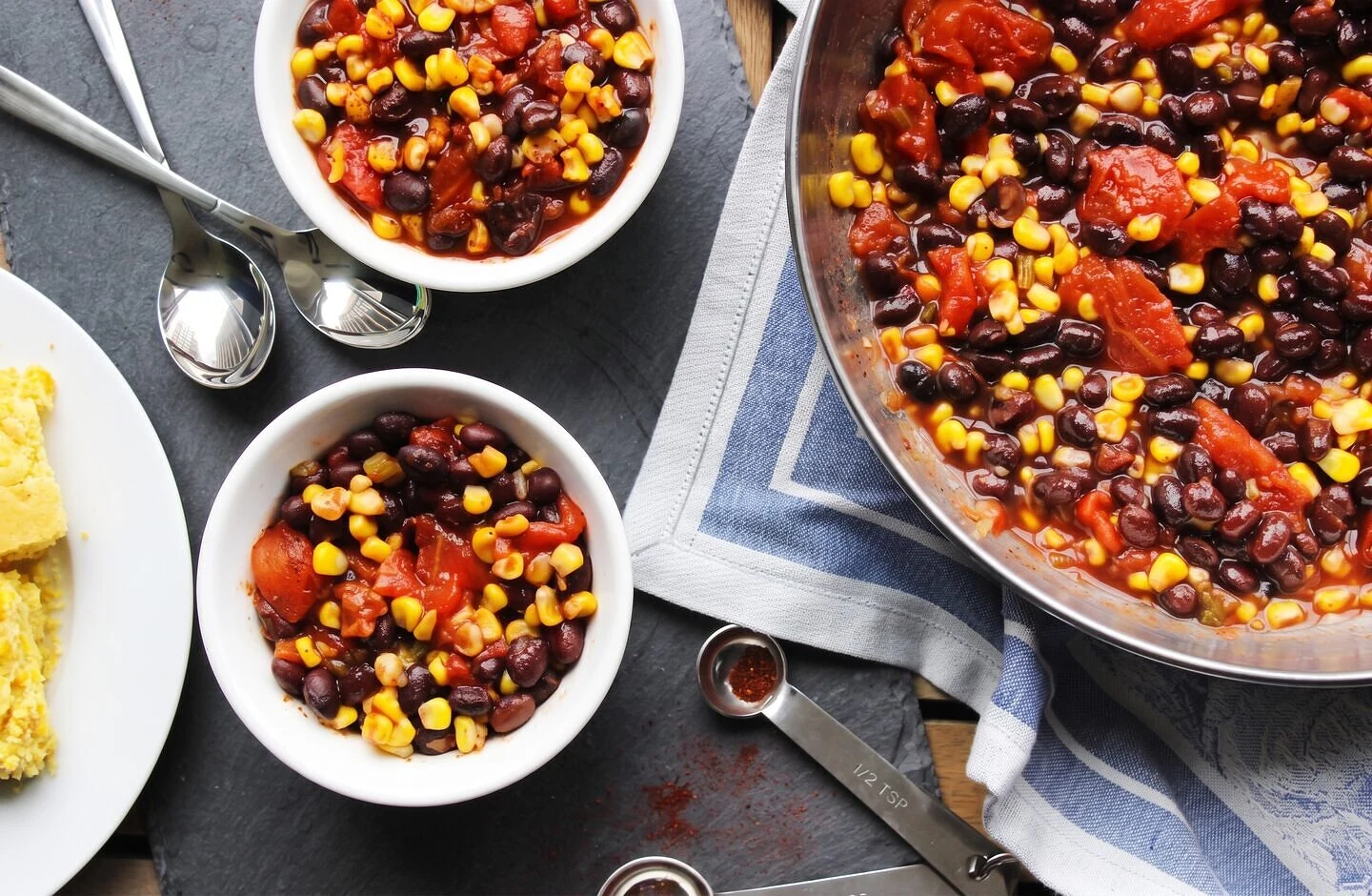
Three-Can Chili is the kind of dish that quietly solves a weeknight problem: it asks almost nothing of the cook and still delivers a warm, satisfying bowl of food. The entire recipe is built around three pantry staples — low-sodium black beans, reduced-sodium corn, and low-sodium crushed tomatoes — plus a single teaspoon of chili powder. There is no chopping, no browning, no simmering for hours. You open the cans, pour everything into a pan, stir, and heat. In the time it takes to toast a slice of bread, dinner is ready.
This is a home-style American classic, the kind of flexible, budget-friendly meal that has appeared on stovetops across the country in countless variations. It belongs to a long tradition of pantry cooking — meals designed around what you already have on the shelf rather than what you need to shop for. The version here is deliberately streamlined: beans provide a hearty base and a solid source of plant protein, corn adds a gentle sweetness and a pop of texture, and crushed tomatoes tie it all together with a rich, saucy body. The chili powder is the only seasoning called for, which keeps the flavor clean and lets the ingredients speak for themselves — though nothing stops a cook from adding a pinch of cumin, a dash of smoked paprika, or a splash of hot sauce at the table.
For anyone tracking calories or building a more plant-forward routine, this dish earns its place in the rotation for practical reasons. The beans are the backbone — they bring protein and fiber, which help a bowl feel substantial without relying on meat or heavy dairy. The corn adds another layer of fiber and a natural sweetness that balances the acidity of the tomatoes. Because the recipe relies on canned ingredients in their own juices, there is no added oil or butter anywhere in the method; what you see in the pan is what you log in your tracker. The portion structure is also forgiving — a single can of each ingredient yields a few servings, so a bowl can be a light lunch or a heartier dinner depending on what you pair with it. And since the recipe is vegan, vegetarian, gluten-free, and dairy-free as written, it fits a wide range of eating patterns without any substitutions.
A few practical notes will make this dish even better. First, do not drain the beans or the tomatoes — the liquid from the cans is what creates the chili's sauce, and pouring it off leaves you with something closer to a dry bean salad. The corn, by contrast, is drained on purpose so the dish does not turn watery. Second, the chili powder is listed as “to taste,” which is an invitation to start with the full teaspoon and adjust from there; chili powders vary in heat, so taste before adding more. Third, leftovers keep well in the refrigerator for a few days and actually improve as the flavors meld — reheat gently on the stovetop or in the microwave, and consider topping a bowl with a squeeze of lime, a few chopped scallions, or a spoonful of salsa for a fresh finish.
Ingredients — For 6 servings
- 1 can (15.5 ounces) low-sodium black beans, undrained (or pinto, kidney, or red beans) 439 g
- 1 can (15.2 ounces) reduced sodium corn, drained (or 10-oz package of frozen corn) 431 g
- 1 can (14.5 ounces) low-sodium crushed tomatoes, undrained 411 g
- 1 teaspoon chili powder (or more, to taste) 2 g
Nutrition per serving
172 kcal
| Protein | 9.5 g |
|---|---|
| Carbohydrates | 33.7 g |
| of which sugars | 6.6 g |
| Fat | 1.6 g |
| of which saturates | 0.4 g |
| Fiber | 8.8 g |
| Sodium | 27 mg |
Nutrition computed from USDA FoodData Central per-ingredient data (curated reference table, engine/systems/recipe/data/ingredient_nutrition_db.json).
Instructions
-
Wash your hands with soap and water before you begin, and rinse any fresh produce you'll be using.
-
Place the contents of all 3 cans into a pan.
-
Add chili powder to taste.
-
Stir to mix.
-
Continue to stir over medium heat until heated thoroughly.
-
Refrigerate leftovers.
Track 3-Can Chili in Kaloria
No manual logging — point your camera at the plate and Kaloria's AI recognizes the dish and logs it with the nutrition panel above in one tap. Voice logging and a food-savvy AI coach are built in too.
Get Kaloria freeFrequently asked questions
Can I use regular canned beans and tomatoes instead of the low-sodium versions?
Yes, but the dish will be noticeably saltier. The low-sodium versions are called for so the chili stays balanced without added salt. If you swap in regular cans, taste before seasoning and consider rinsing the beans — though rinsing removes some of the liquid that helps form the sauce, so you may need to add a splash of water.
Why is the corn drained but the beans and tomatoes left undrained?
The beans and tomatoes contribute their liquid to create the chili's sauce — without it, the dish would be dry and pasty. The corn, on the other hand, is packed in a thin, starchy liquid that would make the chili watery. Draining the corn keeps the texture thick and hearty while the other two cans do the saucy work.
Can I add ground meat or other vegetables to make it more filling?
Absolutely. Brown a half-pound of ground beef or turkey in the pan first, then add the canned ingredients and proceed as written. Diced bell pepper, onion, or zucchini can be sautéed along with the meat or added directly with the cans. Just note that additions change the calorie count, so log the extra ingredients separately.
How should I store and reheat leftovers?
Transfer leftovers to an airtight container and refrigerate within two hours of cooking; they will keep for about three to four days. Reheat gently on the stovetop over medium-low heat, stirring occasionally, or in the microwave in 30-second bursts. The chili thickens as it sits, so add a tablespoon of water or broth if it looks too dense.
What can I serve with this chili to round out the meal?
It is satisfying on its own, but a few easy sides stretch it further: a baked potato or a small scoop of rice, a side salad, or a piece of cornbread. For a lower-carb option, serve it over cauliflower rice or alongside roasted vegetables. A dollop of plain Greek yogurt or avocado on top adds richness without changing the base recipe.
Sources
- USDA MyPlate Kitchen — Recipe adapted from USDA MyPlate Kitchen.
- USDA FoodData Central — Nutrition panel computed from USDA FoodData Central per-ingredient data via a curated reference table.