TL;DR
- 561 kcal · 35.3 g protein per serving
- Ready in 100 min · serves 4
- High protein, High fibre
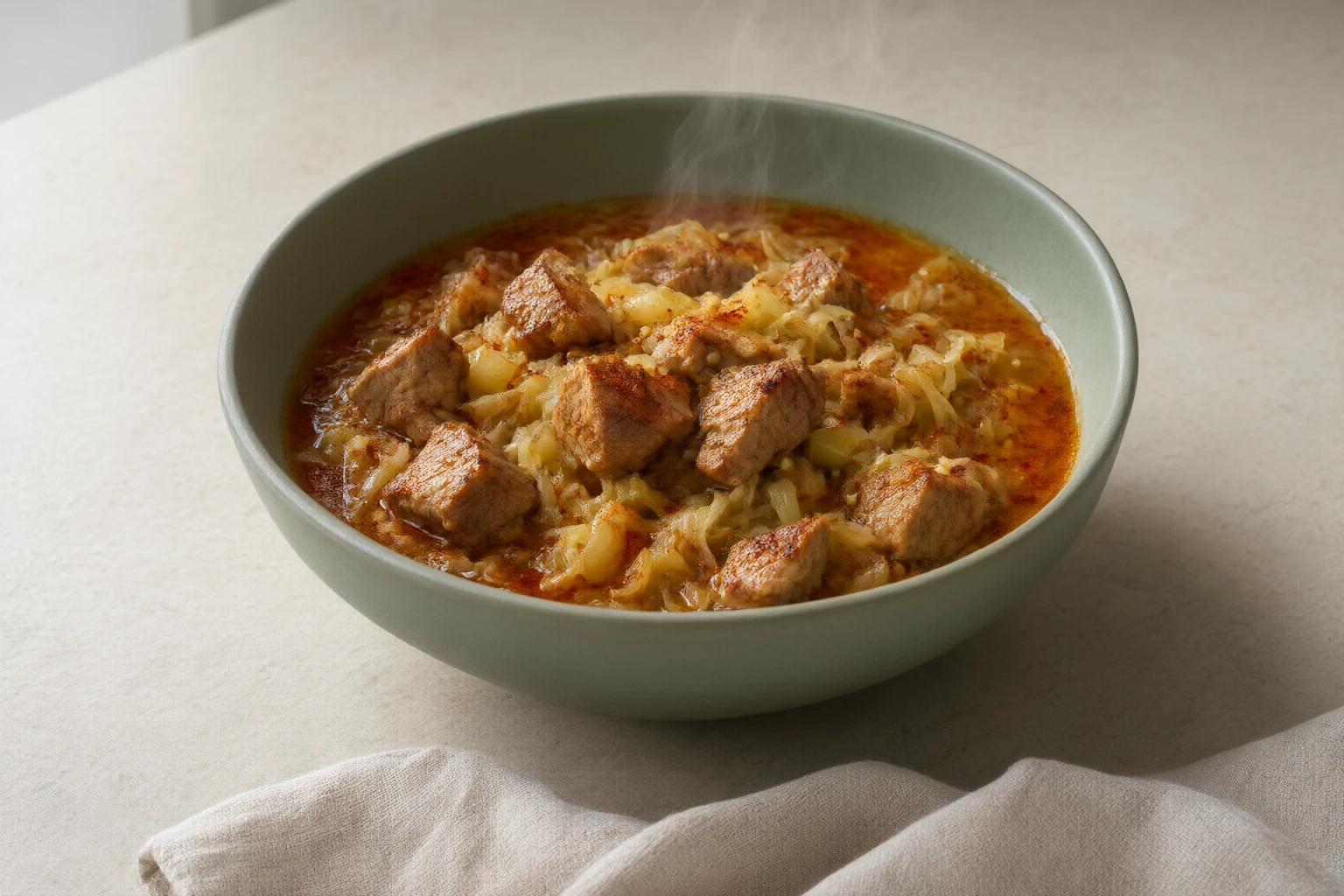
Segedín is one of those dishes that quietly bridges two culinary worlds. While its name points to the Hungarian city of Szeged, the version most Central Europeans know — pork shoulder simmered with sauerkraut, finished with a swirl of cream and a serious dose of sweet paprika — is really a Czech and Slovak standard, served in home kitchens and pub lunches alike. Hungarians might raise an eyebrow at the cream (their original is often a simpler pork-and-kraut affair), but the Czech adaptation has long since claimed its own identity. What matters here is the alchemy: sharp, lactic sauerkraut mellows into something almost buttery as it braises with pork fat and onions, while the paprika gives everything a warm, brick-red glow.
For anyone tracking what they eat, segedín is a gift. It's a one-pot meal that delivers a serious amount of protein — the pork alone is roughly a third of a typical daily target for most adults — and the sauerkraut brings fiber and a probiotic tang that makes the dish feel far lighter than its creamy finish suggests. Because it's a stew, portioning is straightforward: ladle it into a bowl, weigh it once, and you have a reliable, repeatable meal for the week. It also freezes beautifully, so you can cook a double batch and bank four or five lunches without any extra effort.
A few practical notes before you start. First, resist the urge to rinse the sauerkraut — the brine is where the flavor lives, and draining it too aggressively will leave you with a flat, sweet-adjacent stew. If the kraut is extremely sour, a quick rinse is fine, but squeeze it well. Second, be patient with the browning. The pork doesn't need to be deeply seared, but getting a good caramelized fond on the bottom of the pot before the onions go in is what gives the sauce its depth. Finally, if you're gluten-free (as this recipe is), make sure your paprika and broth are certified gluten-free, as some commercial blends contain wheat starch.
Serve it over steamed rice, with a few boiled potatoes, or with rye bread for those who aren't avoiding gluten. A dollop of extra sour cream on top and a sprinkle of caraway seeds are traditional, but the stew holds its own without them.
Ingredients — For 4 servings
- 700 g pork shoulder, cut into 3cm cubes (trim excess fat, pat dry) 700 g
- 2 tbsp neutral oil (sunflower or canola) (for browning) 28 g
- 2 medium yellow onions, diced (about 2 cups diced) 220 g
- 3 cloves garlic, minced 9 g
- 2 tbsp sweet Hungarian paprika (not smoked; use fresh jar for color) 14 g
- 1 tsp caraway seeds (lightly crushed) 2 g
- 500 g sauerkraut, drained but not rinsed (reserve 100ml of the brine) 500 g
- 500 ml low-sodium chicken or pork broth (gluten-free certified) 510 g
- 1 tbsp tomato paste 16 g
- 200 ml sour cream (20% fat) (at room temperature) 200 g
- 1 tbsp all-purpose flour (or cornstarch for GF) (for thickening the cream) 8 g
- 1 tsp fine salt (adjust to taste) 6 g
- 0.5 tsp freshly ground black pepper 1 g
Nutrition per serving
561 kcal
| Protein | 35.3 g |
|---|---|
| Carbohydrates | 18.6 g |
| of which sugars | 7.0 g |
| Fat | 38.6 g |
| of which saturates | 14.3 g |
| Fiber | 6.3 g |
| Sodium | 1836 mg |
Nutrition computed from USDA FoodData Central per-ingredient data (curated reference table, engine/systems/recipe/data/ingredient_nutrition_db.json). 9 of 13 ingredients use a model-estimated figure pending live FDC verification (flagged in the source table).
Instructions
-
Pat the pork cubes dry with paper towels. Season lightly with a pinch of the salt and the black pepper. Heat the oil in a large, heavy-bottomed pot or Dutch oven over medium-high heat until shimmering.
-
Working in two batches (do not crowd the pot), sear the pork until browned on all sides, about 4-5 minutes per batch. Transfer the meat to a plate with a slotted spoon, leaving the fond (browned bits) in the pot.
~10 min -
Reduce heat to medium. Add the diced onions to the pot and cook, scraping up the fond, until soft and translucent, about 5-6 minutes. Add the garlic and cook for 1 minute more, until fragrant.
~7 min -
Move the onions to one side of the pot. Add the paprika and caraway seeds to the cleared space and toast for 30 seconds, stirring constantly — do not let the paprika burn. Immediately stir in the tomato paste and mix everything together.
~1 min -
Return the pork and any accumulated juices to the pot. Add the drained sauerkraut and the reserved 100ml of brine. Pour in the broth, ensuring the meat is mostly submerged. Bring to a gentle simmer, then reduce heat to low, cover, and cook until the pork is fork-tender, about 60-75 minutes.
~70 min -
Once the meat is tender, check the seasoning. In a small bowl, whisk the sour cream with the flour (or cornstarch) until smooth to prevent curdling. Ladle about a cup of the hot stew liquid into the cream mixture, whisking constantly to temper it.
-
Stir the tempered cream mixture into the pot. Simmer uncovered for 5-10 minutes, stirring occasionally, until the sauce thickens slightly and turns a creamy brick-red color. Do not let it boil hard after adding the cream.
~8 min -
Taste and adjust with more salt if needed. Serve hot, ideally over steamed rice or with boiled potatoes.
Track Segedín Goulash (Pork and Sauerkraut Stew) in Kaloria
No manual logging — point your camera at the plate and Kaloria's AI recognizes the dish and logs it with the nutrition panel above in one tap. Voice logging and a food-savvy AI coach are built in too.
Get Kaloria freeFrequently asked questions
Why did my cream curdle when I added it?
Curdling usually happens when the cream is added cold to a boiling-hot pot. Always bring the sour cream to room temperature first, and temper it by whisking in a ladle of hot stew liquid before adding it to the pot. Also, keep the stew at a gentle simmer, not a rolling boil, after the cream goes in.
Can I use a different cut of pork?
Yes. Pork neck or boneless country ribs work well because they have enough fat to stay moist during the long simmer. Lean cuts like pork tenderloin will dry out and turn stringy. If you only have tenderloin, reduce the simmering time to about 30-40 minutes, until just cooked through.
Can I make this ahead or freeze it?
Absolutely. Segedín actually tastes better the next day as the flavors meld. Store it in the fridge for up to 4 days in an airtight container. It freezes well for up to 3 months — thaw overnight in the fridge and reheat gently on the stovetop, adding a splash of broth if it's too thick.
My sauerkraut is very sour. How do I mellow it out?
If your brand is aggressively acidic, give it a quick rinse under cold water before adding it, then squeeze out the excess liquid. You can also add a teaspoon of sugar or a grated apple to the pot along with the broth — the sweetness balances the sharpness without making the dish sweet.
What's the best way to serve segedín for a calorie tracker?
Weigh the finished stew (minus the pot) and divide by your portion size. A 250g serving of the stew alone is a solid, protein-forward meal. Pair it with 150g of cooked rice or a boiled potato (weigh those separately) for a complete plate. The stew freezes in single portions, so portion it before freezing.
Sources
- USDA FoodData Central — Nutrition panel computed from USDA FoodData Central per-ingredient data via a curated reference table.