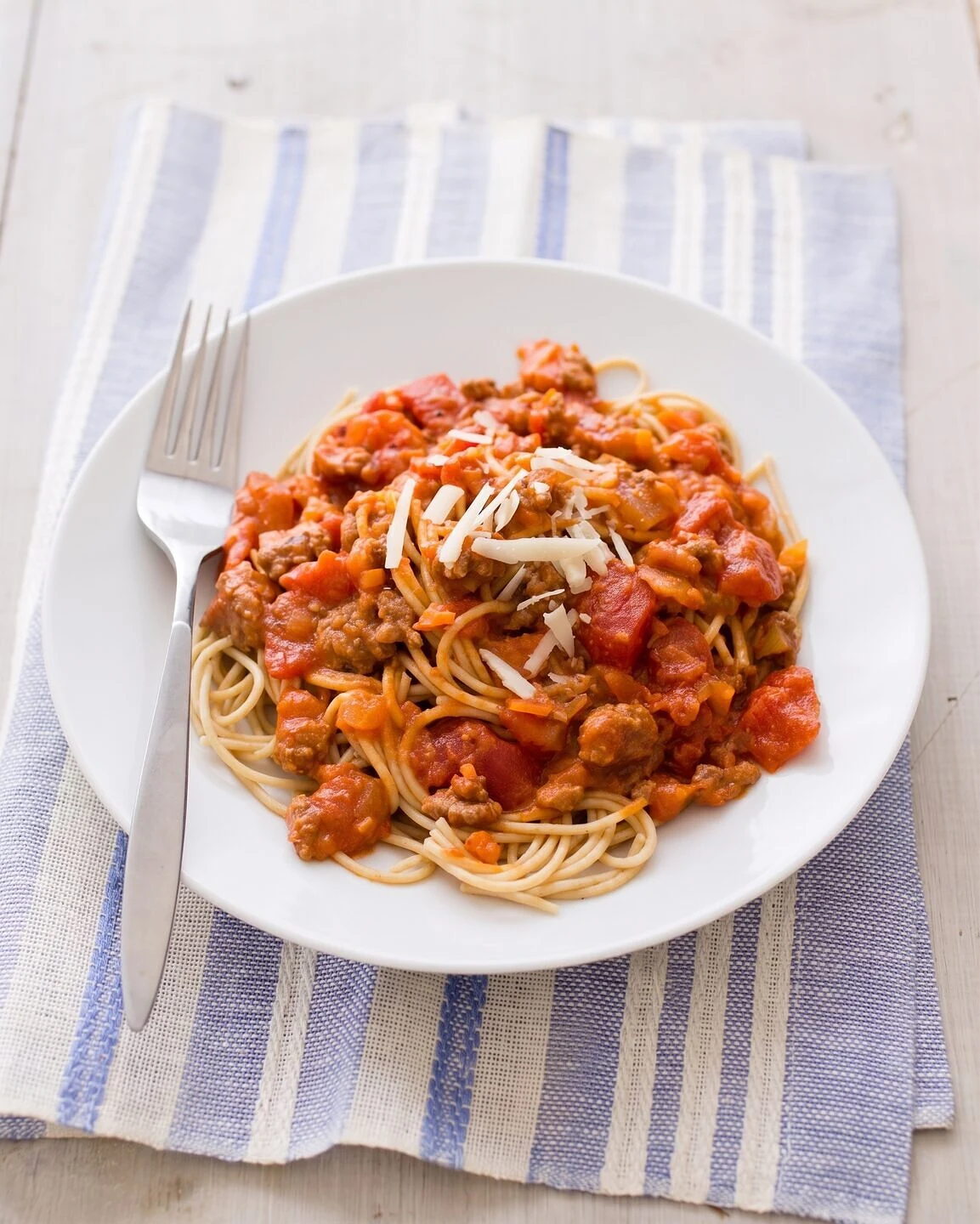
TL;DR
- 539 kcal · 29.6 g protein per serving
- Ready in 107 min · serves 4
- High protein, High fibre
Pasta Bolognese is a home-style Italian-American classic that turns a short list of everyday ingredients into a deeply savory, slow-simmered ragù. The sauce starts with a finely diced soffritto—carrot, celery, and onion—cooked gently in oil until the vegetables soften and begin to brown, laying a sweet, aromatic foundation. Lean ground beef is then added in small pieces and broken apart as it cooks, so it browns evenly rather than steaming into large clumps. The addition of water, crushed tomatoes, and tomato paste builds a thick, robust base, while a slow stream of milk stirred in near the end is the quiet secret: it rounds out the acidity of the tomatoes and gives the sauce a subtle creaminess without any actual cream. The ragù then simmers low for 45 minutes, letting the liquid reduce and the flavors meld into a dense, clinging sauce that coats each strand of pasta beautifully.
For anyone tracking what they eat, this dish is a strong weeknight choice because its portions are built to be measured and its ingredients are straightforward to weigh. The lean ground beef provides a solid source of protein, while the whole wheat pasta and the vegetables—carrot, celery, and onion—contribute meaningful fiber. The recipe makes four servings, each with a defined amount of sauce and pasta, which makes logging a portion simple: just weigh the cooked pasta and sauce as you plate it. The 2% milk adds richness for relatively few calories compared to cream, and the Parmesan is portioned at a tablespoon per bowl, so it's easy to keep track of. The sauce itself is also a convenient make-ahead component—it stores well and actually improves in flavor after a day in the refrigerator.
A few practical notes from the method are worth following closely. The step of pinching the beef into tablespoon-sized pieces before adding it to the pan matters: it encourages even browning and prevents the meat from clumping into dense chunks, which changes the texture of the final sauce. Similarly, stir the milk in slowly rather than dumping it all at once—this helps it incorporate smoothly without curdling. If you're short on time, the sauce can be simmered for 30 minutes instead of 45, though the longer cook does deepen the flavor. Leftovers keep in an airtight container in the fridge for up to three days; reheat gently on the stovetop with a splash of water or broth to loosen the sauce, and cook fresh pasta if you want the best texture.
Ingredients — For 4 servings
- 1 tablespoon vegetable oil 14 g
- 1 piece carrot, diced into 1/4-inch pieces 61 g
- 1 piece celery stalk, diced into 1/4-inch pieces 40 g
- 1 piece yellow onion, chopped into 1/4 inch pieces 110 g
- 3/4 pound lean ground beef (80-85% lean) 340 g
- 1 cup water 237 g
- 2 cans (14.5 ounce) no salt added crushed or diced tomatoes (including liquid) 822 g
- 1/4 cup no salt added tomato paste 71 g
- 1 cup 2% milk 244 g
- 8 ounces whole wheat pasta 227 g
- 1/4 cup grated Parmesan cheese 20 g
Nutrition per serving
539 kcal
| Protein | 29.6 g |
|---|---|
| Carbohydrates | 60.2 g |
| of which sugars | 13.5 g |
| Fat | 20.2 g |
| of which saturates | 7.2 g |
| Fiber | 5.6 g |
| Sodium | 210 mg |
Nutrition computed from USDA FoodData Central per-ingredient data (curated reference table, engine/systems/recipe/data/ingredient_nutrition_db.json). 1 ingredient(s) could not be matched to the reference table and are excluded from the totals below — see nutrition_matches in the content doc.
Instructions
-
To make the Bolognese sauce: Put skillet on the stove over medium heat and when it is hot, add oil.
-
Add carrot, celery, and onion and cook about 10 minutes, stirring occasionally, until the vegetables begin to brown.
~10 min -
Raise the heat to high.
-
Pinch off tablespoon-sized pieces of the beef and add a few at a time, stirring well between additions.
-
Cook, breaking the meat apart until it is no longer raw, starts to give off liquid, and no longer clumps together, about 10 minutes.
~10 min -
Add the water, tomatoes, and tomato paste, stirring well.
-
Cook about 10 minutes until the sauce begins to thicken.
~10 min -
Slowly stir in the milk, a little bit at a time.
-
Turn the heat down to low and cook 45 minutes until all the liquid has been absorbed.
~45 min -
To make the pasta : Fill a large pot halfway with water.
-
Bring it to a boil over high heat.
-
Add the pasta and about 12 minutes cook until just tender.
~12 min -
Drain the pasta and divide into 4 bowls.
-
Top each bowl with about 3/4 cup Bolognese and sprinkle with 1 tablespoon Parmesan cheese.
-
Serve right away.
Track Pasta Bolognese in Kaloria
No manual logging — point your camera at the plate and Kaloria's AI recognizes the dish and logs it with the nutrition panel above in one tap. Voice logging and a food-savvy AI coach are built in too.
Get Kaloria freeFrequently asked questions
Can I use a different type of pasta with this Bolognese?
Absolutely. The recipe calls for whole wheat pasta, but any shape you have on hand—spaghetti, fettuccine, rigatoni, or even penne—will work well. Whole wheat adds fiber, but if you prefer a milder flavor, a regular semolina pasta is fine. Just cook it to just tender, as the recipe notes, since the sauce clings best to al dente noodles.
Why is the milk added slowly, and can I skip it?
The milk is stirred in gradually so it can incorporate into the hot sauce without curdling from the acidity of the tomatoes. It also softens the acidity and adds a subtle creaminess. If you're dairy-free, you can omit it entirely; the sauce will still be delicious, just a bit more tangy and less rich. Alternatively, an unsweetened plant-based milk can be used as a substitute.
Can I make the Bolognese sauce ahead of time?
Yes, the sauce is an excellent make-ahead component. After it finishes simmering, let it cool completely, then store it in an airtight container in the refrigerator for up to three days. Reheat it gently on the stovetop with a splash of water or low-sodium broth to loosen the sauce. You can also freeze the sauce for up to three months—thaw overnight in the fridge before reheating.
What's the best way to reheat leftovers without drying them out?
Reheat the sauce and pasta separately for the best texture. Warm the sauce in a saucepan over medium-low heat, adding a tablespoon or two of water or broth if it looks too thick. For the pasta, a quick dip in boiling water for about 30 seconds or a sauté in a lightly oiled pan works well. Combine them just before serving, and add a fresh sprinkle of Parmesan.
Can I swap the ground beef for a leaner or plant-based option?
Yes. Ground turkey or chicken are straightforward swaps that will still work with the same method, though they may be slightly drier than beef. A plant-based ground meat substitute can also be used—just be aware it may need a little less simmering time since it won't release the same juices. In all cases, keep the browning step the same for good texture.
Sources
- USDA MyPlate Kitchen — Recipe adapted from USDA MyPlate Kitchen.
- USDA FoodData Central — Nutrition panel computed from USDA FoodData Central per-ingredient data via a curated reference table.