TL;DR
- 336 kcal · 16.4 g protein per serving
- Ready in 143 min · serves 4
- Gluten-free, Dairy-free
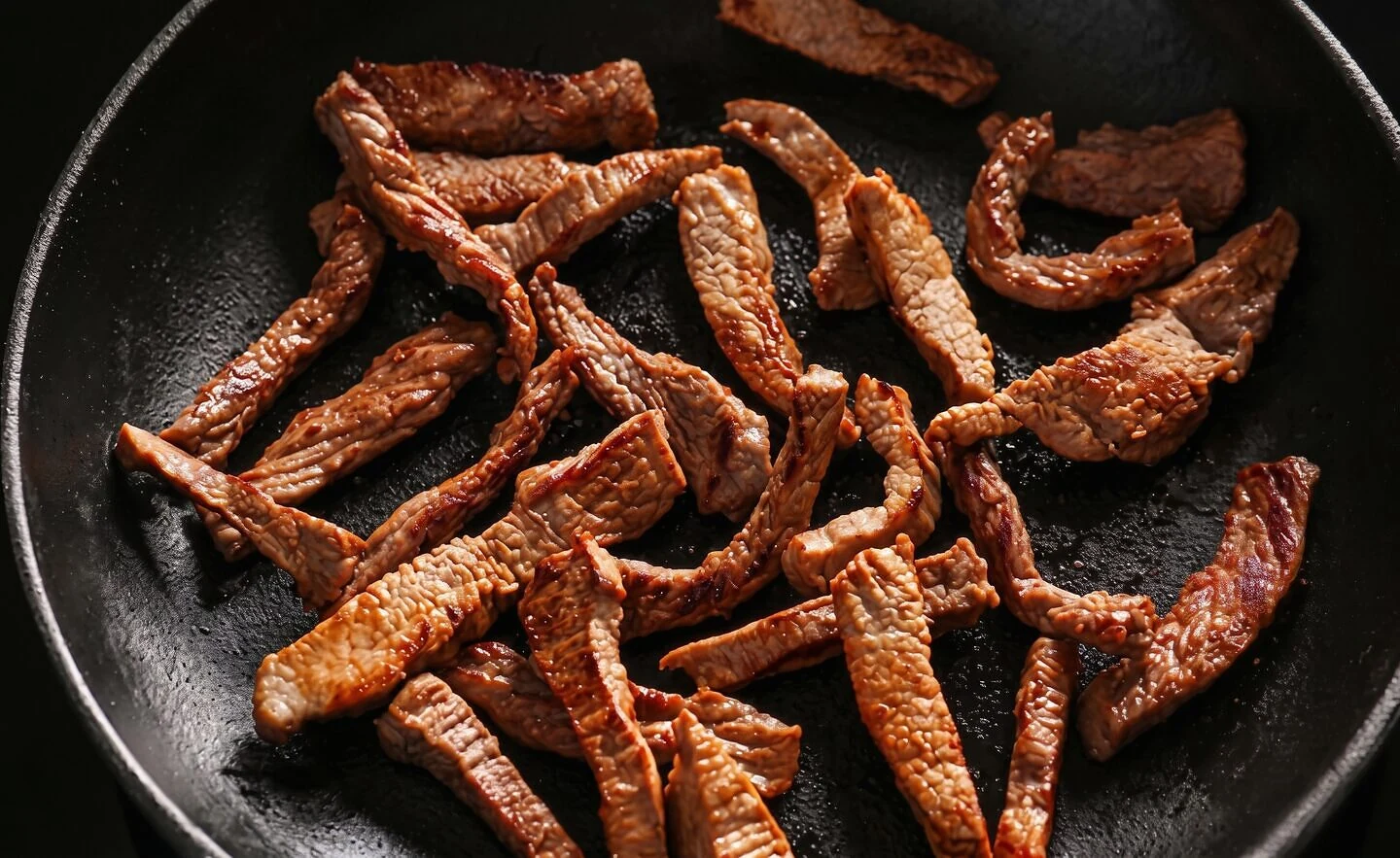
Marinated Beef is a straightforward, home-style American skillet dish that turns an economical cut of round steak into something tangy, savory, and satisfying. The beef is sliced thin against the grain, then soaked in a simple marinade of garlic, lemon juice, oil, salt, and pepper before being quickly browned in a hot pan. The result is a flexible, protein-forward main that works equally well as the centerpiece of a weeknight dinner or as a filling for tacos, rice bowls, or sandwiches. It belongs to a long tradition of no-fuss, pantry-driven cooking where a few bold ingredients do the heavy lifting.
For anyone tracking calories or macros, this recipe is a natural fit. The ingredient list is short and almost entirely whole foods: lean beef round, fresh garlic, lemon juice, and oil. There are no hidden sugars, no heavy cream, no breading, and no complicated sauces. The protein comes straight from the meat, which means you can pair it with a generous portion of vegetables or a modest starch and still keep the meal balanced. Because the marinade is oil-based rather than sugar-based, it coats the meat without adding the kind of sticky glaze that often carries extra calories. The portion structure is also easy to work with — the recipe serves a defined number of people, so you can weigh out your own serving and track precisely without guessing.
A few practical notes will help you get the best result. First, cutting the round steak against the grain is not a stylistic choice — it shortens the muscle fibers, so each bite is noticeably more tender. Take your time with this step; a sharp knife makes it far easier. Second, the two-hour marinating time is a sweet spot: it lets the lemon and garlic penetrate the surface without turning the meat mushy. If you are short on time, even 30 minutes will add flavor, but do not skip the step of draining the marinade before cooking — patting the strips dry helps them brown rather than steam. Finally, when you add the beef to the hot skillet, resist the urge to crowd the pan. Cook in batches if needed, letting the strips sear and brown on the edges; that browned crust is where much of the flavor lives. Leftovers keep well in the fridge for a few days and reheat gently in a skillet or microwave.
Ingredients — For 4 servings
- 12 ounces beef round steak 340 g
- 1 piece garlic clove 3 g
- 2 tablespoons lemon juice 31 g
- 4 tablespoons vegetable oil, divided (or cooking oil of choice) 54 g
- 1/2 teaspoon salt 3 g
- 1/2 teaspoon black pepper 1 g
Nutrition per serving
336 kcal
| Protein | 16.4 g |
|---|---|
| Carbohydrates | 1.0 g |
| of which sugars | 0.2 g |
| Fat | 29.4 g |
| of which saturates | 8.5 g |
| Fiber | 0.1 g |
| Sodium | 341 mg |
Nutrition computed from USDA FoodData Central per-ingredient data (curated reference table, engine/systems/recipe/data/ingredient_nutrition_db.json).
Instructions
-
Wash your hands with soap and water before you begin, and rinse any fresh produce you'll be using.
-
Using a cutting board and sharp knife, cut round steak across the grain into thin strips about 1/2 inch wide and 2 to 3 inches long.
-
In a medium glass mixing bowl, combine garlic, lemon juice, 2 tablespoons of vegetable oil, salt, and pepper.
-
Add beef strips and stir to coat with the oil mixture (marinade sauce).
-
Cover bowl with plastic wrap and refrigerate for about 2 hours.
~120 min -
In a medium skillet over medium-high heat, heat 2 tablespoons of the oil for 1-2 minutes until hot.
~2 min -
Drain marinade from beef.
-
Put beef in skillet, stir and cook for 5 to 7 minutes or until meat is thoroughly browned.
~6 min
Track Marinated Beef in Kaloria
No manual logging — point your camera at the plate and Kaloria's AI recognizes the dish and logs it with the nutrition panel above in one tap. Voice logging and a food-savvy AI coach are built in too.
Get Kaloria freeFrequently asked questions
Can I use a different cut of beef instead of round steak?
Yes. Sirloin, flank steak, or even skirt steak work well because they are lean and slice nicely into strips. Round steak is economical, but if you use a more tender cut, you can reduce the marinating time to about an hour. Avoid fatty cuts like ribeye, which can make the dish greasy.
Why do I need to drain the marinade before cooking?
The marinade contains lemon juice and oil, and leaving it on the beef will cause the meat to steam in the pan instead of browning. Draining it off lets the surface of the beef get hot enough to develop a rich, brown crust. Patting the strips dry with a paper towel helps even more.
What should I serve with this marinated beef?
It pairs well with roasted potatoes, steamed broccoli, or fresh sliced tomatoes, as the original serving suggestion notes. For a lower-carb meal, serve it over cauliflower rice or a green salad. It also works great in warm tortillas with sautéed peppers and onions.
Can I make this ahead of time or freeze it?
You can marinate the beef a day in advance and keep it covered in the refrigerator — the flavor will only deepen. Cooked leftovers keep for 3 to 4 days in an airtight container. To freeze, cook the beef first, let it cool completely, then store in a freezer-safe bag for up to 2 months. Thaw overnight in the fridge and reheat gently.
Is there a way to make this dish lower in fat?
Yes. The recipe uses 4 tablespoons of vegetable oil total, but you can reduce it slightly. Use about 1 tablespoon in the marinade instead of 2, and use a nonstick skillet so you only need 1 tablespoon for cooking. The beef itself is lean, so most of the fat comes from the oil.
Sources
- USDA MyPlate Kitchen — Recipe adapted from USDA MyPlate Kitchen.
- USDA FoodData Central — Nutrition panel computed from USDA FoodData Central per-ingredient data via a curated reference table.