TL;DR
- 418 kcal · 12.3 g protein per serving
- Ready in 75 min · serves 4
- Vegetarian, Vegan, Dairy-free, High fibre
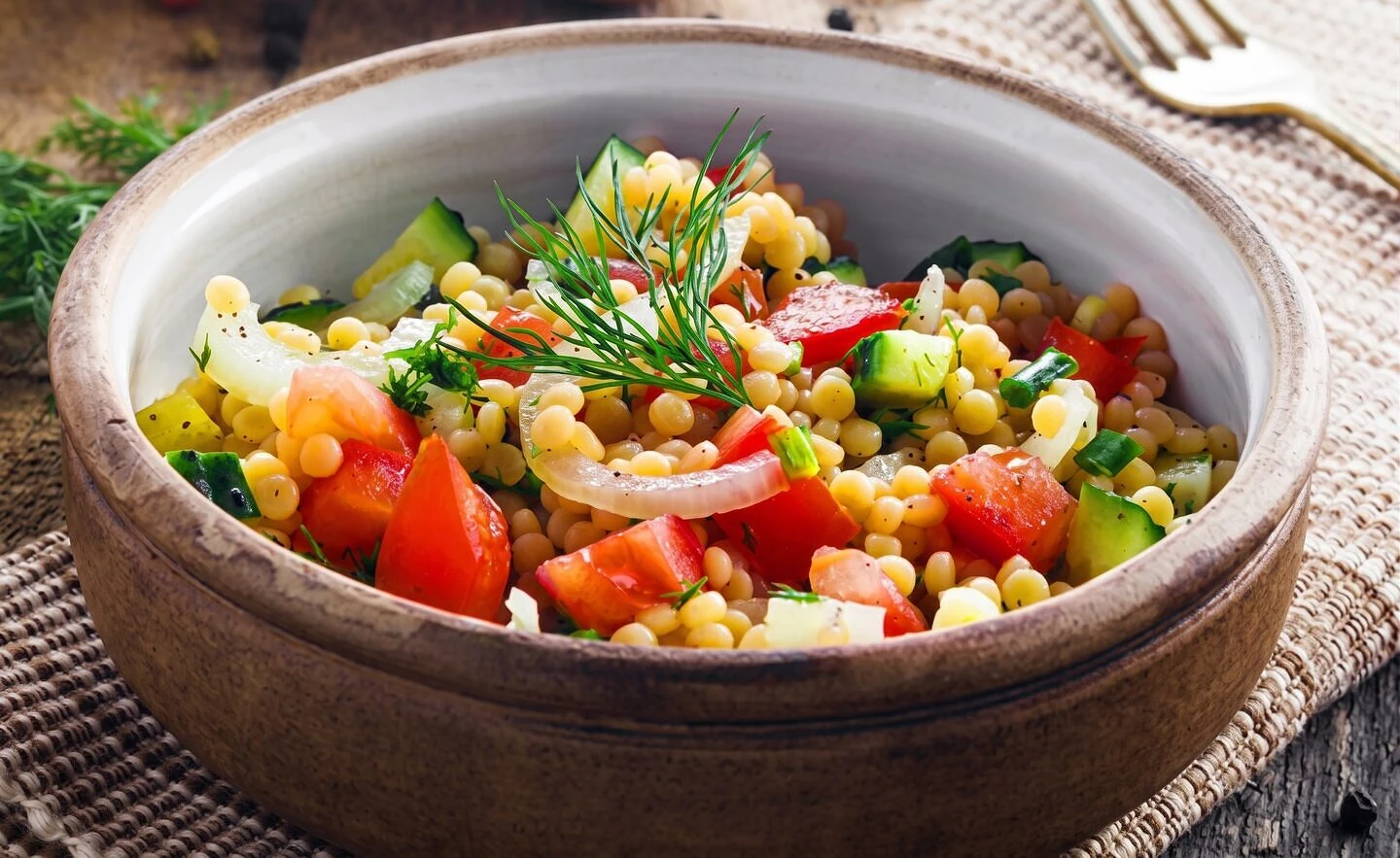
Cucumber Salad with Tomatoes is the kind of dish that earns its place at the table by being both effortlessly simple and genuinely satisfying. At its core, it is a chilled couscous salad built around the crisp, clean flavors of fresh cucumber and ripe tomato, with sweet onion adding a gentle bite and fresh dill providing a bright, herbal lift. The couscous gives the salad a soft, grainy texture that soaks up the low-fat Italian dressing, turning a handful of everyday ingredients into a cohesive, fork-friendly bowl. It is a home-style American take on the classic summer salad — the kind of thing that shows up at potlucks and backyard lunches, where the goal is something refreshing that still feels like a real meal.
For anyone tracking calories, this salad is a practical choice because of how its components work together. The cucumbers and tomatoes are low in energy density and high in water content, which means they add volume and freshness without weighing the dish down. The couscous provides a satisfying base that makes the salad substantial enough to stand as a lunch on its own, while the sweet onion and dill add flavor without relying on heavy creams or cheeses. The low-fat Italian dressing ties everything together with acidity and herbs, keeping the dish light while still giving it enough character to feel intentional. Because the recipe is built on vegetables and a whole-grain-style starch, it also brings a meaningful amount of dietary fiber to the plate, which supports steady energy and helps keep hunger at bay between meals.
A few practical notes make all the difference with this recipe. First, the chilling step is not optional — giving the salad a full hour in the refrigerator allows the couscous to absorb the dressing and lets the flavors meld, turning a simple toss into something that tastes like it has been marinating all afternoon. If you are making it ahead, it keeps well for a day or two, though you may want to give it a quick stir and add a splash of dressing before serving, as the couscous will continue to soak up liquid as it sits. For a variation, cooked rice or another small grain can stand in for the couscous, and if you prefer a little more bite, a splash of red wine vinegar can brighten the dressing. Just be sure to seed the tomatoes as directed — it keeps the salad from becoming watery and helps the dressing cling to the other ingredients instead of pooling at the bottom of the bowl.
Ingredients — For 4 servings
- 2 cups cucumber, diced 237 g
- 1 cup tomato, seeded and diced 237 g
- 1/4 cup sweet onion, chopped 40 g
- 2 cups couscous, cooked (or rice) 341 g
- 2 teaspoons dill weed, chopped 5 g
- 1/2 cup Italian salad dressing, low-fat 118 g
Nutrition per serving
418 kcal
| Protein | 12.3 g |
|---|---|
| Carbohydrates | 75.7 g |
| of which sugars | 6.2 g |
| Fat | 7.0 g |
| of which saturates | 1.0 g |
| Fiber | 5.6 g |
| Sodium | 310 mg |
Nutrition computed from USDA FoodData Central per-ingredient data (curated reference table, engine/systems/recipe/data/ingredient_nutrition_db.json).
Instructions
-
Wash your hands with soap and water before you begin, and rinse any fresh produce you'll be using.
-
Toss together the cucumbers, tomatoes, onions, couscous (or rice), dill, and salad dressing.
-
Chill for 1 hour.
~60 min -
Serve.
Track Cucumber Salad with Tomatoes in Kaloria
No manual logging — point your camera at the plate and Kaloria's AI recognizes the dish and logs it with the nutrition panel above in one tap. Voice logging and a food-savvy AI coach are built in too.
Get Kaloria freeFrequently asked questions
Can I make this salad ahead of time?
Yes, this salad actually benefits from resting in the fridge. The hour-long chill lets the couscous absorb the dressing and the flavors blend together. If you make it a day ahead, store it covered and give it a stir before serving. You may want to add a small splash of dressing to refresh it, since the couscous will continue soaking up liquid.
What can I substitute for the couscous?
Cooked rice works very well as a substitute and is mentioned in the recipe itself. Quinoa or another small grain would also work, though cooking times and textures will vary slightly. The key is using a grain that is already cooked and cooled so it can absorb the dressing during the chilling step without becoming mushy.
Why do the tomatoes need to be seeded?
Seeding the tomatoes removes the watery pulp and seeds, which would otherwise dilute the dressing and make the salad pool liquid at the bottom of the bowl. Seeding also helps the dressing cling evenly to the tomatoes and the other ingredients, keeping the salad cohesive and preventing it from becoming soggy during the chill time.
Is this salad meant to be served cold or at room temperature?
The recipe calls for chilling the salad for one hour, so it is best served cold. That said, it is perfectly fine to let it sit at room temperature for a few minutes before serving, especially if you prefer the flavors a little less sharp. Just do not leave it out for extended periods, as the dressing and vegetables are best kept chilled.
Can I add a protein to make it a heartier lunch?
Absolutely. The salad is vegetarian and vegan as written, but it pairs well with grilled chicken, chickpeas, or tofu if you want to make it more filling. Add the protein just before serving so it stays separate from the dressed salad. Keep in mind that adding protein will change the nutritional profile of the dish.
Sources
- USDA MyPlate Kitchen — Recipe adapted from USDA MyPlate Kitchen.
- USDA FoodData Central — Nutrition panel computed from USDA FoodData Central per-ingredient data via a curated reference table.