TL;DR
- 262 kcal · 21.4 g protein per serving
- Ready in 29 min · serves 3
- Gluten-free, Dairy-free, High protein
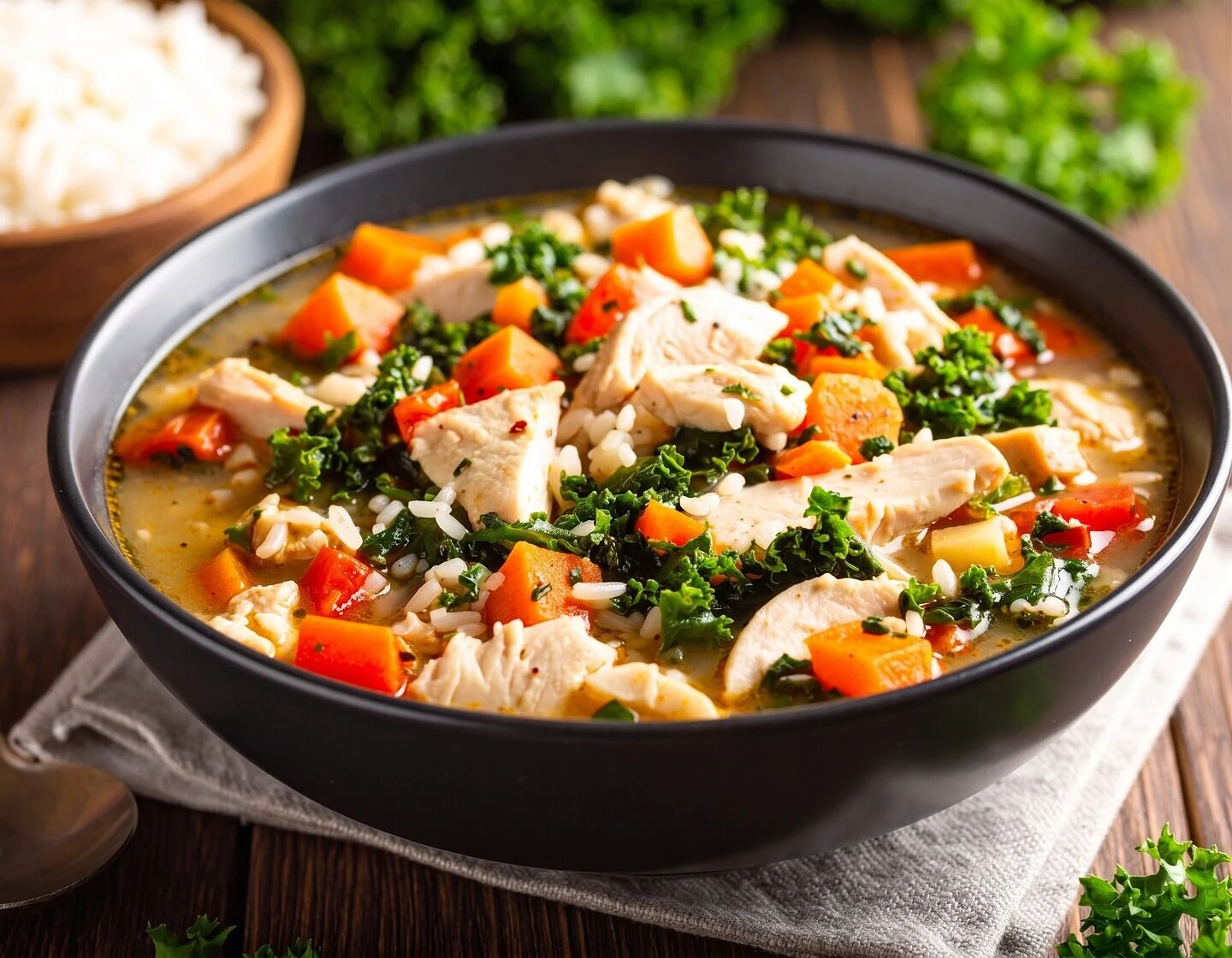
Chicken Vegetable Soup with Kale is a home-style American classic that proves a deeply satisfying bowl doesn't require a long ingredient list or hours at the stove. This is the kind of soup that feels like a warm, practical hug in a mug — a straightforward assembly of pantry staples and fresh produce that comes together in about twenty minutes of actual cooking time. The backbone is a simple sauté: onion and carrot softened in vegetable oil until tender, then joined by thyme and garlic for a final fragrant minute. Into that aromatic base goes water, diced tomatoes, pre-cooked chicken, cooked brown rice, and a generous handful of chopped kale, all left to simmer just long enough for the flavors to mingle and the kale to wilt into submission.
What makes this particular soup such a smart fit for anyone tracking their intake is the way its components pull weight without relying on heavy cream, butter, or a roux. The chicken provides a solid, lean protein foundation — the recipe calls for it already cooked and skinned, which keeps things straightforward and lets you use up leftover roast chicken or a rotisserie bird. The brown rice adds chewy texture and a dose of fiber that helps the soup feel more like a meal than a starter, while the kale and carrots contribute a substantial amount of vitamin A and a pleasant, earthy bitterness that stands up nicely to the sweet diced tomatoes. Because the soup is built on a water or broth base rather than dairy, it stays light and clean on the palate, and the portion structure — roughly a cup of chicken and a half-cup each of rice and kale per batch — makes it easy to ladle out a single serving without any guesswork. It is a soup that fills you up on volume and vegetables first, which is exactly the kind of thing a calorie-conscious cook wants in regular rotation.
A few practical notes will make the process even smoother. Since the recipe relies on water or broth as the cooking liquid, the quality of that liquid matters more than it might in a heartier stew — a good homemade or low-sodium store-bought broth will add depth that plain water simply won't, so use broth if you have it. The kale is added at the very end and only simmered for a short time, which is intentional: a long boil will turn it mushy and drab, so keep the heat gentle and pull the pot off the stove just as the leaves turn bright green and tender. The soup also keeps well in the refrigerator for three to four days, though the rice will continue to absorb liquid as it sits — simply add a splash of broth or water when reheating to restore its soupy consistency. And because the chicken and rice are already cooked before they hit the pot, this is a forgiving recipe that rewards whatever odds and ends you have on hand.
Ingredients — For 3 servings
- 2 teaspoons vegetable oil (or cooking oil of choice) 9 g
- 1/2 cup onion, chopped 80 g
- 1/2 cup carrots, chopped 59 g
- 1 teaspoon thyme, dried 3 g
- 2 piece garlic cloves, minced 6 g
- 2 cups water (or low-sodium chicken broth) 473 g
- 3/4 cup tomatoes, diced 115 g
- 1 cup chicken, cooked, skinned and cubed 237 g
- 1/2 cup brown rice, cooked (or white rice) 97 g
- 1 cup kale, chopped (about one large leaf) 35 g
Nutrition per serving
262 kcal
| Protein | 21.4 g |
|---|---|
| Carbohydrates | 32.1 g |
| of which sugars | 3.2 g |
| Fat | 6.0 g |
| of which saturates | 0.8 g |
| Fiber | 3.1 g |
| Sodium | 78 mg |
Nutrition computed from USDA FoodData Central per-ingredient data (curated reference table, engine/systems/recipe/data/ingredient_nutrition_db.json).
Instructions
-
Wash your hands with soap and water before you begin, and rinse any fresh produce you'll be using.
-
Heat oil in a medium sauce pan.
-
Add onion and carrots.
-
Sauté until vegetables are tender, about 5 to 8 minutes.
~6 min -
Add thyme and garlic.
-
Sauté for one more minute.
-
Add water or broth, tomatoes, chicken, cooked rice, and kale.
-
Simmer for 5 to 10 minutes.
~8 min
Track Chicken Vegetable Soup with Kale in Kaloria
No manual logging — point your camera at the plate and Kaloria's AI recognizes the dish and logs it with the nutrition panel above in one tap. Voice logging and a food-savvy AI coach are built in too.
Get Kaloria freeFrequently asked questions
Can I use a different leafy green instead of kale?
Yes. Spinach is the easiest swap — add it at the very end and simmer just until wilted, about a minute, since it cooks much faster than kale. Swiss chard or collard greens also work well, though heartier greens like collards benefit from a slightly longer simmer to become tender.
The recipe calls for water or broth — which should I choose?
Broth will give you noticeably more flavor for almost no extra effort. Chicken broth complements the cooked chicken nicely, while vegetable broth keeps the dish fully vegetarian if you skip the chicken. If you only have water, consider adding a pinch more thyme or a bay leaf during the simmer to boost depth.
My soup thickened up in the fridge overnight. How do I fix it?
That is completely normal — the brown rice absorbs liquid as it sits. When reheating, stir in a splash of water or broth until it reaches your preferred consistency. The flavor will actually improve after a day, as the garlic and thyme have more time to meld with the vegetables.
Can I make this with raw chicken instead of pre-cooked?
Yes, but you will need to adjust the method. Cut the raw chicken into small cubes and brown it in the oil before adding the onion and carrots, then continue with the recipe as written. Make sure the soup simmers until the chicken is cooked through, which should take about 10 minutes given the small pieces.
What can I serve with this soup to make it a heartier meal?
A slice of crusty whole-grain bread or a simple side salad are both excellent, low-fuss options. If you want to keep the meal entirely grain-based, a small serving of crackers or a toasted English muffin works well. The soup itself is fairly complete, so keep accompaniments light to avoid overshooting your portion goals.
Sources
- USDA MyPlate Kitchen — Recipe adapted from USDA MyPlate Kitchen.
- USDA FoodData Central — Nutrition panel computed from USDA FoodData Central per-ingredient data via a curated reference table.