TL;DR
- 379 kcal · 13.1 g protein per serving
- Ready in 10 min · serves 6
- Gluten-free, Dairy-free
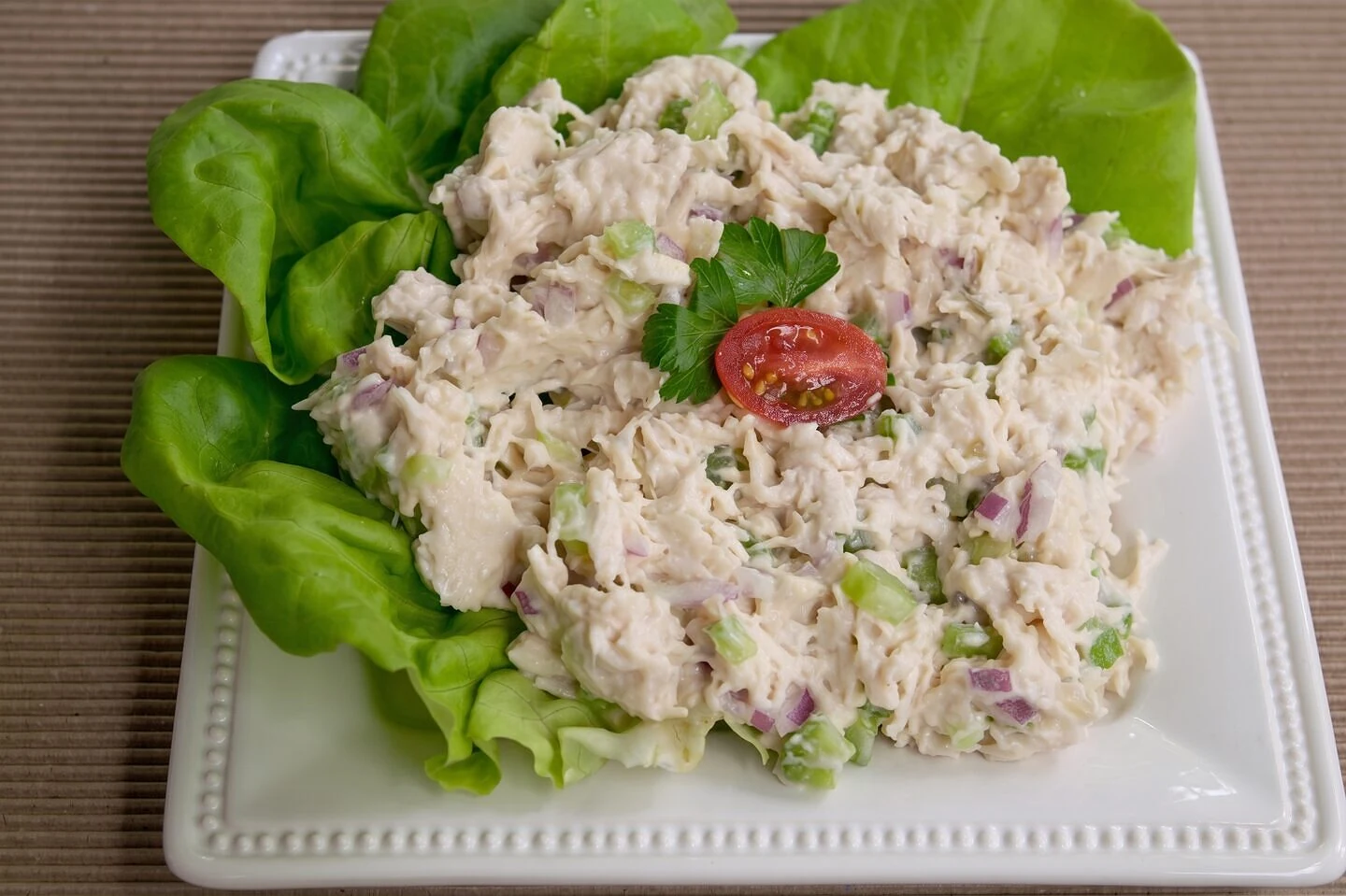
Chicken salad is a home-style American classic, a dish that has earned its place at picnics, bridal showers, and weekday lunch tables alike for generations. At its heart, it is a study in contrasts: tender, mild pieces of cooked chicken brought to life by the sharp snap of fresh celery, the gentle bite of onion, and the sweet-tangy pop of pickle relish, all bound together in a creamy, light mayonnaise dressing. It is a recipe that rewards simplicity, letting each component keep its own character while the whole becomes something greater than the sum of its parts.
This particular version is a straightforward, no-fuss preparation that leans on pantry-friendly ingredients and a quick assembly. The chicken is diced rather than shredded, giving the salad a satisfying, chunky texture that holds up well whether it is piled onto bread or folded into pasta. The celery and onion are chopped, not minced, so they provide a fresh, crunchy counterpoint to the creamy dressing with every bite. The pickle relish is the quiet hero here, introducing a vinegary sweetness that cuts through the richness of the mayonnaise and brightens the entire dish. Using light mayonnaise keeps the dressing creamy and cohesive while trimming some of the fat from the final result, making this a sensible choice for anyone keeping an eye on their intake. The protein from the chicken makes it a filling option that can anchor a meal, while the celery adds a bit of dietary fiber, and the built-in portion control of a sandwich or a measured scoop of salad helps make tracking straightforward.
For those counting calories or simply trying to eat a bit more deliberately, this chicken salad is a cooperative partner. Because the ingredient list is short and the method is a simple matter of combining everything in a bowl, it is easy to weigh and log each component before mixing. The recipe also offers built-in flexibility: it can be portioned out into individual containers for grab-and-go lunches, or served in a hollowed-out tomato or cucumber for a lighter, vegetable-forward presentation that adds color and crunch without adding much to the bottom line.
A few practical notes will help anyone get the most out of this dish. Since the recipe calls for cooked chicken, this is an excellent way to use up a rotisserie bird or leftover roasted chicken from a previous meal; just be sure to dice it into uniform pieces so every bite has a good balance of chicken, crunch, and dressing. The salad is best made ahead and allowed to chill for at least an hour so the flavors can meld, but it should be used within a day or two, as the recipe notes. It does not freeze well, so it is best enjoyed fresh. When making sandwiches, a sturdy bread or a toasted roll will hold up better than a delicate slice, and a crisp lettuce leaf adds another layer of texture. For a quick variation, folding the finished salad into cooked pasta transforms it into a heartier main-dish pasta salad that travels well to potlucks and cookouts.
Ingredients — For 6 servings
- 2 1/2 cups cooked chicken breast, diced 325 g
- 1/2 cup celery, chopped 59 g
- 1/4 cup onion, chopped 40 g
- 3 packages pickle relish (2 tablespoons) 900 g
- 1/2 cup light mayonnaise 108 g
Nutrition per serving
379 kcal
| Protein | 13.1 g |
|---|---|
| Carbohydrates | 53.6 g |
| of which sugars | 44.2 g |
| Fat | 15.2 g |
| of which saturates | 2.4 g |
| Fiber | 1.9 g |
| Sodium | 1374 mg |
Nutrition computed from USDA FoodData Central per-ingredient data (curated reference table, engine/systems/recipe/data/ingredient_nutrition_db.json).
Instructions
-
Wash your hands with soap and water before you begin, and rinse any fresh produce you'll be using.
-
Combine all ingredients.
-
Refrigerate until ready to serve.
-
Use within 1-2 days.
-
Chicken salad does not freeze well.
-
How to use: Make chicken salad sandwiches.
-
Make a pasta salad by mixing with 2 cups cooked pasta.
-
Kids will love this salad served in a tomato or a cucumber boat.
Track Chicken Salad in Kaloria
No manual logging — point your camera at the plate and Kaloria's AI recognizes the dish and logs it with the nutrition panel above in one tap. Voice logging and a food-savvy AI coach are built in too.
Get Kaloria freeFrequently asked questions
Can I use Greek yogurt instead of light mayonnaise?
Yes, plain Greek yogurt can replace part or all of the light mayonnaise for a tangier, higher-protein dressing. Keep in mind the texture will be slightly less rich and a bit more tart. If you swap it entirely, you may want to add a small pinch of salt or a touch of relish brine to brighten the flavor.
How long will this chicken salad keep in the refrigerator?
The recipe advises using the salad within 1 to 2 days. Because it contains mayonnaise and cooked chicken, it should be kept refrigerated in a covered container until serving. It does not freeze well, so plan to make only what you will eat within that short window.
What is the best way to serve this to kids?
The recipe suggests serving the salad in a hollowed-out tomato or cucumber boat, which makes a fun, edible bowl that kids tend to enjoy. You can also serve it on crackers, in a lettuce wrap, or as a sandwich filling on soft bread. The mild flavors and crunchy celery make it a kid-friendly option.
Can I add other ingredients to this chicken salad?
Absolutely. The base recipe is very adaptable. Sliced grapes, diced apples, toasted nuts, or fresh herbs like dill or parsley all pair well with the existing flavors. Just keep in mind that adding moist ingredients may make the salad looser, so you might want to add them just before serving.
Why does the recipe say chicken salad does not freeze well?
Freezing a mayonnaise-based salad causes the dressing to separate and become watery when thawed, and the texture of the celery and onion turns mushy. The cooked chicken itself freezes fine, but the finished salad will lose its pleasant crunch and creamy consistency, so it is best enjoyed fresh.
Sources
- USDA MyPlate Kitchen — Recipe adapted from USDA MyPlate Kitchen.
- USDA FoodData Central — Nutrition panel computed from USDA FoodData Central per-ingredient data via a curated reference table.