TL;DR
- 277 kcal · 23.3 g protein per serving
- Ready in 32 min · serves 4
- Pescatarian, Gluten-free, Dairy-free, High protein
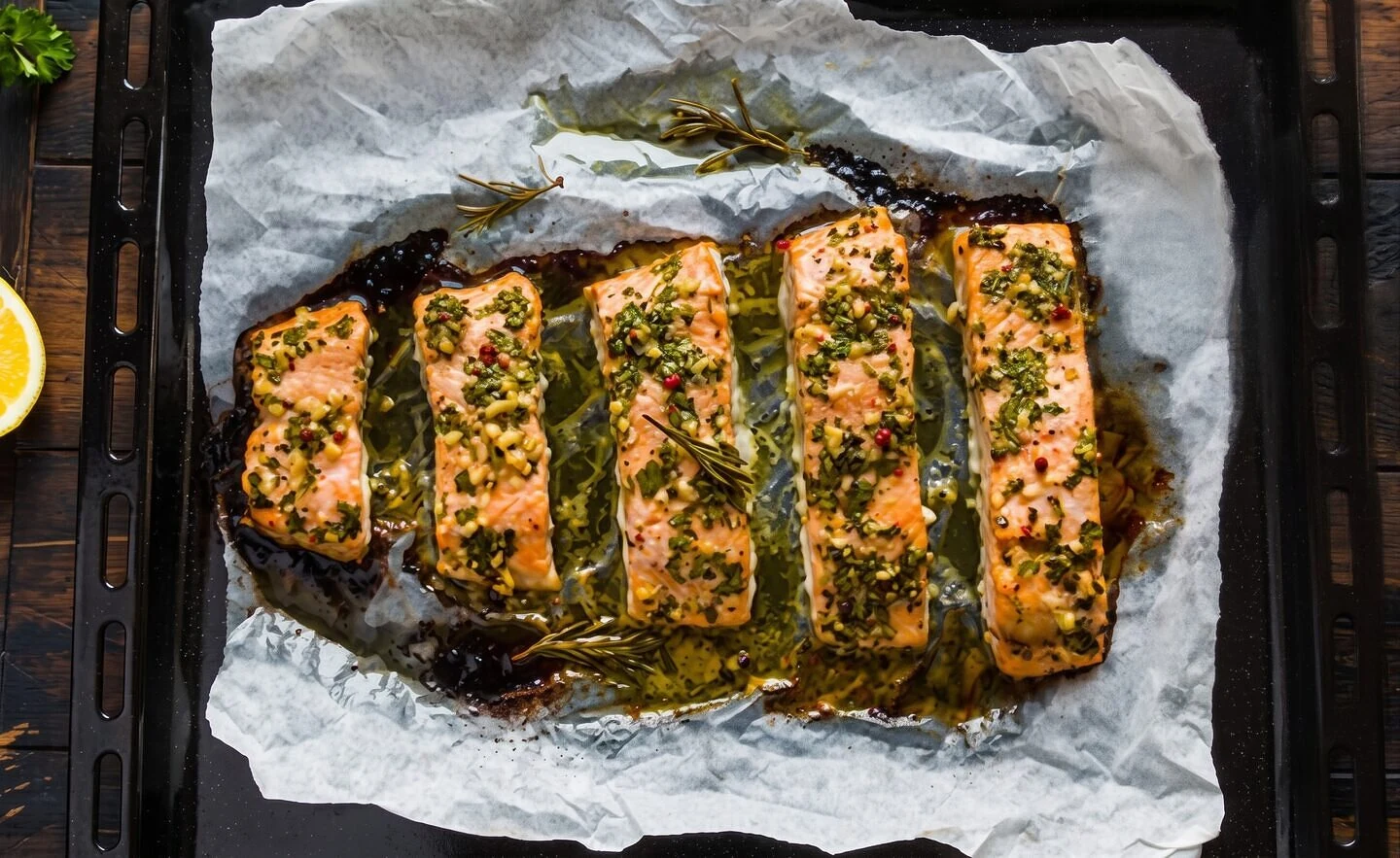
Baked Salmon with Herbs and Lemon is a straightforward, home-style American dinner that puts a well-loved, versatile fish at the center of the plate. The preparation is simple: four salmon portions are arranged in a baking pan, dusted with a blend of paprika, garlic and onion powders, black pepper, oregano, and thyme, then brightened with lemon juice and finished with a light drizzle of melted margarine. The oven does the rest, turning out tender, flaky fillets in about twenty to twenty-five minutes. It is the kind of meal that feels both everyday and a little special, equally at home on a busy weeknight or a relaxed weekend table.
For anyone keeping a close eye on portions and nutrients, this recipe is a natural fit. Salmon is the sole main ingredient, so the protein content of the dish is straightforward and substantial, and there are no heavy sauces, breadcrumbs, or starches to obscure what you are eating. The herb rub and lemon juice add flavor without adding bulk, and the small amount of melted margarine is the only added fat, used sparingly to help the seasonings cling and to encourage a nicely browned surface. Because the recipe is built around a single protein portioned into four equal pieces, it is simple to log accurately: weigh or measure your piece, and you know exactly what is on your plate. Pair it with roasted vegetables, a green salad, or a grain of your choice to round out the meal with fiber and additional nutrients, all while keeping the overall plate composition easy to track.
A few practical notes will help this dish turn out well every time. First, pat the salmon dry with paper towels before applying the seasonings; a drier surface allows the rub to adhere better and helps the fish brown rather than steam. Second, resist the urge to open the oven door repeatedly to check on the fish — the heat loss can slow cooking and dry out the exterior. The fish is done when it flakes easily with a fork, which is the most reliable doneness cue for home cooks. If you have extra time in the morning, you can mix the herb blend in advance and store it in a small airtight container, so dinner comes together in minutes. Leftovers keep well in the refrigerator for a day or two and can be flaked over a salad or tucked into a wrap for an easy next-day lunch.
Ingredients — For 4 servings
- 16 ounces salmon, fresh or frozen (or any white fish) 454 g
- 1/4 teaspoon paprika 1 g
- 1/4 teaspoon onion powder 1 g
- 1/4 teaspoon garlic powder 1 g
- 1/8 teaspoon black pepper 0 g
- 1/8 teaspoon dried oregano 0 g
- 1/8 teaspoon dried thyme 0 g
- 1 tablespoon lemon juice 15 g
- 1 1/2 tablespoons margarine, melted 21 g
Nutrition per serving
277 kcal
| Protein | 23.3 g |
|---|---|
| Carbohydrates | 0.8 g |
| of which sugars | 0.1 g |
| Fat | 19.5 g |
| of which saturates | 4.3 g |
| Fiber | 0.2 g |
| Sodium | 107 mg |
Nutrition computed from USDA FoodData Central per-ingredient data (curated reference table, engine/systems/recipe/data/ingredient_nutrition_db.json).
Instructions
-
Wash your hands with soap and water before you begin, and rinse any fresh produce you'll be using.
-
If using frozen fish, thaw in refrigerator according to package directions.
-
Preheat oven to 350 degrees F.
-
Separate (or cut) fish into 4 pieces.
-
Place fish in a 13x9x2-inch baking pan.
-
Combine paprika, garlic and onion powders, pepper, oregano, and thyme in a small bowl.
-
Sprinkle herb mixture and lemon juice evenly over the fish.
-
Then drizzle melted margarine on top.
-
Bake until fish flakes easily with a fork, about 20 to 25 minutes.
~22 min
Track Baked Salmon with Herbs and Lemon in Kaloria
No manual logging — point your camera at the plate and Kaloria's AI recognizes the dish and logs it with the nutrition panel above in one tap. Voice logging and a food-savvy AI coach are built in too.
Get Kaloria freeFrequently asked questions
Can I use butter instead of margarine?
Yes. Melted butter can be swapped in at the same amount (1 1/2 tablespoons) for a richer flavor. The dish will no longer be dairy-free, so keep that in mind if you are cooking for someone with a dairy sensitivity. The cooking time and technique stay exactly the same.
How do I know when the salmon is fully cooked?
The recipe gives a clear cue: the fish is done when it flakes easily with a fork. Start checking around the 20-minute mark, especially if your fillets are on the thinner side. Insert a fork into the thickest part and twist gently — the flesh should separate into clean flakes and look opaque throughout.
Can I use frozen salmon directly, or do I need to thaw it first?
Thaw it first. The recipe calls for thawing frozen fish in the refrigerator according to the package directions before baking. Cooking from frozen would throw off the timing and could leave the center undercooked while the outside dries out. Plan ahead so the fish is fully thawed before you start.
What should I serve with this salmon?
The original source suggests roasting seasonal vegetables alongside the fish, which works beautifully since both cook at a similar temperature. A simple green salad, steamed rice, quinoa, or roasted potatoes also pair well. Keep sides simple so the herb and lemon flavors stay the focus.
How should I store and reheat leftovers?
Store leftover salmon in an airtight container in the refrigerator for up to two days. To reheat, warm it gently in a 300-degree oven for about 10 minutes, or flake it cold over a salad. Avoid the microwave if you can, as it tends to dry out the fish and intensify the fishy aroma.
Sources
- USDA MyPlate Kitchen — Recipe adapted from USDA MyPlate Kitchen.
- USDA FoodData Central — Nutrition panel computed from USDA FoodData Central per-ingredient data via a curated reference table.