TL;DR
- 77 kcal · 1.6 g protein per serving
- Ready in 15 min · serves 4
- Vegetarian, Gluten-free
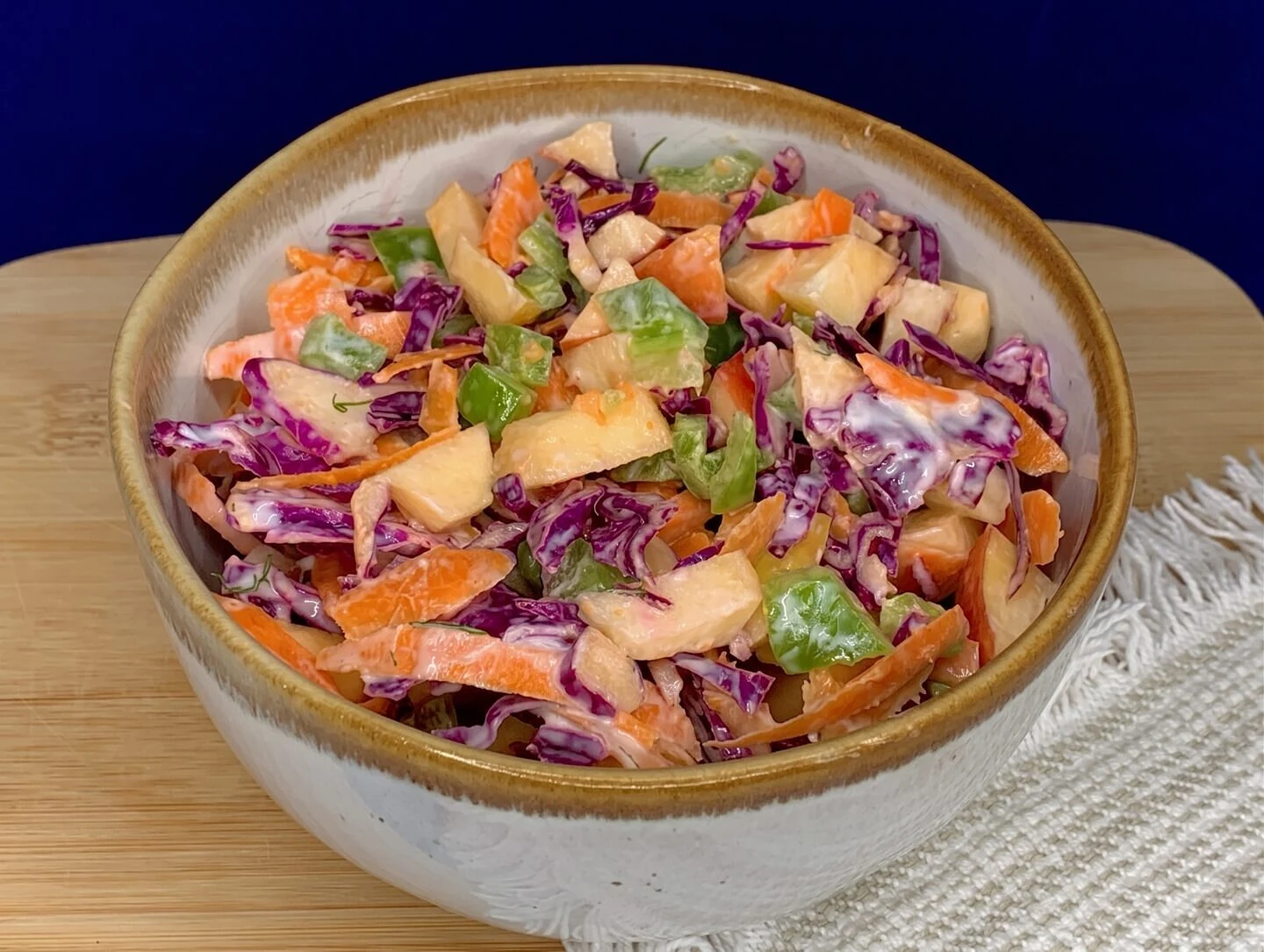
Apple Coleslaw is a crisp, refreshing take on the classic American side dish, swapping the heavy, often sugary dressings for a lighter, brighter combination of shredded cabbage, sweet apple, and a tangy yogurt-based dressing. This is a home-style classic that leans into the natural crunch of fresh vegetables and fruit, making it a versatile addition to a lunch plate, a picnic spread, or a weeknight dinner table. The mix of green pepper adds a subtle bite, while the grated carrot brings a gentle sweetness and a pop of color, creating a salad that is as pleasing to the eye as it is to the palate.
What sets this version apart is its thoughtful composition for those keeping an eye on their daily intake. The base is a generous portion of cabbage, a low-energy-density vegetable that provides satisfying bulk and fiber without weighing things down. The dressing relies primarily on low-fat yogurt, which offers a creamy texture and a dose of protein, with just a touch of low-fat mayonnaise for richness and a classic coleslaw flavor profile. This means you get the familiar, comforting taste of a deli-style slaw, but with a much lighter hand on the fat and calories, making portion control feel less like a compromise and more like a sensible choice. The apple and carrot contribute natural sugars and fiber, which helps keep you feeling full and energized, while the lemon juice and dill weed cut through the creaminess with a bright, herby lift.
A few practical notes can make this dish even better. First, when prepping the cabbage, aim for fine, uniform shreds—this not only makes the slaw easier to eat but also allows the dressing to coat every strand evenly. Second, consider tossing the chopped apple with the lemon juice before adding it to the bowl; the steps call for lemon juice in the dressing, but lightly coating the apple pieces first will help prevent them from browning if you are making the slaw ahead of time. This salad is best served within a few hours of assembling, as the cabbage will soften as it sits. If you do make it in advance, store the dressing separately and toss everything together just before serving to keep the crunch intact. Finally, the recipe suggests adding salt and pepper to taste—do not skip this step, as a pinch of salt truly awakens the flavors of the vegetables and ties the sweet, tangy, and creamy elements together.
Ingredients — For 4 servings
- 2 cups shredded cabbage 142 g
- 1 medium carrot, grated 61 g
- 1/2 medium green pepper, chopped 60 g
- 1 medium apple, chopped 182 g
- 5 tablespoons yogurt, low-fat 76 g
- 1 tablespoon mayonnaise, low-fat 13 g
- 1 teaspoon lemon juice 5 g
- 1/4 teaspoon dill weed 1 g
Nutrition per serving
77 kcal
| Protein | 1.6 g |
|---|---|
| Carbohydrates | 11.6 g |
| of which sugars | 7.9 g |
| Fat | 3.3 g |
| of which saturates | 0.8 g |
| Fiber | 2.7 g |
| Sodium | 48 mg |
Nutrition computed from USDA FoodData Central per-ingredient data (curated reference table, engine/systems/recipe/data/ingredient_nutrition_db.json).
Instructions
-
Wash your hands with soap and water before you begin, and rinse any fresh produce you'll be using.
-
Wash the cabbage.
-
Cut it into fine shreds, until you have 2 cups of cabbage.
-
Peel the carrot.
-
Grate it with a grater.
-
Chop half a green pepper into small pieces.
-
Remove the core, and chop the apple.
-
Put the cabbage, carrot, green pepper, and apple in a large mixing bowl.
-
Stir together.
-
Put the yogurt, mayonnaise, lemon juice, and dill weed in a small bowl.
-
Stir together to make a dressing.
-
Pour the dressing over the salad.
-
Toss to mix.
-
Add salt and pepper to taste.
Track Apple Coleslaw in Kaloria
No manual logging — point your camera at the plate and Kaloria's AI recognizes the dish and logs it with the nutrition panel above in one tap. Voice logging and a food-savvy AI coach are built in too.
Get Kaloria freeFrequently asked questions
Can I make this coleslaw ahead of time?
Yes, but with a caveat. The cabbage and apple will lose some of their crunch as they sit in the dressing. For the best texture, prepare the vegetables and the dressing separately up to a day in advance, keeping both covered in the refrigerator. Toss them together just before serving, and add the salt and pepper at that point.
What can I use instead of mayonnaise to make it even lighter?
The recipe already uses low-fat mayonnaise, but you can easily swap it out entirely. Try using an extra tablespoon of low-fat yogurt or a spoonful of Dijon mustard for a tangier flavor. A small amount of plain Greek yogurt can also work, though it will be a bit more tart.
Why is the lemon juice in the dressing, and not just for flavor?
The lemon juice serves a dual purpose. It adds a bright, acidic note that balances the creamy yogurt and mayonnaise, but it also helps keep the chopped apple from browning. While the recipe calls for it in the dressing, tossing the apple pieces with a little lemon juice before mixing is a helpful trick.
What main dishes does this coleslaw pair well with?
This is a wonderfully versatile side. It pairs beautifully with grilled chicken, turkey burgers, or pulled pork sandwiches. Its crisp, tangy character also makes it a great companion to fish tacos or a simple plate of baked salmon, and it holds up well at a barbecue.
Can I add other vegetables to this slaw?
Absolutely. The base of cabbage, carrot, and green pepper is a great starting point. Thinly sliced red onion adds a sharp bite, while shredded red cabbage brings more color. A handful of chopped fresh parsley or a few raisins could also be folded in for extra texture and sweetness.
Sources
- USDA MyPlate Kitchen — Recipe adapted from USDA MyPlate Kitchen.
- USDA FoodData Central — Nutrition panel computed from USDA FoodData Central per-ingredient data via a curated reference table.