- Per portion
- 281 kcal
- Protein
- 22.22 g
- Carbs
- 19.82 g
- Fat
- 13.62 g
- Fibre
- 1.03 g
Your portion
- Protein
- 22.22 g
- Carbs
- 19.82 g
- Fat
- 13.62 g
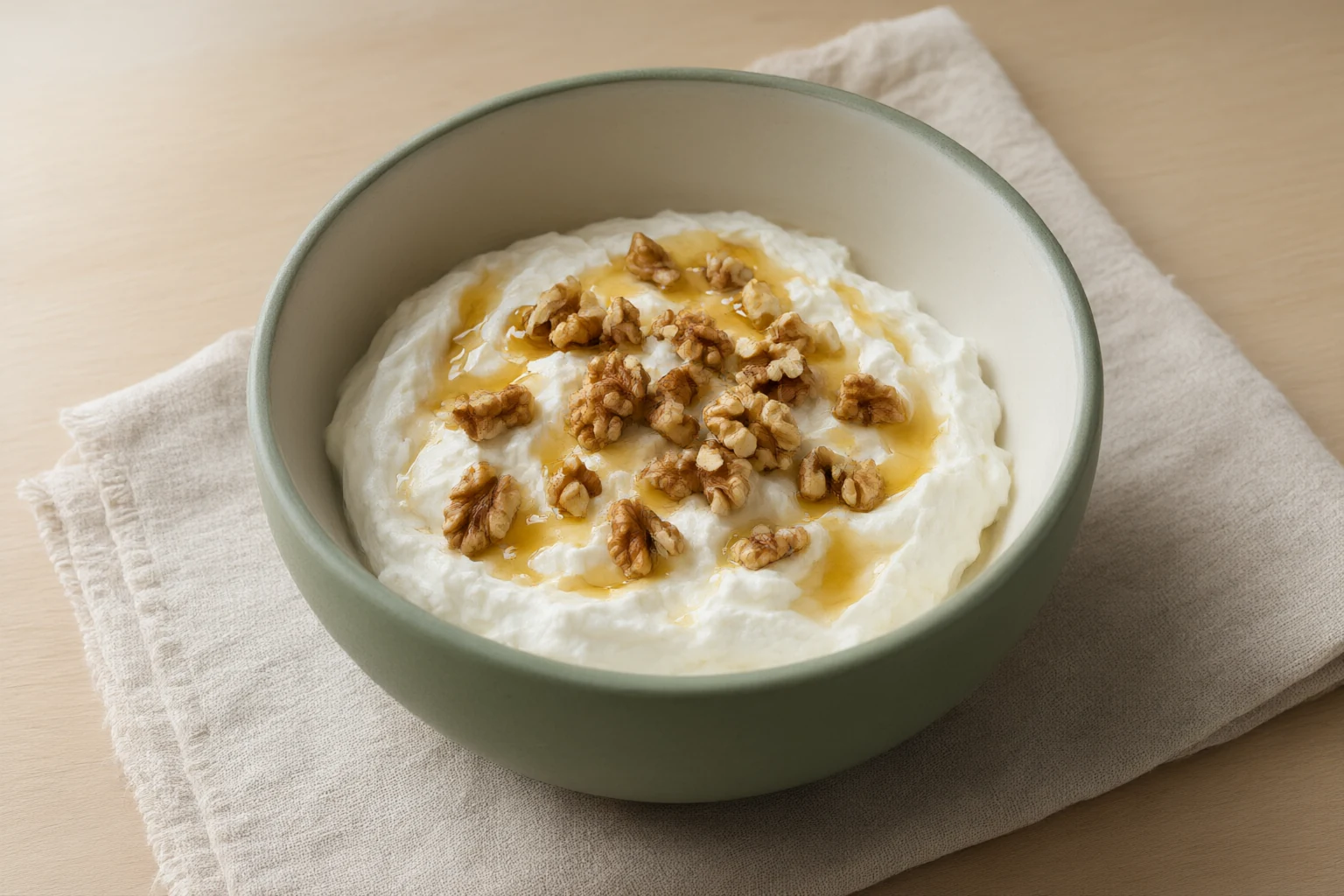
This bowl is mostly water and protein, with modest carbs and very little fat. A 200-gram serving delivers about 146 calories, nearly 20 grams of protein, and under 8 grams of carbs, most of which are natural sugars. It stands out for its protein density, providing over half of its energy from protein, plus meaningful amounts of selenium, vitamin B12, phosphorus, and riboflavin, each covering roughly a fifth of daily reference needs.
A normal portion works well as a filling breakfast or afternoon snack, especially before a workout, since the protein supports muscle recovery and the low fat keeps it light. Pair it with fruit or a handful of oats to add fiber, as this bowl has none. The honest caveat is that honey and walnuts, while tasty, add calories and sugar quickly, so keep the drizzle modest if you are watching your intake.
Nutrition claims, per 100 g:
How to put it together
- Spoon the yogurt into a bowl.
- Drizzle with honey and scatter the walnuts on top.
Full nutrition
Nutrition
per 1 bowl (227 g)
| Energy | 166 kcal | 8.3% |
|---|---|---|
| Energy | 692 kJ | 8.2% |
| Protein | 22.59 g | 45.2% |
| Carbohydrates | 8.94 g | 3.4% |
| of which sugars | 8.08 g | 9.0% |
| Starch | 0.0 g | |
| Fibre | 0.0 g | |
| Fat | 4.36 g | 6.2% |
| of which saturates | 2.79 g | 14.0% |
| Monounsaturated | 1.1 g | |
| Polyunsaturated | 0.17 g | |
| Trans fat | 0.14 g | |
| Cholesterol | 22.7 mg | |
| Water | 189.68 g | |
| Ash | 1.43 g |
Sugar breakdown
Minerals
Vitamins
Fatty acids
Amino acids
Nutrition from USDA FoodData Central (public domain), scaled to the stated portion. Reference intakes: EU Regulation 1169/2011. Percentages track your portion; claim badges are per 100 g (Reg. 1169/2011, 1924/2006).
How it compares
Against 322 other foods in “Dairy and Egg Products”, per 100 g. The mark is this food; the faint line is the category median.
Common portions
- container (7 oz) — 200 g (146 kcal)
Sources
- USDA FoodData Central — Yogurt, Greek, plain, lowfat — Nutrition values for Yogurt, Greek, plain, lowfat.