- Per portion
- 46 kcal
- Protein
- 0.93 g
- Carbs
- 11.48 g
- Fat
- 0.23 g
- Fibre
- 0.61 g
Your portion
- Protein
- 0.93 g
- Carbs
- 11.48 g
- Fat
- 0.23 g
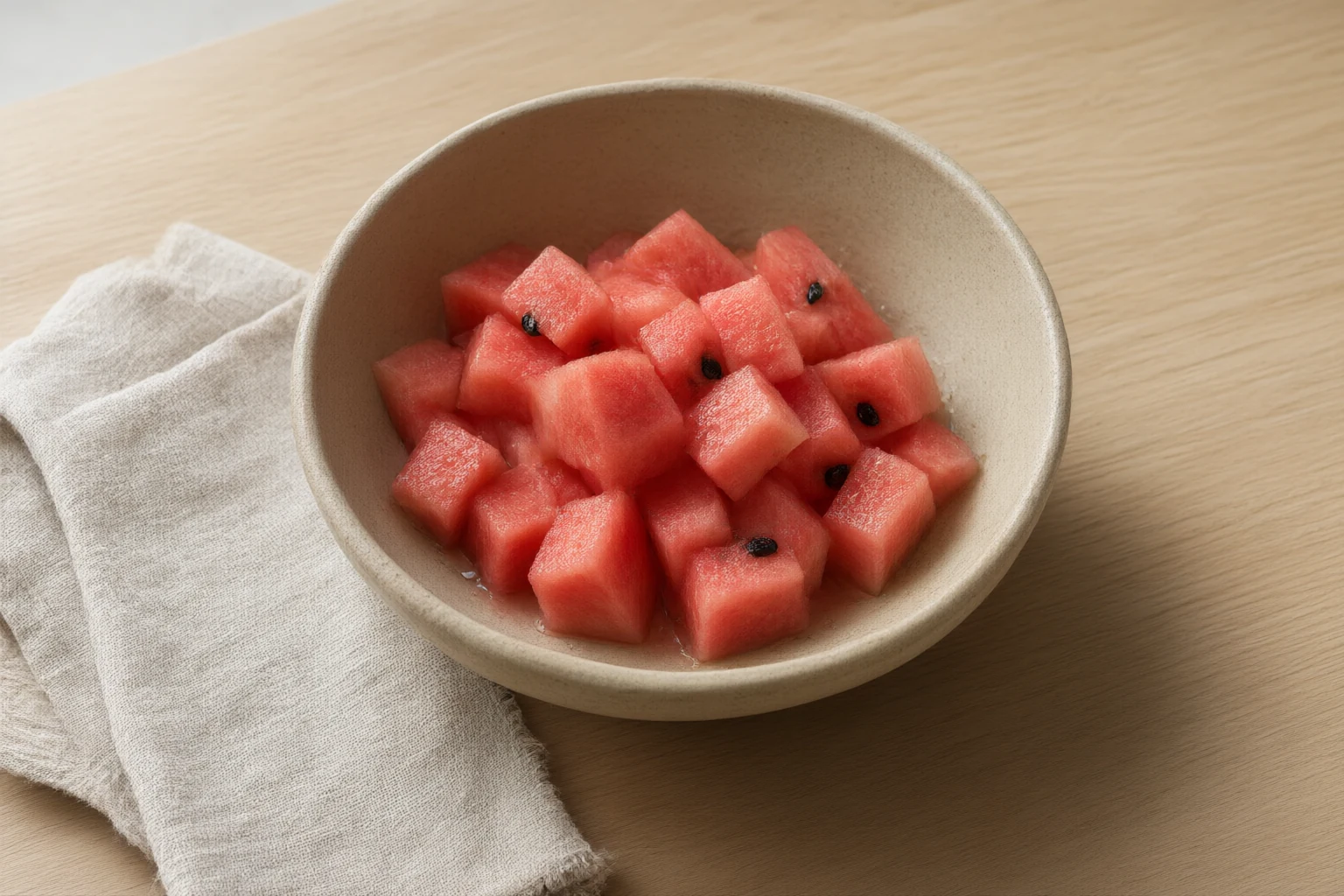
A cup of diced watermelon is mostly water, about 91 grams of it, which explains its light 45.6 calories. It is almost entirely carbohydrate, with 11.5 grams per cup, nearly all of that as natural sugars at 9.4 grams, and it offers minimal protein and fiber. Its standout feature is being virtually fat-free, at just 0.23 grams per portion, making it a very lean fruit choice.
A normal portion is a single cup, easy to eat as-is for a quick, hydrating snack between meals or after a workout when you want something light. It works well on its own, though pairing it with a handful of nuts or some yogurt adds staying power since it is low in protein and fiber. The honest caveat is its sugar load, so it is best enjoyed in one serving rather than as a bottomless bowl.
Nutrition claims, per 100 g:
Full nutrition
Nutrition
per 1 cup, diced (152 g)
| Energy | 46 kcal | 2.3% |
|---|---|---|
| Energy | 193 kJ | 2.3% |
| Protein | 0.93 g | 1.9% |
| Carbohydrates | 11.48 g | 4.4% |
| of which sugars | 9.42 g | 10.5% |
| Starch | 0.0 g | |
| Fibre | 0.61 g | 2.4% |
| Fat | 0.23 g | 0.3% |
| of which saturates | 0.02 g | 0.1% |
| Monounsaturated | 0.06 g | |
| Polyunsaturated | 0.08 g | |
| Trans fat | 0.0 g | |
| Cholesterol | 0.0 mg | |
| Water | 139.0 g | |
| Ash | 0.38 g |
Sugar breakdown
Minerals
Vitamins
Fatty acids
Amino acids
Nutrition from USDA FoodData Central (public domain), scaled to the stated portion. Reference intakes: EU Regulation 1169/2011. Percentages track your portion; claim badges are per 100 g (Reg. 1169/2011, 1924/2006).
How it compares
Against 379 other foods in “Fruits and Fruit Juices”, per 100 g. The mark is this food; the faint line is the category median.
Common portions
- cup, balls — 154 g (46 kcal)
- cup, diced — 152 g (46 kcal)
- melon (15" long x 7-1/2" dia) — 4518 g (1355 kcal)
- wedge (approx 1/16 of melon) — 286 g (86 kcal)
- watermelon balls — 122 g (37 kcal)
- NLEA serving — 280 g (84 kcal)
Sources
- USDA FoodData Central — Watermelon, raw — Nutrition values for Watermelon, raw.