- Per portion
- 183 kcal
- Protein
- 4.26 g
- Carbs
- 3.84 g
- Fat
- 18.26 g
- Fibre
- 1.88 g
Your portion
- Protein
- 4.26 g
- Carbs
- 3.84 g
- Fat
- 18.26 g
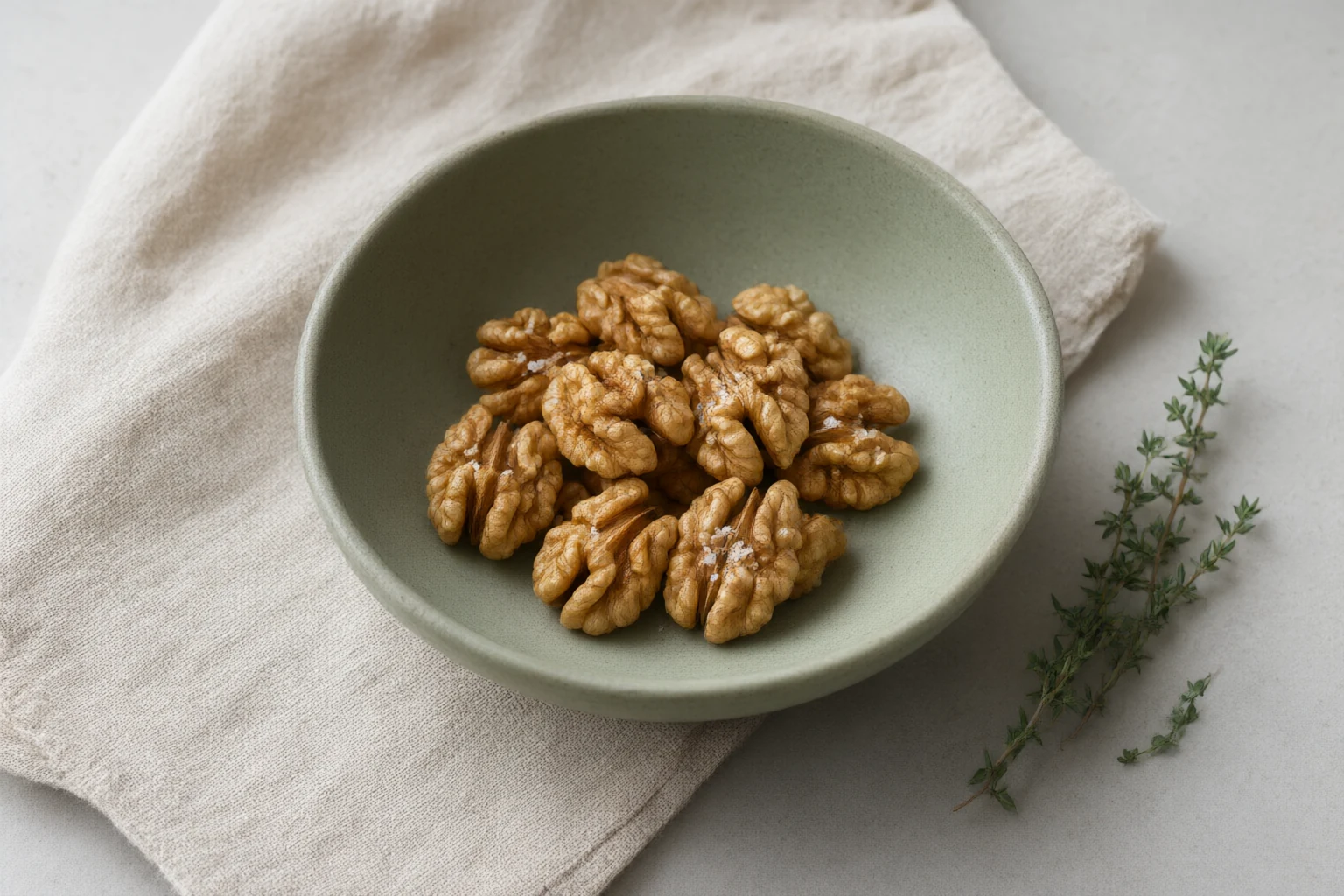
A handful of walnuts is mostly fat, with 18 grams of it in a 28-gram portion, alongside just under 4 grams of protein and carbs, plus about 2 grams of fiber. Nutritionally, they stand out for their trace minerals: that same handful delivers 171% of the daily reference for manganese and 159% for copper, with notable phosphorus, folate, and magnesium. They are also high in saturated fat, at 6 grams per 100 grams.
A normal portion is one small handful, which works well as a quick snack or thrown over a salad or oatmeal to add crunch and satiety. Because they are calorie-dense, it is easy to eat more than planned, so measuring helps. They pair nicely with fruit or yogurt to balance the fat with some carbohydrates, and they are a convenient plant-based option that needs no prep, though the saturated fat is worth keeping in mind if you eat them often.
Nutrition claims, per 100 g:
Full nutrition
Nutrition
per 1 handful (28 g)
| Energy | 183 kcal | 9.2% |
|---|---|---|
| Energy | 767 kJ | 9.1% |
| Protein | 4.26 g | 8.5% |
| Carbohydrates | 3.84 g | 1.5% |
| of which sugars | 0.73 g | 0.8% |
| Starch | 0.02 g | |
| Fibre | 1.88 g | 7.5% |
| Fat | 18.26 g | 26.1% |
| of which saturates | 1.72 g | 8.6% |
| Monounsaturated | 2.5 g | |
| Polyunsaturated | 13.21 g | |
| Cholesterol | 0.0 mg | |
| Water | 1.14 g | |
| Ash | 0.5 g |
Sugar breakdown
Minerals
Vitamins
Fatty acids
Amino acids
Nutrition from USDA FoodData Central (public domain), scaled to the stated portion. Reference intakes: EU Regulation 1169/2011. Percentages track your portion; claim badges are per 100 g (Reg. 1169/2011, 1924/2006).
How it compares
Against 139 other foods in “Nut and Seed Products”, per 100 g. The mark is this food; the faint line is the category median.
Common portions
- cup, chopped — 117 g (765 kcal)
- cup, ground — 80 g (523 kcal)
- cup, in shell, edible yield (7 nuts) — 28 g (183 kcal)
- cup shelled (50 halves) — 100 g (654 kcal)
- cup pieces or chips — 120 g (785 kcal)
- oz (14 halves) — 28 g (185 kcal)
Sources
- USDA FoodData Central — Nuts, walnuts, english — Nutrition values for Nuts, walnuts, english.