- Per portion
- 238 kcal
- Protein
- 9.1 g
- Carbs
- 28.29 g
- Fat
- 10.57 g
- Fibre
- 2.88 g
Your portion
- Protein
- 9.1 g
- Carbs
- 28.29 g
- Fat
- 10.57 g
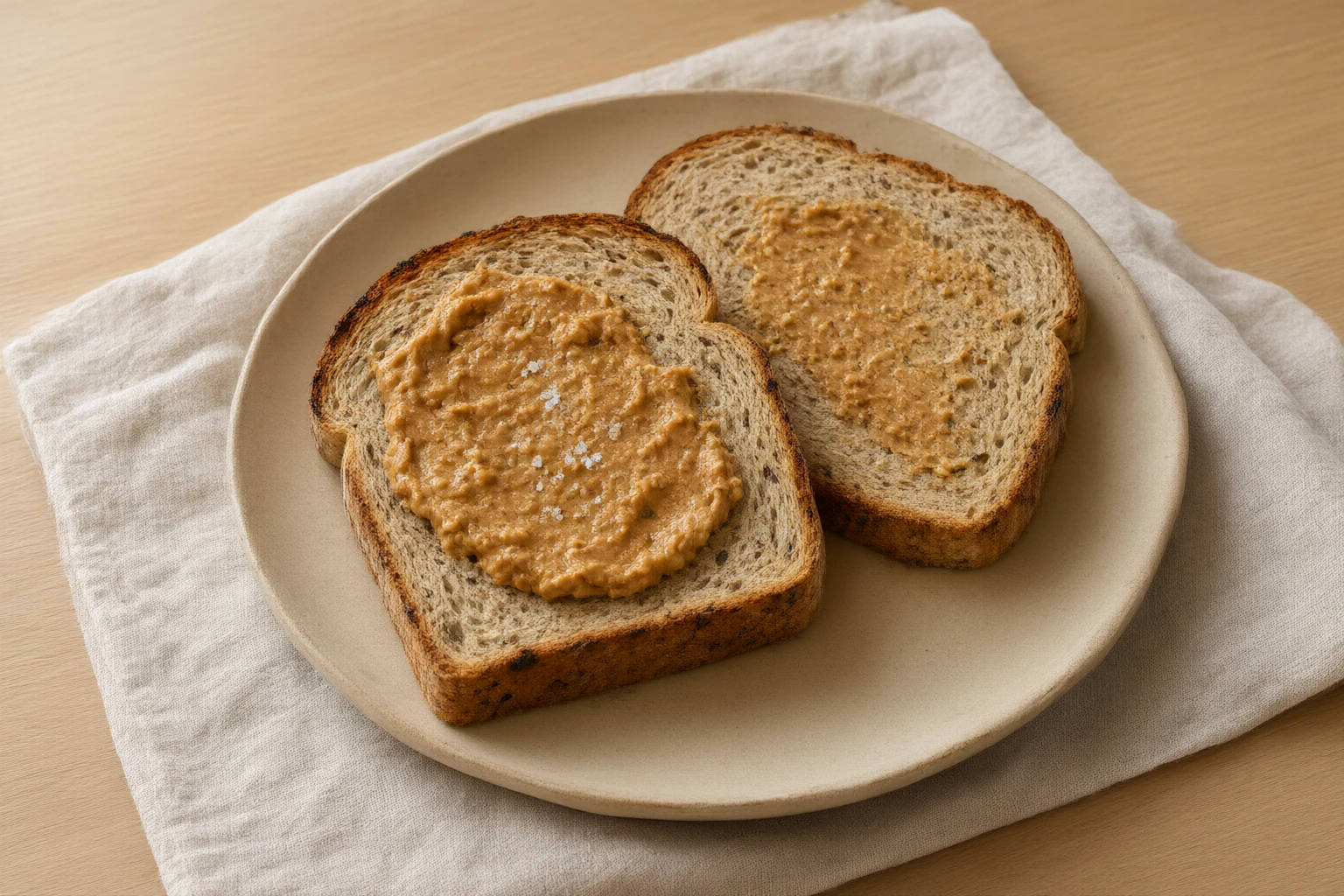
Two slices of whole-grain toast with a tablespoon of peanut butter gives you about 142 calories, built mostly on 24.7 grams of carbs and just 2.4 grams of fat. It is a modest protein source at 5.5 grams, but the real story is the micronutrient lineup: a single portion covers over half your daily selenium and manganese needs, plus solid chunks of folate, thiamin, and niacin. The fiber sits at 2 grams, which is decent for a small snack.
This works well as a quick pre-workout bite or a mid-afternoon pick-me-up, since the carbs digest easily and the fat keeps things steady. A normal portion is two slices with a thin spread, not a heavy slather. It is light on protein for a meal, so pair it with a glass of milk or some yogurt if you want it to hold you longer. The calorie count is gentle, but don’t assume it’s filling on its own.
Nutrition claims, per 100 g:
How to put it together
- Toast the bread.
- Spread the peanut butter over the warm toast.
Full nutrition
Nutrition
per 2 slices + 1 tbsp (68 g)
| Energy | 186 kcal | 9.3% |
|---|---|---|
| Energy | 779 kJ | 9.3% |
| Protein | 7.26 g | 14.5% |
| Carbohydrates | 32.33 g | 12.4% |
| of which sugars | 3.9 g | 4.3% |
| Starch | 24.71 g | |
| Fibre | 2.72 g | 10.9% |
| Fat | 3.08 g | 4.4% |
| of which saturates | 0.47 g | 2.4% |
| Monounsaturated | 0.42 g | |
| Polyunsaturated | 1.1 g | |
| Trans fat | 0.02 g | |
| Cholesterol | 0.0 mg | |
| Water | 23.97 g | |
| Ash | 1.37 g |
Sugar breakdown
Minerals
Vitamins
Fatty acids
Nutrition from USDA FoodData Central (public domain), scaled to the stated portion. Reference intakes: EU Regulation 1169/2011. Percentages track your portion; claim badges are per 100 g (Reg. 1169/2011, 1924/2006).
How it compares
Against 520 other foods in “Baked Products”, per 100 g. The mark is this food; the faint line is the category median.
Common portions
- slice — 29 g (79 kcal)
Sources
- USDA FoodData Central — Bread, wheat — Nutrition values for Bread, wheat.