- Per portion
- 166 kcal
- Protein
- 4.83 g
- Carbs
- 18.17 g
- Fat
- 8.99 g
- Fibre
- 1.56 g
Your portion
- Protein
- 4.83 g
- Carbs
- 18.17 g
- Fat
- 8.99 g
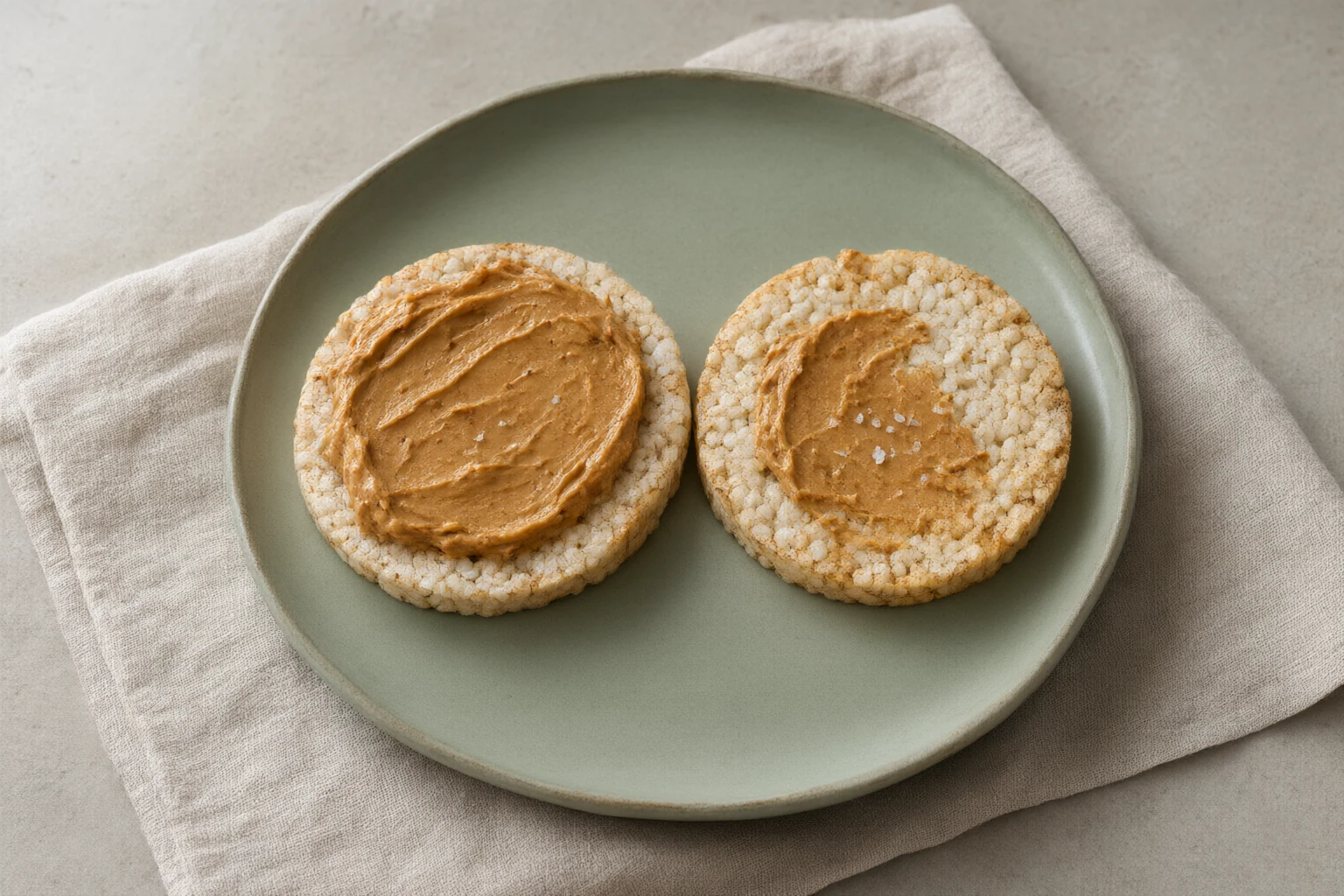
Two rice cakes with a tablespoon of peanut butter give you about 70 calories, almost all from 14.6 grams of carbohydrate, with very little protein or fat. What stands out here is not the macros but the minerals and B-vitamin: this small snack delivers 51% of your daily phosphorus, 49% of your niacin, and 45% of your selenium, plus solid copper and magnesium. It is mostly airy, puffed rice with a thin nut coating, so it is light, not dense.
A normal portion is two cakes, best eaten right after spreading so they stay crisp. It works well as a quick pre-training bite or a low-calorie filler alongside something with protein, like a glass of milk or a hard-boiled egg, since the snack itself is not satiating. There is no sugar or salt to flag, but the calorie count is modest, so if you are hungry, this alone will not hold you long. It is a neat, vegan-friendly way to get some micronutrients without much bulk.
Nutrition claims, per 100 g:
How to put it together
- Spread the peanut butter over the rice cakes.
- Eat straight away so they stay crisp.
Full nutrition
Nutrition
per 2 cakes + 1 tbsp (34 g)
| Energy | 133 kcal | 6.7% |
|---|---|---|
| Energy | 557 kJ | 6.6% |
| Protein | 2.41 g | 4.8% |
| Carbohydrates | 27.57 g | 10.6% |
| of which sugars | 0.3 g | 0.3% |
| Fibre | 1.43 g | 5.7% |
| Fat | 1.46 g | 2.1% |
| of which saturates | 0.3 g | 1.5% |
| Monounsaturated | 0.54 g | |
| Polyunsaturated | 0.52 g | |
| Cholesterol | 0.0 mg | |
| Water | 1.97 g | |
| Ash | 0.58 g |
Minerals
Vitamins
Fatty acids
Nutrition from USDA FoodData Central (public domain), scaled to the stated portion. Reference intakes: EU Regulation 1169/2011. Percentages track your portion; claim badges are per 100 g (Reg. 1169/2011, 1924/2006).
How it compares
Against 176 other foods in “Snacks”, per 100 g. The mark is this food; the faint line is the category median.
Common portions
- cubic inch — 4 g (16 kcal)
Sources
- USDA FoodData Central — Rice cake, cracker (include hain mini rice cakes) — Nutrition values for Rice cake, cracker (include hain mini rice cakes).