- Per portion
- 157 kcal
- Protein
- 8.46 g
- Carbs
- 3.0 g
- Fat
- 13.73 g
- Fibre
- 1.68 g
Your portion
- Protein
- 8.46 g
- Carbs
- 3.0 g
- Fat
- 13.73 g
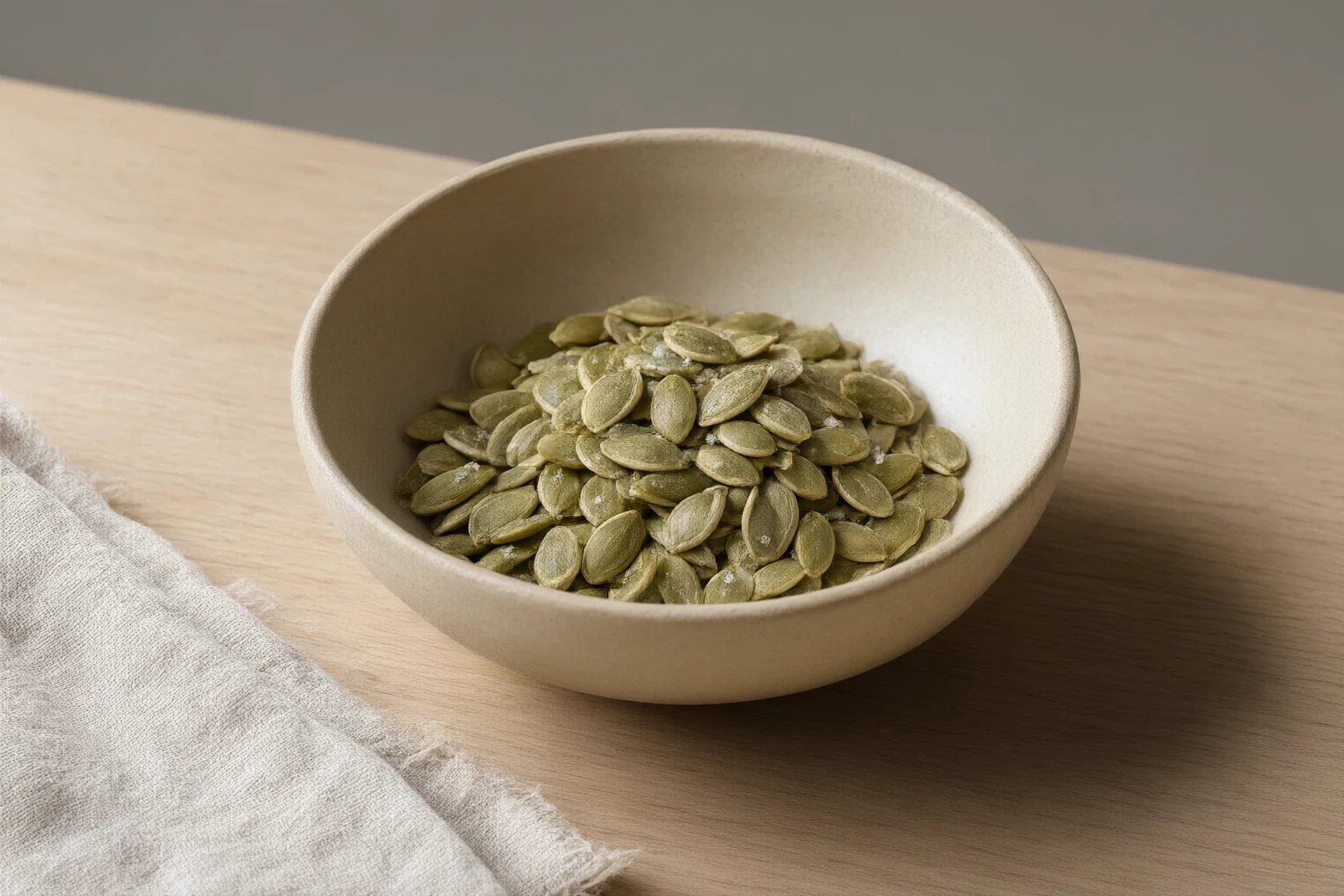
A single handful of dried pumpkin seeds delivers about 157 calories, with fat doing most of the heavy lifting at nearly 14 grams, followed by a solid 8.5 grams of plant protein and only 3 grams of carbs, under half a gram of which is sugar. What really sets them apart is the mineral lineup: that same handful covers over twice your daily manganese needs, more than your daily phosphorus, and well over half your magnesium and copper reference intakes, making them a concentrated source of these trace elements.
That handful is a genuinely filling snack on its own, especially mid-afternoon when you need something crunchy and satiating without a sugar spike. They also work well sprinkled over a salad or stirred into porridge to add texture and a protein bump to a lighter meal. The honest caveat is their calorie density and notable saturated fat content, so they are best enjoyed measured out rather than eaten straight from the bag, particularly if you are watching your fat intake.
Nutrition claims, per 100 g:
Full nutrition
Nutrition
per 1 handful (28 g)
| Energy | 157 kcal | 7.8% |
|---|---|---|
| Energy | 655 kJ | 7.8% |
| Protein | 8.46 g | 16.9% |
| Carbohydrates | 3.0 g | 1.2% |
| of which sugars | 0.39 g | 0.4% |
| Starch | 0.41 g | |
| Fibre | 1.68 g | 6.7% |
| Fat | 13.73 g | 19.6% |
| of which saturates | 2.42 g | 12.1% |
| Monounsaturated | 4.55 g | |
| Polyunsaturated | 5.87 g | |
| Trans fat | 0.02 g | |
| Cholesterol | 0.0 mg | |
| Water | 1.46 g | |
| Ash | 1.34 g |
Sugar breakdown
Minerals
Vitamins
Fatty acids
Amino acids
Nutrition from USDA FoodData Central (public domain), scaled to the stated portion. Reference intakes: EU Regulation 1169/2011. Percentages track your portion; claim badges are per 100 g (Reg. 1169/2011, 1924/2006).
How it compares
Against 139 other foods in “Nut and Seed Products”, per 100 g. The mark is this food; the faint line is the category median.
Common portions
- cup — 129 g (721 kcal)
- oz — 28 g (158 kcal)
Sources
- USDA FoodData Central — Seeds, pumpkin and squash seed kernels, dried — Nutrition values for Seeds, pumpkin and squash seed kernels, dried.