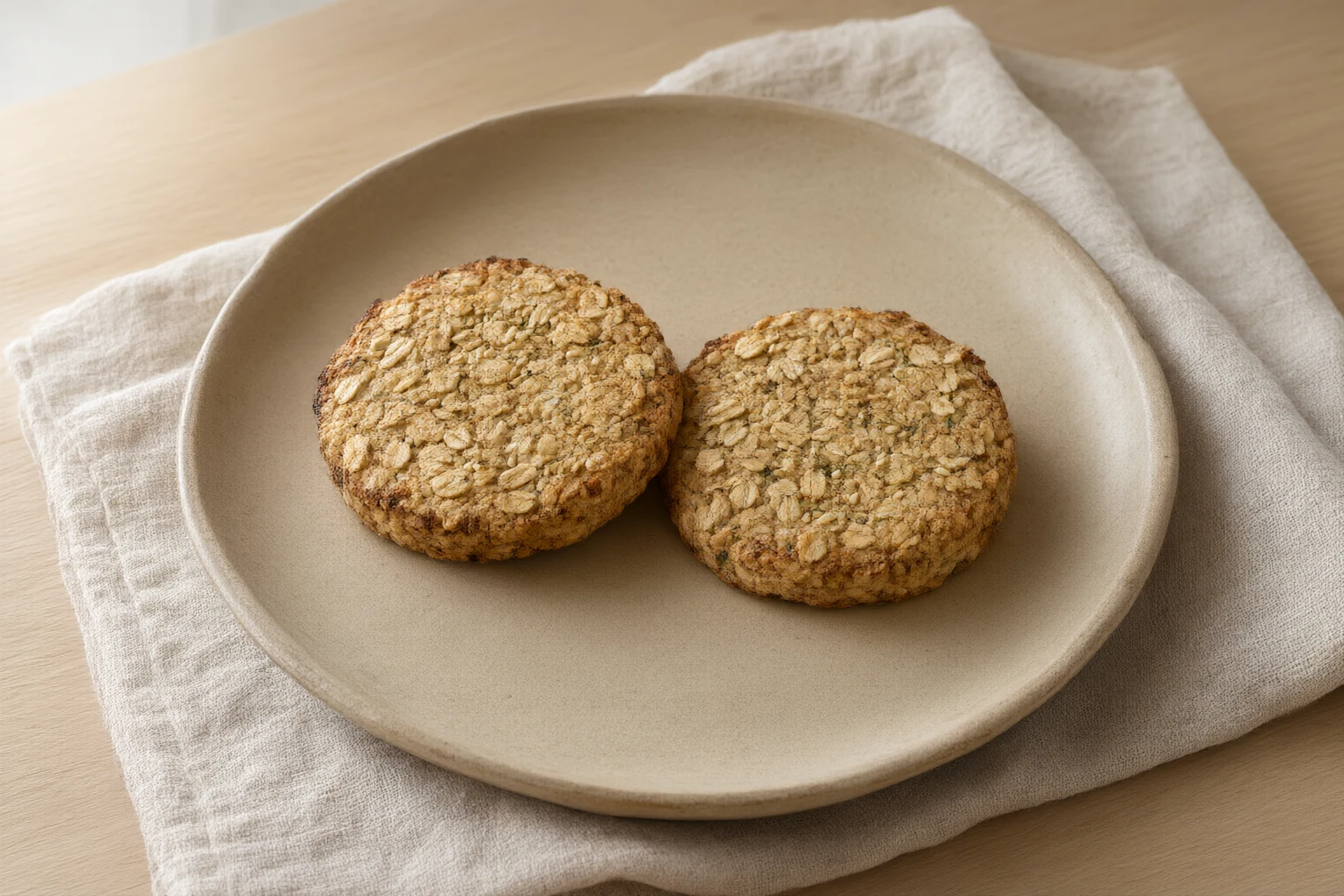
- Per portion
- 120 kcal
- Protein
- 2.96 g
- Carbs
- 19.47 g
- Fat
- 3.96 g
- Fibre
- 2.88 g
Your portion
- Protein
- 2.96 g
- Carbs
- 19.47 g
- Fat
- 3.96 g
Two oatcakes give you about 120 calories, built mostly from slow-digesting carbs and a modest 4 grams of fat, with nearly 3 grams of fibre and under half a gram of sugar. What really sets them apart is the mineral lineup: that single portion covers over a full day’s reference for manganese, nearly half your phosphorus, and solid chunks of copper and magnesium. They are genuinely high-fibre for a cracker, though the salt is worth noticing at 800 mg per 100 grams.
A normal serving is just two oatcakes, so they work well as a quick snack on their own or paired with something protein-rich like cheese or hummus to round out the meal. They are handy before a workout or as a sturdy base for toppings, and the fibre helps keep things filling. The honest caveat is the sodium, so if you are watching salt, factor that in, especially if you eat them daily alongside other salty foods.
Nutrition claims, per 100 g:
Full nutrition
Nutrition
per 2 oatcakes (28 g)
| Energy | 120 kcal | 6.0% |
|---|---|---|
| Energy | 500 kJ | 6.0% |
| Protein | 2.96 g | 5.9% |
| Carbohydrates | 19.47 g | 7.5% |
| of which sugars | 0.33 g | 0.4% |
| Starch | 15.96 g | |
| Fibre | 2.88 g | 11.5% |
| Fat | 3.96 g | 5.7% |
| of which saturates | 0.58 g | 2.9% |
| Monounsaturated | 0.91 g | |
| Polyunsaturated | 1.94 g | |
| Trans fat | 0.06 g | |
| Cholesterol | 0.0 mg | |
| Water | 0.82 g | |
| Ash | 0.78 g |
Sugar breakdown
Minerals
Vitamins
Fatty acids
Amino acids
Nutrition from USDA FoodData Central (public domain), scaled to the stated portion. Reference intakes: EU Regulation 1169/2011. Percentages track your portion; claim badges are per 100 g (Reg. 1169/2011, 1924/2006).
How it compares
Against 520 other foods in “Baked Products”, per 100 g. The mark is this food; the faint line is the category median.
Common portions
- serving — 28 g (120 kcal)
- crackers, Triscuits, regular size — 28 g (120 kcal)
- cracker — 5 g (20 kcal)
- oz — 14 g (61 kcal)
- cup, crushed — 94 g (401 kcal)
- Triscuit Bits — 10 g (43 kcal)
Sources
- USDA FoodData Central — Crackers, whole-wheat — Nutrition values for Crackers, whole-wheat.