- Per portion
- 149 kcal
- Protein
- 8.14 g
- Carbs
- 11.53 g
- Fat
- 7.97 g
Your portion
- Protein
- 8.14 g
- Carbs
- 11.53 g
- Fat
- 7.97 g
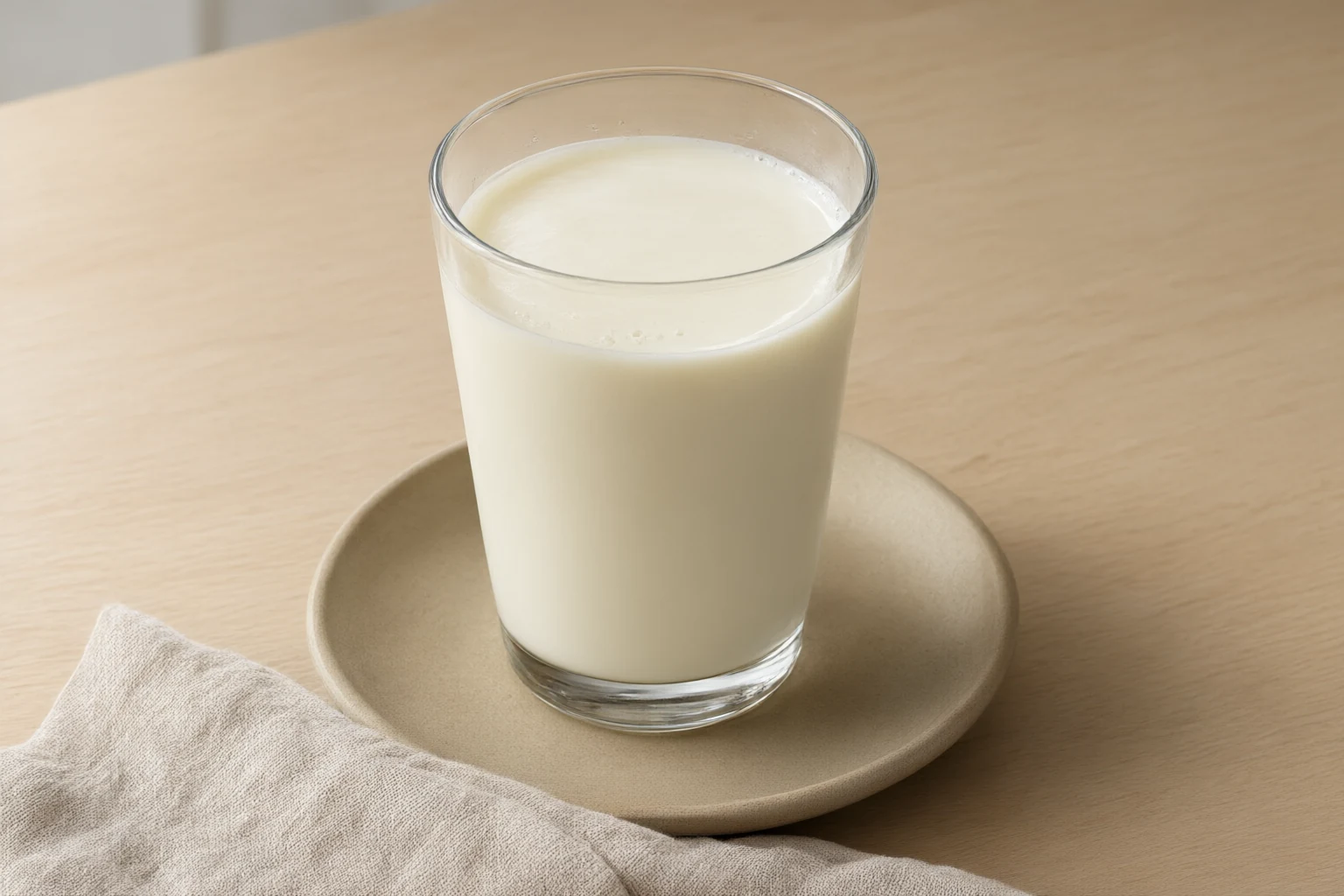
A glass of whole milk is mostly water, with the rest split fairly evenly between carbohydrates and fat, and a solid chunk of protein making up about 22% of its calories. It genuinely stands out for its iodine, delivering 37.9 µg, or 25% of the daily reference, alongside vitamin B12 at 22% and vitamin D at 19%. Calcium comes in at 15% of the daily reference per glass, making it a practical way to cover several micronutrients in one drink.
A normal glass works well as a standalone snack or alongside a meal to add protein and fat without much bulk. It fits nicely before training or as a mid-afternoon pick-me-up, and it pairs fine with cereal or fruit to round out carbs. There is no real caveat here—just watch the calorie density if you are logging multiple glasses, since 149 kcal per serving adds up quickly.
Nutrition claims, per 100 g:
Full nutrition
Nutrition
per 1 glass (249 g)
| Energy | 149 kcal | 7.4% |
|---|---|---|
| Energy | 625 kJ | 7.4% |
| Protein | 8.14 g | 16.3% |
| Carbohydrates | 11.53 g | 4.4% |
| Fat | 7.97 g | 11.4% |
| of which saturates | 4.63 g | 23.1% |
| Monounsaturated | 1.71 g | |
| Polyunsaturated | 0.27 g | |
| Trans fat | 0.28 g | |
| Cholesterol | 29.88 mg | |
| Water | 219.37 g | |
| Ash | 1.99 g |
Sugar breakdown
Minerals
Vitamins
Fatty acids
Amino acids
Nutrition from USDA FoodData Central (public domain), scaled to the stated portion. Reference intakes: EU Regulation 1169/2011. Percentages track your portion; claim badges are per 100 g (Reg. 1169/2011, 1924/2006).
How it compares
Against 322 other foods in “Dairy and Egg Products”, per 100 g. The mark is this food; the faint line is the category median.
Common portions
- serving — 249 g (149 kcal)
Sources
- USDA FoodData Central — Milk, whole, 3.25% milkfat, with added vitamin D — Nutrition values for Milk, whole, 3.25% milkfat, with added vitamin D.