- Per portion
- 64 kcal
- Protein
- 0.97 g
- Carbs
- 16.01 g
- Fat
- 0.37 g
- Fibre
- 2.16 g
Your portion
- Protein
- 0.97 g
- Carbs
- 16.01 g
- Fat
- 0.37 g
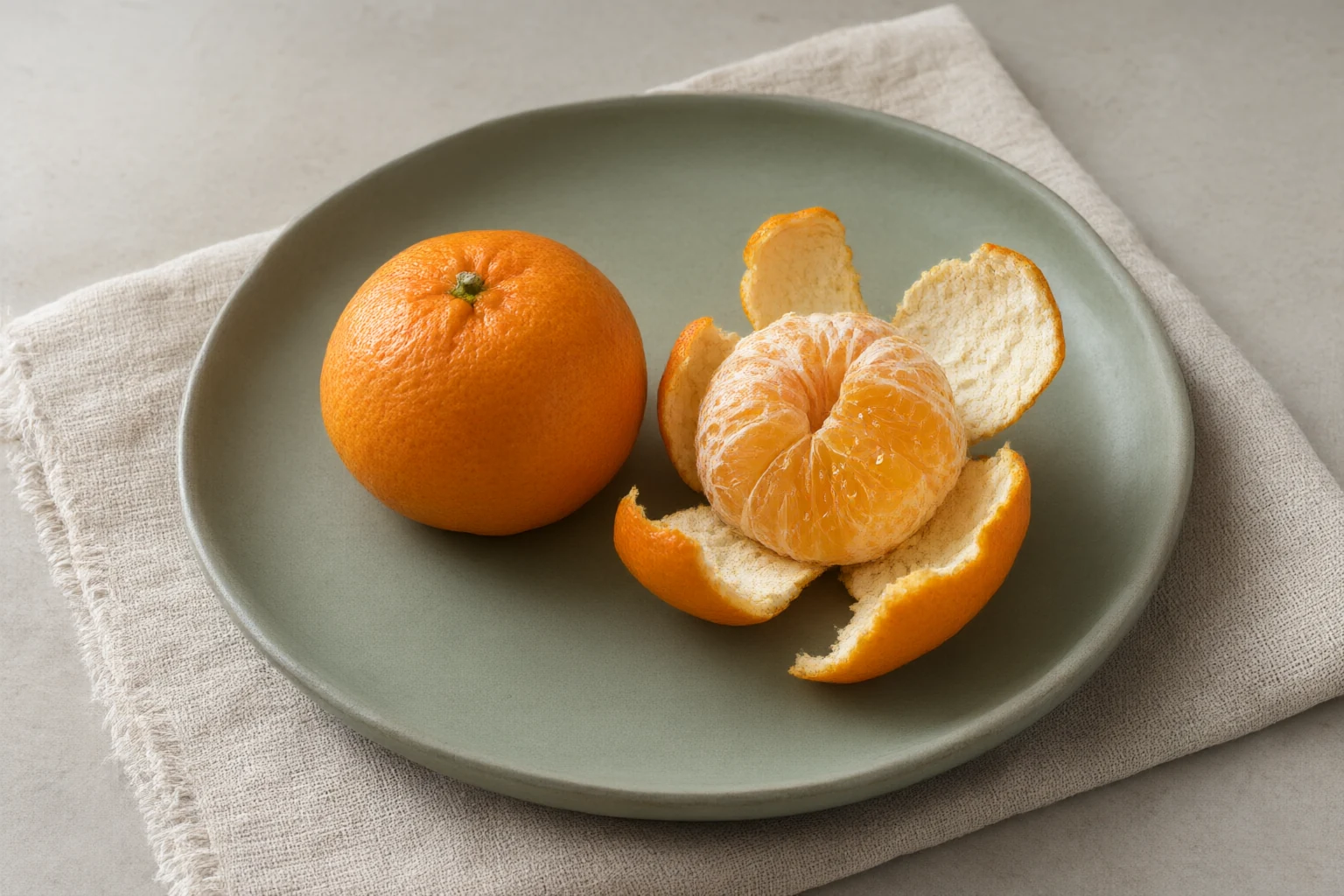
Two small mandarins give you about 64 calories, almost all from natural sugars and carbs, with very little protein or fat. They are mostly water, which makes them refreshing, and they provide a solid 26.7 mg of vitamin C, covering a third of your daily reference intake. The fibre, at roughly 2 grams per portion, is a decent bonus for such a light fruit.
A normal portion is two small fruits, easy to peel and eat on their own as a quick snack or dessert. They work well before a workout for fast energy, or alongside a handful of nuts or a yoghurt to add staying power. The sugar is all natural, so if you are watching total sugar intake, just count them like any fruit; otherwise they are a straightforward, low-fat choice.
Nutrition claims, per 100 g:
Full nutrition
Nutrition
per 2 small (120 g)
| Energy | 64 kcal | 3.2% |
|---|---|---|
| Energy | 268 kJ | 3.2% |
| Protein | 0.97 g | 1.9% |
| Carbohydrates | 16.01 g | 6.2% |
| of which sugars | 12.7 g | 14.1% |
| Starch | 0.0 g | |
| Fibre | 2.16 g | 8.6% |
| Fat | 0.37 g | 0.5% |
| of which saturates | 0.05 g | 0.2% |
| Monounsaturated | 0.07 g | |
| Polyunsaturated | 0.08 g | |
| Trans fat | 0.0 g | |
| Cholesterol | 0.0 mg | |
| Water | 102.2 g | |
| Ash | 0.46 g |
Sugar breakdown
Minerals
Vitamins
Fatty acids
Amino acids
Nutrition from USDA FoodData Central (public domain), scaled to the stated portion. Reference intakes: EU Regulation 1169/2011. Percentages track your portion; claim badges are per 100 g (Reg. 1169/2011, 1924/2006).
How it compares
Against 379 other foods in “Fruits and Fruit Juices”, per 100 g. The mark is this food; the faint line is the category median.
Common portions
- cup, sections — 195 g (103 kcal)
- small (2-1/4" dia) — 76 g (40 kcal)
- medium (2-1/2" dia) — 88 g (47 kcal)
- large (2-3/4" dia) — 120 g (64 kcal)
- NLEA serving — 109 g (58 kcal)
Sources
- USDA FoodData Central — Tangerines, (mandarin oranges), raw — Nutrition values for Tangerines, (mandarin oranges), raw.