- Per portion
- 176 kcal
- Protein
- 5.62 g
- Carbs
- 16.93 g
- Fat
- 10.9 g
- Fibre
- 5.28 g
Your portion
- Protein
- 5.62 g
- Carbs
- 16.93 g
- Fat
- 10.9 g
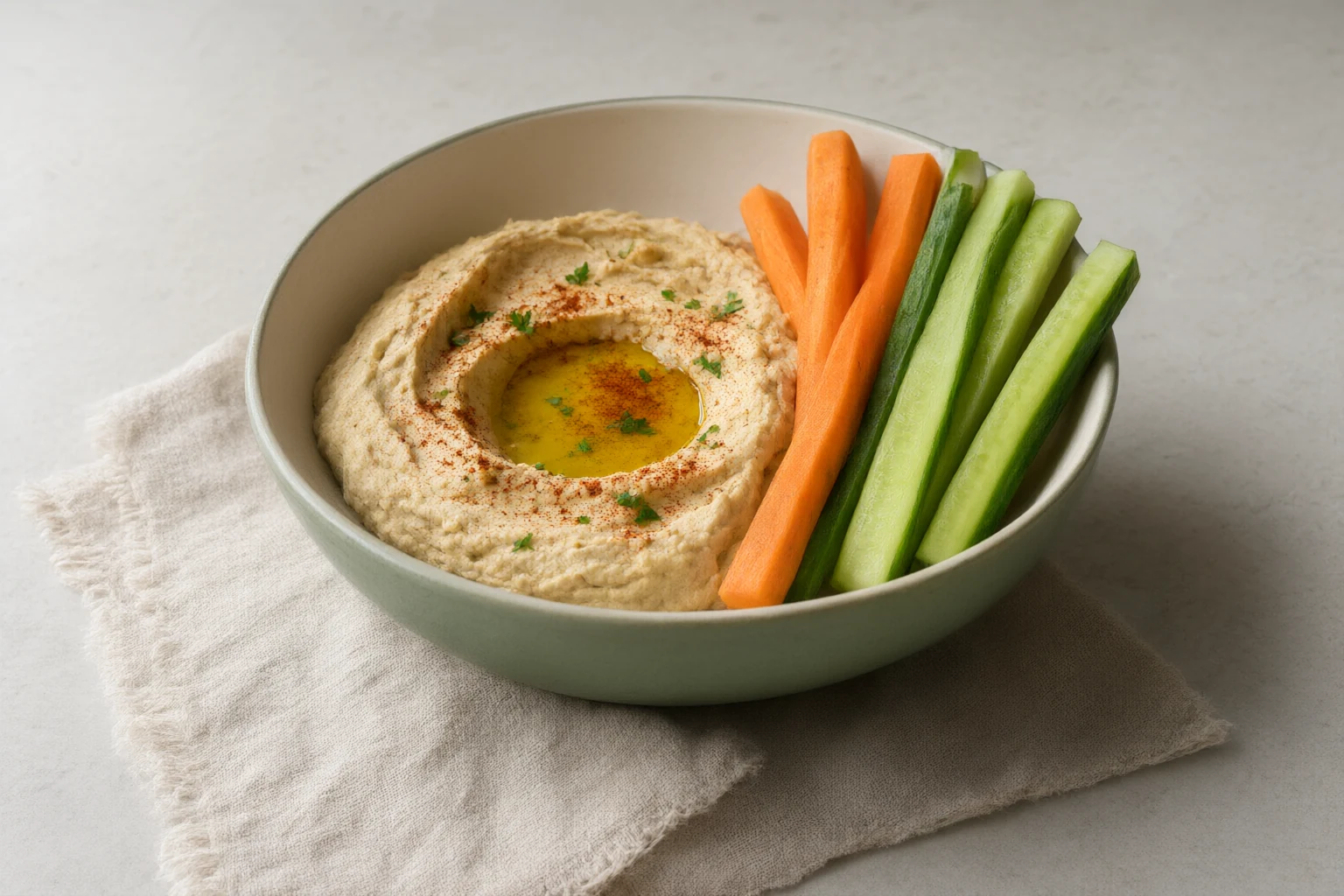
This is a legume-based dip made from chickpeas and tahini, so its character is mostly fat and carbs, with a modest amount of plant protein. A 60 g pot with veg delivers 142 kcal, 10.7 g of fat, and 9 g of carbs, of which only 0.37 g are sugars. Where it genuinely stands out is in trace minerals: it provides 58% of the daily reference for manganese, 38% for copper, and 30% for vitamin K, plus useful amounts of phosphorus and folate.
A normal portion is one small pot with a few carrot and cucumber sticks, which works well as a filling snack or a light lunch side. The fat comes mostly from tahini, so it is calorie-dense for its volume, but the 3.3 g of fibre and 4.7 g of protein help keep you satisfied. It pairs nicely with wholegrain crackers or a piece of fruit to round out the meal. There is no real caveat here, just watch the portion if you are tracking calories, as the dip alone can add up quickly.
Nutrition claims, per 100 g:
How to put it together
- Cut the carrot and cucumber into sticks.
- Serve alongside the hummus.
Full nutrition
Nutrition
per 1 pot + veg (180 g)
| Energy | 427 kcal | 21.3% |
|---|---|---|
| Energy | 1786 kJ | 21.3% |
| Protein | 14.0 g | 28.0% |
| Carbohydrates | 27.0 g | 10.4% |
| of which sugars | 1.12 g | 1.2% |
| Starch | 14.54 g | |
| Fibre | 9.9 g | 39.6% |
| Fat | 32.08 g | 45.8% |
| of which saturates | 4.61 g | 23.1% |
| Monounsaturated | 9.61 g | |
| Polyunsaturated | 15.86 g | |
| Trans fat | 0.03 g | |
| Cholesterol | 0.0 mg | |
| Water | 103.32 g | |
| Ash | 3.6 g |
Sugar breakdown
Minerals
Vitamins
Fatty acids
Nutrition from USDA FoodData Central (public domain), scaled to the stated portion. Reference intakes: EU Regulation 1169/2011. Percentages track your portion; claim badges are per 100 g (Reg. 1169/2011, 1924/2006).
How it compares
Against 294 other foods in “Legumes and Legume Products”, per 100 g. The mark is this food; the faint line is the category median.
Common portions
- tbsp — 15 g (36 kcal)
- cup — 246 g (583 kcal)
Sources
- USDA FoodData Central — Hummus, commercial — Nutrition values for Hummus, commercial.