- Per portion
- 155 kcal
- Protein
- 12.58 g
- Carbs
- 1.12 g
- Fat
- 10.61 g
- Fibre
- 0.0 g
Your portion
- Protein
- 12.58 g
- Carbs
- 1.12 g
- Fat
- 10.61 g
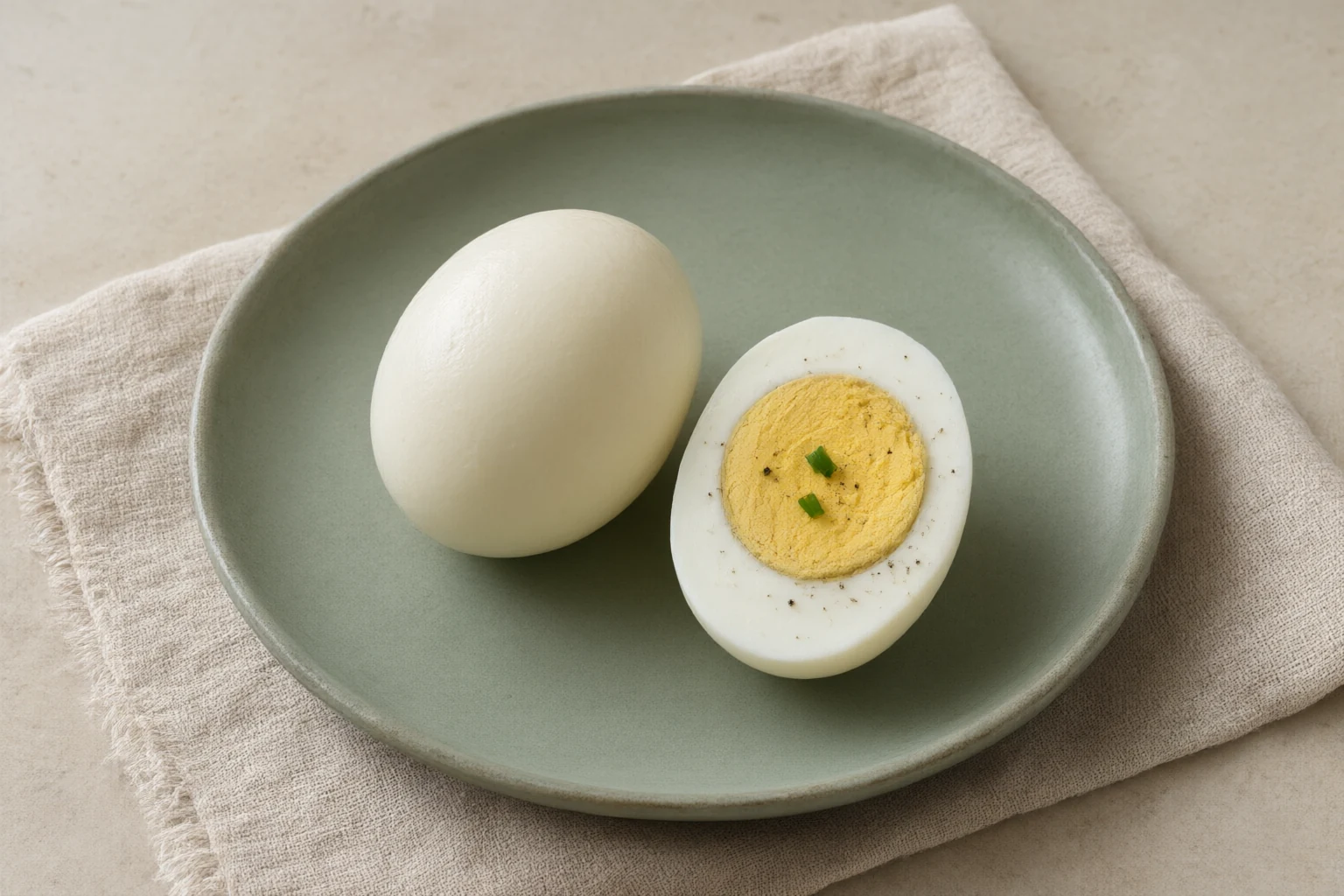
A hard-boiled egg is mostly water and fat, with a moderate amount of protein and almost no carbohydrate. In a two-egg portion, you get 12.6 grams of protein and 10.6 grams of fat, which together supply most of the 155 calories. It genuinely stands out for selenium, covering 56% of the daily reference, alongside useful amounts of vitamin D, vitamin B12, and riboflavin.
A typical portion is two eggs, eaten on their own or sliced into a salad. They work well as a portable snack or a light breakfast when paired with toast or fruit to add carbs and fiber. There is no real caveat here; the fat is mostly unsaturated, and the protein is high relative to calories, so it fits easily into most days without much thought.
Nutrition claims, per 100 g:
Full nutrition
Nutrition
per 2 large (100 g)
| Energy | 155 kcal | 7.8% |
|---|---|---|
| Energy | 649 kJ | 7.7% |
| Protein | 12.58 g | 25.2% |
| Carbohydrates | 1.12 g | 0.4% |
| of which sugars | 1.12 g | 1.2% |
| Fibre | 0.0 g | |
| Fat | 10.61 g | 15.2% |
| of which saturates | 3.27 g | 16.4% |
| Monounsaturated | 4.08 g | |
| Polyunsaturated | 1.41 g | |
| Cholesterol | 373.0 mg | |
| Water | 74.62 g | |
| Ash | 1.08 g |
Minerals
Vitamins
Fatty acids
Amino acids
Nutrition from USDA FoodData Central (public domain), scaled to the stated portion. Reference intakes: EU Regulation 1169/2011. Percentages track your portion; claim badges are per 100 g (Reg. 1169/2011, 1924/2006).
How it compares
Against 322 other foods in “Dairy and Egg Products”, per 100 g. The mark is this food; the faint line is the category median.
Common portions
- cup, chopped — 136 g (211 kcal)
- tbsp — 8 g (13 kcal)
- large — 50 g (78 kcal)
Sources
- USDA FoodData Central — Egg, whole, cooked, hard-boiled — Nutrition values for Egg, whole, cooked, hard-boiled.