- Per portion
- 146 kcal
- Protein
- 19.9 g
- Carbs
- 7.88 g
- Fat
- 3.84 g
- Fibre
- 0.0 g
Your portion
- Protein
- 19.9 g
- Carbs
- 7.88 g
- Fat
- 3.84 g
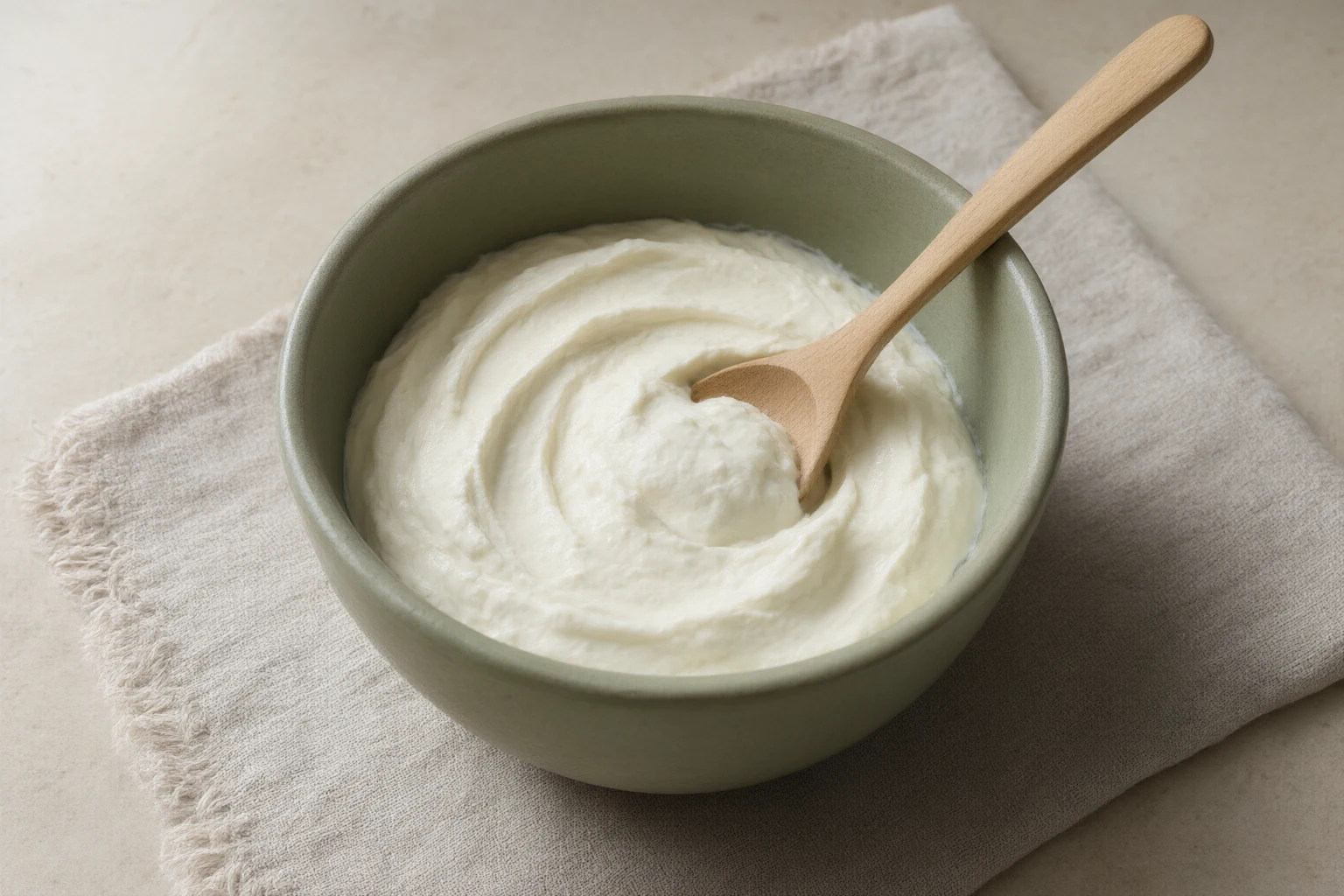
Plain Greek yogurt is mostly water and protein, with a modest amount of natural milk sugar and a little fat. A single 200-gram container delivers about 146 calories, nearly 20 grams of protein, and just under 8 grams of carbs, most of which are sugars. It stands out for its protein density, providing over half of its energy from protein, and it also contributes useful amounts of selenium, vitamin B12, phosphorus, and riboflavin.
A normal portion is one container, which works well as a filling breakfast or post-workout snack on its own. Because it is low in fat and fiber, pairing it with fruit, nuts, or a sprinkle of granola adds texture and makes it more satisfying. There is no major downside, though the natural sugar content is worth noting if you are tracking total sugar intake. It is a straightforward, high-protein choice that fits easily into most days.
Nutrition claims, per 100 g:
Full nutrition
Nutrition
per 1 container (200 g)
| Energy | 146 kcal | 7.3% |
|---|---|---|
| Energy | 610 kJ | 7.3% |
| Protein | 19.9 g | 39.8% |
| Carbohydrates | 7.88 g | 3.0% |
| of which sugars | 7.12 g | 7.9% |
| Starch | 0.0 g | |
| Fibre | 0.0 g | |
| Fat | 3.84 g | 5.5% |
| of which saturates | 2.46 g | 12.3% |
| Monounsaturated | 0.97 g | |
| Polyunsaturated | 0.15 g | |
| Trans fat | 0.12 g | |
| Cholesterol | 20.0 mg | |
| Water | 167.12 g | |
| Ash | 1.26 g |
Sugar breakdown
Minerals
Vitamins
Fatty acids
Amino acids
Nutrition from USDA FoodData Central (public domain), scaled to the stated portion. Reference intakes: EU Regulation 1169/2011. Percentages track your portion; claim badges are per 100 g (Reg. 1169/2011, 1924/2006).
How it compares
Against 322 other foods in “Dairy and Egg Products”, per 100 g. The mark is this food; the faint line is the category median.
Common portions
- container (7 oz) — 200 g (146 kcal)
Sources
- USDA FoodData Central — Yogurt, Greek, plain, lowfat — Nutrition values for Yogurt, Greek, plain, lowfat.