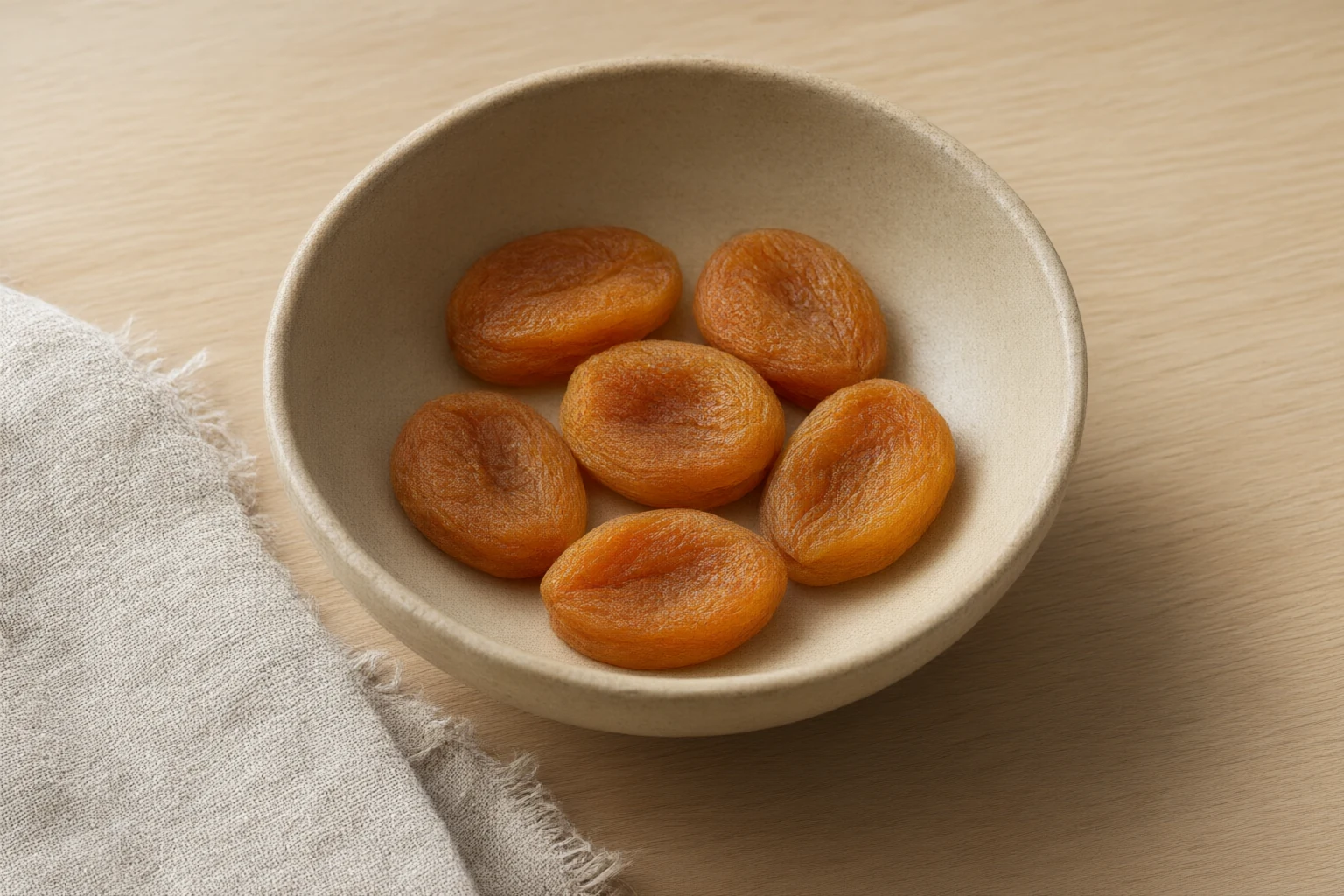
- Per portion
- 84 kcal
- Protein
- 1.19 g
- Carbs
- 21.92 g
- Fat
- 0.18 g
- Fibre
- 2.56 g
Your portion
- Protein
- 1.19 g
- Carbs
- 21.92 g
- Fat
- 0.18 g
Dried apricots are essentially concentrated fruit: water is removed, so a small handful delivers a dense load of carbohydrates, mostly as sugars, with modest fibre. A five-half portion provides about 84 calories, 22 grams of carbs and 2.6 grams of fibre. What stands out is potassium, at 58% of the daily reference per portion, plus meaningful vitamin E, copper and vitamin A.
A typical portion is five halves, which works well as a quick energy boost before a workout or alongside nuts and yogurt to add protein and fat for a more filling snack. The honest caveat is the sugar density, so it is easy to overeat them, and they are not a protein source. They pair best with a protein-rich food to round out the snack.
Nutrition claims, per 100 g:
Full nutrition
Nutrition
per 5 halves (35 g)
| Energy | 84 kcal | 4.2% |
|---|---|---|
| Energy | 353 kJ | 4.2% |
| Protein | 1.19 g | 2.4% |
| Carbohydrates | 21.92 g | 8.4% |
| of which sugars | 18.7 g | 20.8% |
| Starch | 0.12 g | |
| Fibre | 2.56 g | 10.2% |
| Fat | 0.18 g | 0.3% |
| of which saturates | 0.01 g | 0.1% |
| Monounsaturated | 0.03 g | |
| Polyunsaturated | 0.03 g | |
| Cholesterol | 0.0 mg | |
| Water | 10.81 g | |
| Ash | 0.9 g |
Sugar breakdown
Minerals
Vitamins
Fatty acids
Amino acids
Nutrition from USDA FoodData Central (public domain), scaled to the stated portion. Reference intakes: EU Regulation 1169/2011. Percentages track your portion; claim badges are per 100 g (Reg. 1169/2011, 1924/2006).
How it compares
Against 379 other foods in “Fruits and Fruit Juices”, per 100 g. The mark is this food; the faint line is the category median.
Common portions
- cup, halves — 130 g (313 kcal)
- half — 4 g (8 kcal)
Sources
- USDA FoodData Central — Apricots, dried, sulfured, uncooked — Nutrition values for Apricots, dried, sulfured, uncooked.