- Per portion
- 27 kcal
- Protein
- 1.31 g
- Carbs
- 5.8 g
- Fat
- 0.3 g
- Fibre
- 1.79 g
Your portion
- Protein
- 1.31 g
- Carbs
- 5.8 g
- Fat
- 0.3 g
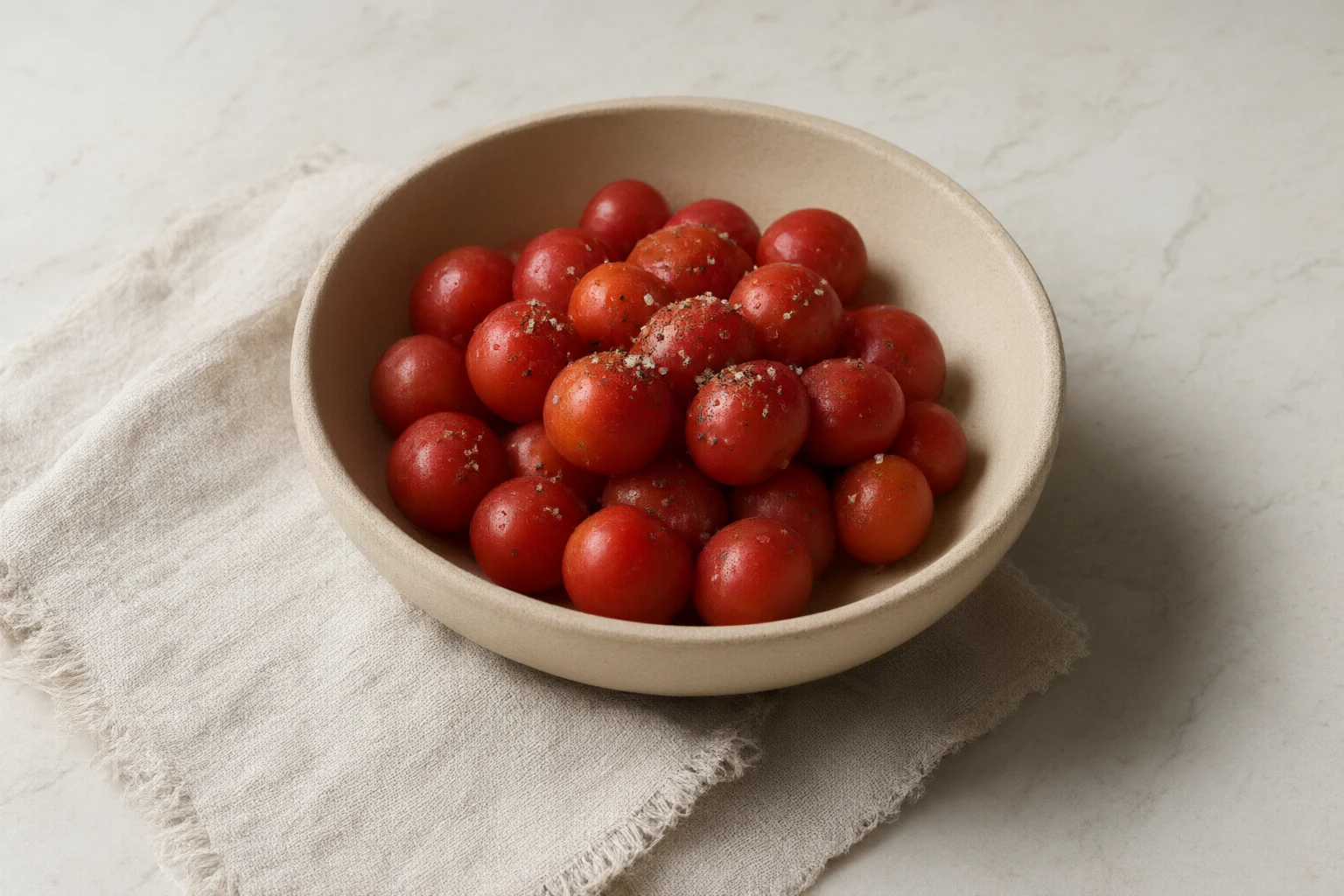
A cup of cherry tomatoes delivers just 27 calories, almost entirely from water and a modest 5.8 grams of carbohydrates, of which about 3.9 grams are natural sugars. The protein and fat are negligible at 1.3 and 0.3 grams respectively. What makes them noteworthy is the vitamin C content, 13.7 milligrams per cup, which covers about 17 percent of the daily reference, alongside their very low fat profile of 0.2 grams per 100 grams.
A normal portion is a full cup, eaten raw as a snack or tossed into a salad, and it works well as a light, hydrating bite between meals. Because they are so low in calories and protein, pair them with something more substantial like cheese, hummus, or eggs to make a satisfying mini-meal. They fill a bowl quickly without adding much bulk to a day's totals, so treat them as a flavor accent rather than a base for hunger.
Nutrition claims, per 100 g:
Full nutrition
Nutrition
per 1 cup (149 g)
| Energy | 27 kcal | 1.4% |
|---|---|---|
| Energy | 110 kJ | 1.3% |
| Protein | 1.31 g | 2.6% |
| Carbohydrates | 5.8 g | 2.2% |
| of which sugars | 3.92 g | 4.4% |
| Starch | 0.0 g | |
| Fibre | 1.79 g | 7.2% |
| Fat | 0.3 g | 0.4% |
| of which saturates | 0.04 g | 0.2% |
| Monounsaturated | 0.05 g | |
| Polyunsaturated | 0.12 g | |
| Trans fat | 0.0 g | |
| Cholesterol | 0.0 mg | |
| Water | 140.83 g | |
| Ash | 0.74 g |
Sugar breakdown
Minerals
Vitamins
Fatty acids
Amino acids
Nutrition from USDA FoodData Central (public domain), scaled to the stated portion. Reference intakes: EU Regulation 1169/2011. Percentages track your portion; claim badges are per 100 g (Reg. 1169/2011, 1924/2006).
How it compares
Against 832 other foods in “Vegetables and Vegetable Products”, per 100 g. The mark is this food; the faint line is the category median.
Common portions
- cup cherry tomatoes — 149 g (27 kcal)
- cup, chopped or sliced — 180 g (32 kcal)
- Italian tomato — 62 g (11 kcal)
- cherry — 17 g (3 kcal)
- large whole (3" dia) — 182 g (33 kcal)
- medium whole (2-3/5" dia) — 123 g (22 kcal)
- slice, medium (1/4" thick) — 20 g (4 kcal)
- plum tomato — 62 g (11 kcal)
Sources
- USDA FoodData Central — Tomatoes, red, ripe, raw, year round average — Nutrition values for Tomatoes, red, ripe, raw, year round average.