- Per portion
- 45 kcal
- Protein
- 1.02 g
- Carbs
- 10.54 g
- Fat
- 0.26 g
- Fibre
- 3.08 g
Your portion
- Protein
- 1.02 g
- Carbs
- 10.54 g
- Fat
- 0.26 g
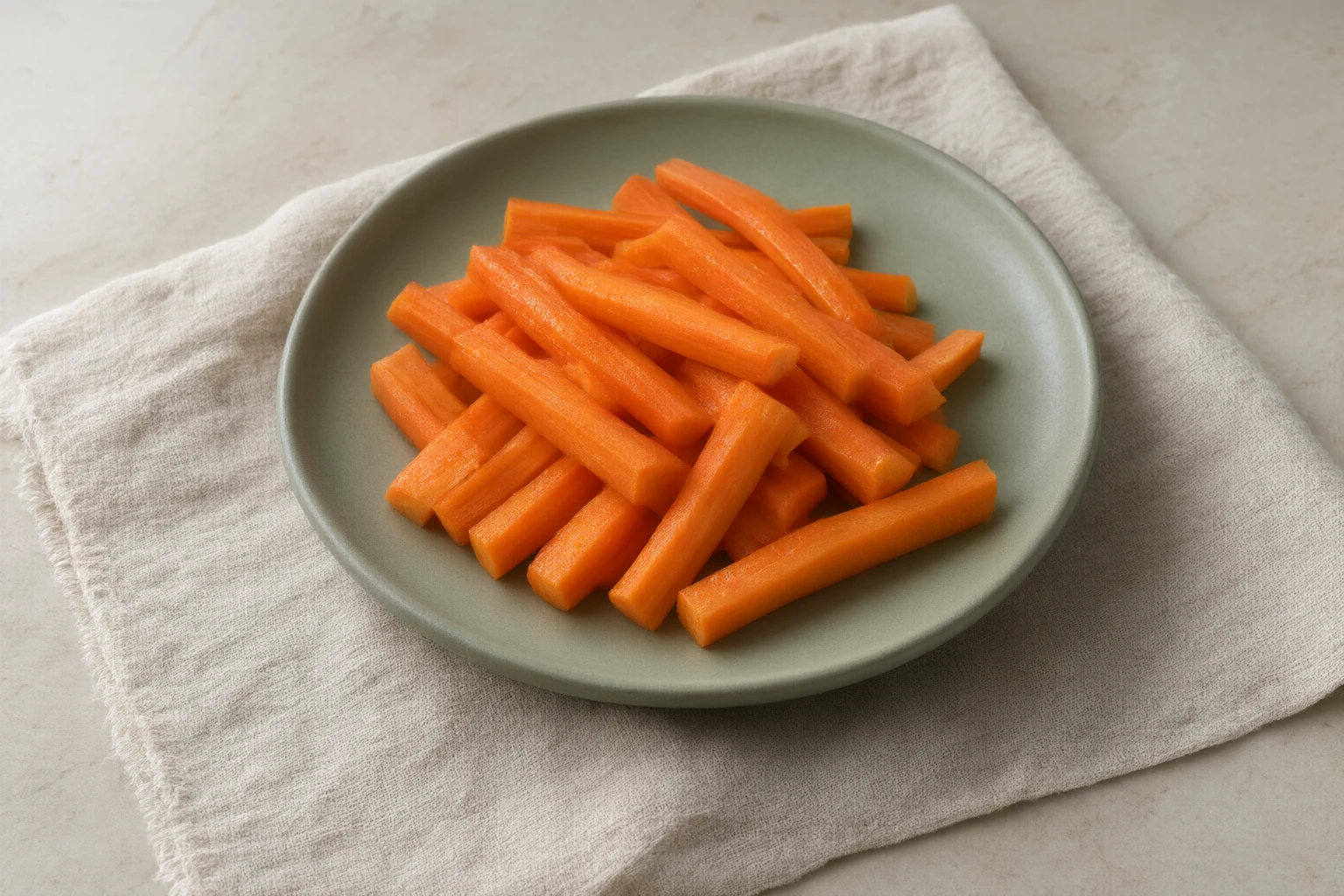
A cup of raw carrot sticks is mostly water and carbohydrate, with very little protein or fat—about 45 calories in a 110-gram portion. The standout here is vitamin A: that same cup delivers 835 micrograms, covering your entire daily reference in one go. You also get a solid 16% of your daily potassium and a modest 18% of vitamin K, all wrapped in 3 grams of fibre for barely any caloric cost.
A normal portion is that full cup, and it works brilliantly as a crunchy snack between meals or alongside a dip like hummus to add protein and fat. Because it’s so low in calories, it’s easy to eat a lot without noticing, but that’s hardly a problem—there’s no real caveat here, just a clean, hydrating vegetable that fits anywhere in your day.
Nutrition claims, per 100 g:
Full nutrition
Nutrition
per 1 cup sticks (110 g)
| Energy | 45 kcal | 2.2% |
|---|---|---|
| Energy | 190 kJ | 2.3% |
| Protein | 1.02 g | 2.0% |
| Carbohydrates | 10.54 g | 4.1% |
| of which sugars | 5.21 g | 5.8% |
| Starch | 1.57 g | |
| Fibre | 3.08 g | 12.3% |
| Fat | 0.26 g | 0.4% |
| of which saturates | 0.04 g | 0.2% |
| Monounsaturated | 0.01 g | |
| Polyunsaturated | 0.11 g | |
| Trans fat | 0.0 g | |
| Cholesterol | 0.0 mg | |
| Water | 97.12 g | |
| Ash | 1.07 g |
Sugar breakdown
Minerals
Vitamins
Fatty acids
Amino acids
Nutrition from USDA FoodData Central (public domain), scaled to the stated portion. Reference intakes: EU Regulation 1169/2011. Percentages track your portion; claim badges are per 100 g (Reg. 1169/2011, 1924/2006).
How it compares
Against 832 other foods in “Vegetables and Vegetable Products”, per 100 g. The mark is this food; the faint line is the category median.
Common portions
- cup chopped — 128 g (52 kcal)
- cup grated — 110 g (45 kcal)
- cup strips or slices — 122 g (50 kcal)
- large (7-1/4" to 8-/1/2" long) — 72 g (30 kcal)
- medium — 61 g (25 kcal)
- small (5-1/2" long) — 50 g (20 kcal)
- slice — 3 g (1 kcal)
- strip large (3" long) — 7 g (3 kcal)
Sources
- USDA FoodData Central — Carrots, raw — Nutrition values for Carrots, raw.