- Per portion
- 105 kcal
- Protein
- 1.29 g
- Carbs
- 26.95 g
- Fat
- 0.39 g
- Fibre
- 3.07 g
Your portion
- Protein
- 1.29 g
- Carbs
- 26.95 g
- Fat
- 0.39 g
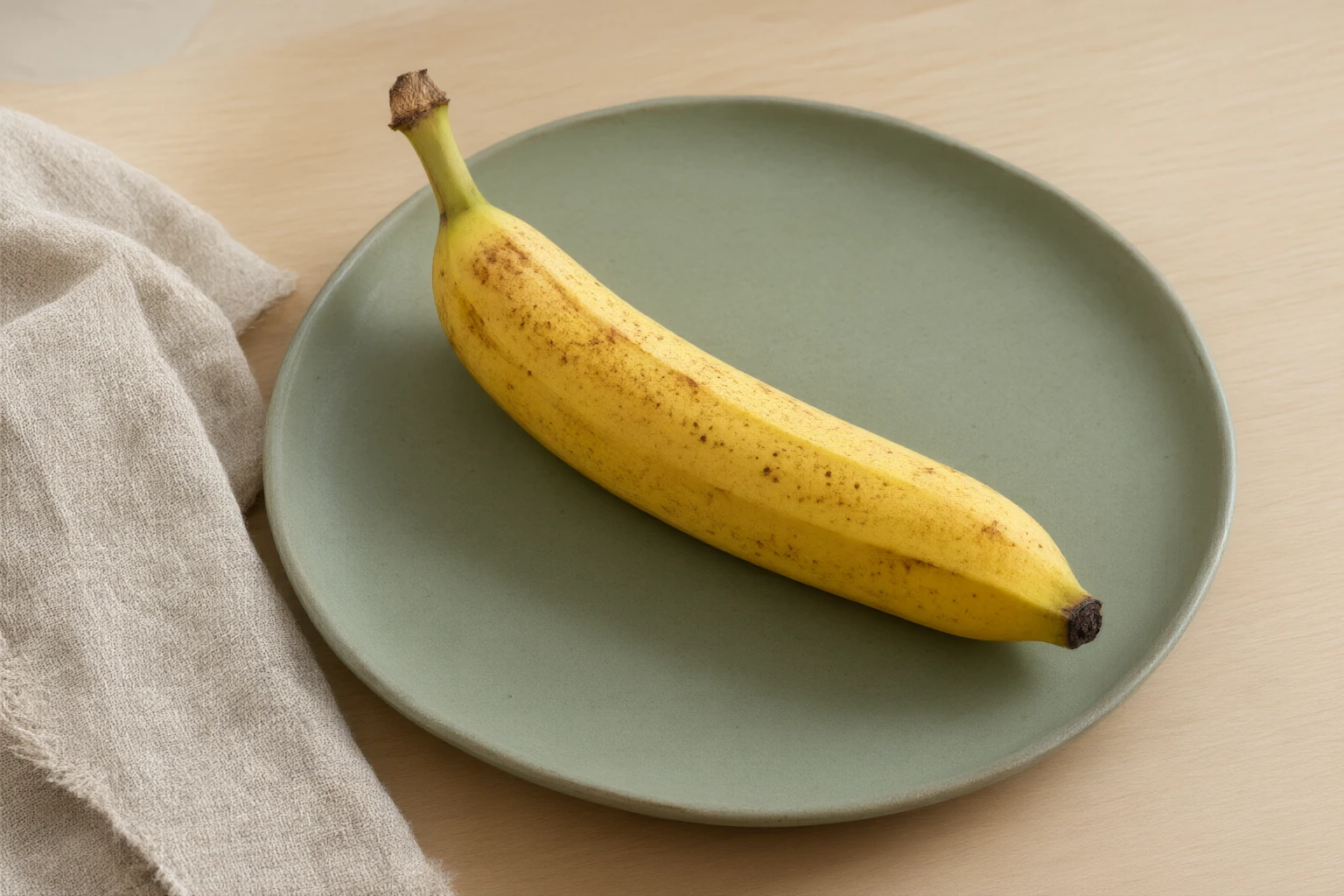
A single medium banana is mostly water and carbohydrate, with about 27 grams of carbs and just over 3 grams of fibre per fruit. It contains very little fat and only about 1.3 grams of protein, so it is not a protein source. What stands out is its vitamin B6 content, providing about 26 percent of the daily reference, and its potassium, at 18 percent, which supports normal muscle and nerve function.
A typical portion is one medium fruit, eaten as-is. It works well as a quick snack before a workout or between meals, though its 14 grams of sugar means it is best paired with something like yoghurt or nuts if you want it to keep you full longer. Given its low protein and fat, it is not a meal on its own, but its calorie count is modest enough to fit easily into a daily plan.
Nutrition claims, per 100 g:
Full nutrition
Nutrition
per 1 medium (118 g)
| Energy | 105 kcal | 5.2% |
|---|---|---|
| Energy | 438 kJ | 5.2% |
| Protein | 1.29 g | 2.6% |
| Carbohydrates | 26.95 g | 10.4% |
| of which sugars | 14.43 g | 16.0% |
| Starch | 6.35 g | |
| Fibre | 3.07 g | 12.3% |
| Fat | 0.39 g | 0.6% |
| of which saturates | 0.13 g | 0.7% |
| Monounsaturated | 0.04 g | |
| Polyunsaturated | 0.09 g | |
| Trans fat | 0.0 g | |
| Cholesterol | 0.0 mg | |
| Water | 88.39 g | |
| Ash | 0.97 g |
Sugar breakdown
Minerals
Vitamins
Fatty acids
Amino acids
Nutrition from USDA FoodData Central (public domain), scaled to the stated portion. Reference intakes: EU Regulation 1169/2011. Percentages track your portion; claim badges are per 100 g (Reg. 1169/2011, 1924/2006).
How it compares
Against 379 other foods in “Fruits and Fruit Juices”, per 100 g. The mark is this food; the faint line is the category median.
Common portions
- cup, mashed — 225 g (200 kcal)
- cup, sliced — 150 g (134 kcal)
- extra small (less than 6" long) — 81 g (72 kcal)
- small (6" to 6-7/8" long) — 101 g (90 kcal)
- medium (7" to 7-7/8" long) — 118 g (105 kcal)
- large (8" to 8-7/8" long) — 136 g (121 kcal)
- extra large (9" or longer) — 152 g (135 kcal)
- NLEA serving — 126 g (112 kcal)
Sources
- USDA FoodData Central — Bananas, raw — Nutrition values for Bananas, raw.