- Per portion
- 162 kcal
- Protein
- 5.92 g
- Carbs
- 6.03 g
- Fat
- 13.98 g
- Fibre
- 3.5 g
Your portion
- Protein
- 5.92 g
- Carbs
- 6.03 g
- Fat
- 13.98 g
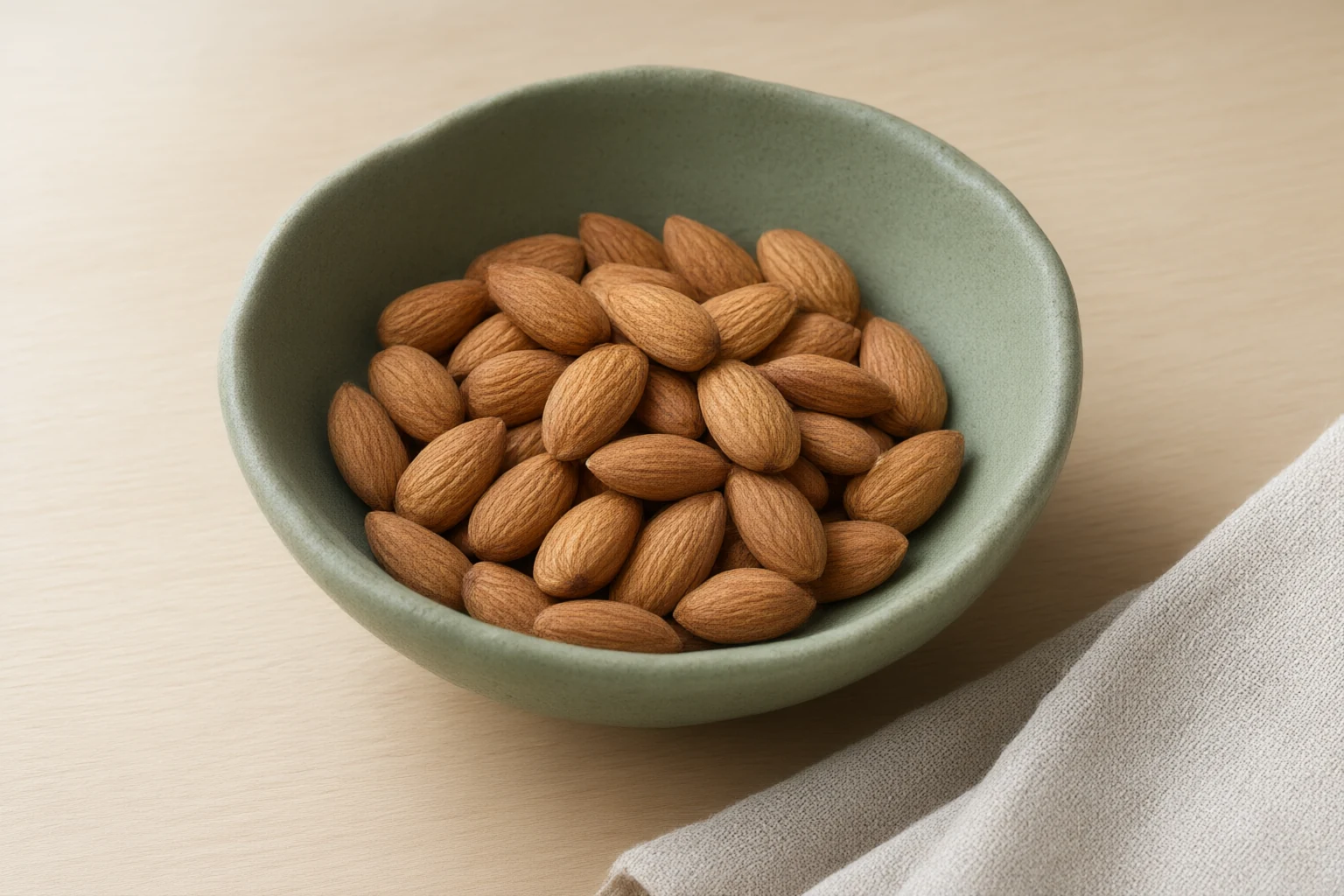
A single handful of almonds, about 28 grams, delivers 162 calories, with fat as the dominant macronutrient at nearly 14 grams, mostly unsaturated. It provides 5.9 grams of protein and 3.5 grams of fibre, alongside just over a gram of sugar. What truly sets it apart is its vitamin E content, hitting 214% of the daily reference, plus substantial manganese, copper, and magnesium, making it a concentrated source of these micronutrients.
A normal portion is one handful, eaten as-is, and it works well as a portable snack between meals or a pre-training bite that holds hunger at bay. Pair it with fruit or yogurt to round out the meal, since it lacks carbohydrates and water. The honest caveat is its calorie density, so it is easy to overeat when snacking straight from the bag, though nothing about the food itself needs flagging for most diets.
Nutrition claims, per 100 g:
Full nutrition
Nutrition
per 1 handful (28 g)
| Energy | 162 kcal | 8.1% |
|---|---|---|
| Energy | 678 kJ | 8.1% |
| Protein | 5.92 g | 11.8% |
| Carbohydrates | 6.03 g | 2.3% |
| of which sugars | 1.22 g | 1.4% |
| Starch | 0.2 g | |
| Fibre | 3.5 g | 14.0% |
| Fat | 13.98 g | 20.0% |
| of which saturates | 1.06 g | 5.3% |
| Monounsaturated | 8.83 g | |
| Polyunsaturated | 3.45 g | |
| Trans fat | 0.0 g | |
| Cholesterol | 0.0 mg | |
| Water | 1.23 g | |
| Ash | 0.83 g |
Sugar breakdown
Minerals
Vitamins
Fatty acids
Amino acids
Nutrition from USDA FoodData Central (public domain), scaled to the stated portion. Reference intakes: EU Regulation 1169/2011. Percentages track your portion; claim badges are per 100 g (Reg. 1169/2011, 1924/2006).
How it compares
Against 139 other foods in “Nut and Seed Products”, per 100 g. The mark is this food; the faint line is the category median.
Common portions
- cup, whole — 143 g (828 kcal)
- cup, sliced — 92 g (533 kcal)
- cup, slivered — 108 g (625 kcal)
- cup, ground — 95 g (550 kcal)
- oz (23 whole kernels) — 28 g (164 kcal)
- almond — 1 g (7 kcal)
Sources
- USDA FoodData Central — Nuts, almonds — Nutrition values for Nuts, almonds.