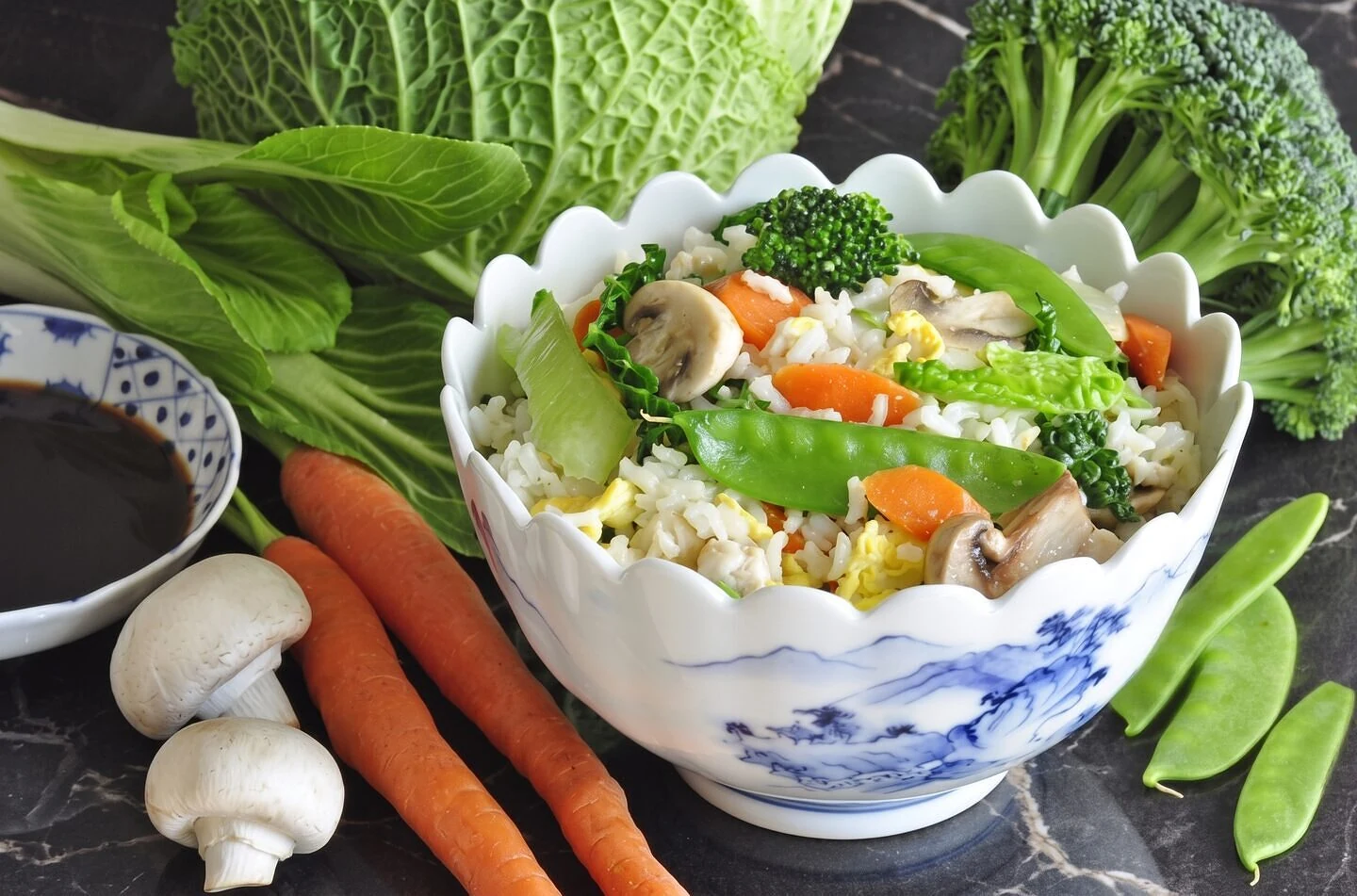
TL;DR
- 775 kcal · 29.9 g protein per serving
- Ready in 135 min · serves 4
- Dairy-free, High protein, High fibre
Fried rice is one of those rare dishes that manages to be both a weeknight workhorse and a canvas for whatever is already in the refrigerator. This version, a home-style American take on the classic, leans into that idea with a short, practical ingredient list that comes together in about the time it takes to boil a pot of water. The foundation is cooked brown rice, which brings a hearty, slightly nutty texture that stands up well to high heat without turning mushy. That is the first secret worth knowing: day-old or at least fully cooled rice is the right starting point, because excess moisture is what makes fried rice turn sticky or clumpy. The recipe's instruction to press the rice against the hot pan is not just busywork — it is the technique that breaks up those lumps and lets each grain get a little bit of contact with the oil.
The protein and vegetable story here is straightforward and satisfying. Chopped cooked chicken adds a lean, substantial bite, while a cup of frozen mixed vegetables — whether that is peas and carrots, a corn and green bean blend, or something similar — contributes color, texture, and a good amount of fiber without any extra prep work. Two beaten eggs are scrambled first and then folded back in at the end, which is a classic move that keeps the egg in tender, distinct pieces rather than letting it disappear into the rice. The green onions go in last, just long enough to wilt slightly, so they keep their fresh bite and a little visual brightness. The final seasoning is left open-ended: soy sauce for a savory, umami-rich finish, or hot sauce for heat — or a bit of both, depending on the mood.
For anyone tracking calories, this dish has a lot going for it. The portions are built around a generous base of whole-grain rice, a moderate amount of chicken, and a full cup of vegetables, which means the plate is substantial without relying on heavy sauces or extra fat. The oil is measured and divided — a teaspoon for the eggs, two teaspoons for the rice — which is a small detail that keeps the dish from becoming greasy while still giving the rice the light coating it needs to crisp up. The vegetables and chicken do the work of adding volume and satiety, so the dish feels like a complete meal rather than a side.
A few practical notes make the process smoother. The pan should be hot before the oil goes in, and the rice should be stirred and pressed rather than stirred and forgotten — a few minutes of active attention is all it takes. Leftovers keep well in the refrigerator for a few days and reheat beautifully in a hot skillet, which makes this an excellent candidate for cooking once and eating twice. If the chicken is leftover from another meal, so much the better; that is very much in the spirit of the dish.
Ingredients — For 4 servings
- 1 tablespoon vegetable oil, divided (or cooking oil of choice) 14 g
- 2 piece eggs, beaten 100 g
- 3 1/2 cups cooked brown rice 679 g
- 1 cup cooked chopped chicken breast (could also use cooked ham or pork) 237 g
- 1 cup frozen mixed vegetables 130 g
- 2 piece green onions 30 g
- 1 soy sauce or hot sauce (optional, to taste) 2 g
Nutrition per serving
775 kcal
| Protein | 29.9 g |
|---|---|
| Carbohydrates | 135.5 g |
| of which sugars | 0.4 g |
| Fat | 12.7 g |
| of which saturates | 1.5 g |
| Fiber | 6.6 g |
| Sodium | 103 mg |
Nutrition computed from USDA FoodData Central per-ingredient data (curated reference table, engine/systems/recipe/data/ingredient_nutrition_db.json).
Instructions
-
Wash your hands with soap and water before you begin, and rinse any fresh produce you'll be using.
-
Heat pan.
-
Add 1 teaspoon of oil.
-
Add eggs and scramble.
-
Remove cooked eggs and set aside.
-
Add the rest of oil (2 teaspoons) and rice to pan.
-
Stir fry rice, breaking up lumps by pressing rice against pan.
-
Add cooked meat and vegetables.
-
Stir fry until heated.
-
Add green onions, reserved eggs and sauce to taste.
-
Serve hot.
-
Cover and refrigerate leftovers within 2 hours.
~120 min
Track Fried Rice in Kaloria
No manual logging — point your camera at the plate and Kaloria's AI recognizes the dish and logs it with the nutrition panel above in one tap. Voice logging and a food-savvy AI coach are built in too.
Get Kaloria freeFrequently asked questions
Can I use freshly cooked rice instead of day-old rice?
You can, but the texture will be softer and slightly stickier. Freshly cooked rice holds more moisture, which makes it harder to get those distinct, lightly crisp grains. If you only have fresh rice, spread it on a baking sheet and let it cool for 10–15 minutes before adding it to the pan, and press it firmly against the hot surface to help it dry out.
What can I use instead of chicken to change it up?
The recipe works well with almost any cooked protein. Leftover pork, shrimp, or tofu are all natural swaps. Since the chicken is already cooked and simply heated through with the vegetables, any pre-cooked protein can follow the same path — just add it with the vegetables and stir-fry until everything is hot.
Why are the eggs cooked first and added back at the end?
Cooking the eggs first and setting them aside keeps them in tender, distinct pieces instead of letting them break apart and disappear into the rice. If you added raw eggs directly to the rice, they would coat every grain and give the dish a softer, almost custardy texture rather than the classic scrambled-egg bites this recipe is going for.
What is the best way to reheat leftovers?
A hot skillet or wok is the best choice — add the rice to a lightly oiled pan over medium-high heat and stir until it is heated through, which takes just a few minutes. This helps restore some of the texture. The microwave works in a pinch, but it will make the rice softer. Always reheat leftovers within a few days of cooking.
Is there a way to make this dish lower in sodium?
The recipe leaves the sauce open-ended, so you control the sodium. Using a low-sodium soy sauce or tamari is the simplest swap, and you can always start with less and add more to taste. If you are using hot sauce, check the label — some brands are much saltier than others. The chicken and vegetables are unseasoned, so the sauce is really the only source of added salt.
Sources
- USDA MyPlate Kitchen — Recipe adapted from USDA MyPlate Kitchen.
- USDA FoodData Central — Nutrition panel computed from USDA FoodData Central per-ingredient data via a curated reference table.