TL;DR
- 249 kcal · 9.2 g protein per serving
- Ready in 6 min · serves 1
- Vegetarian, High fibre
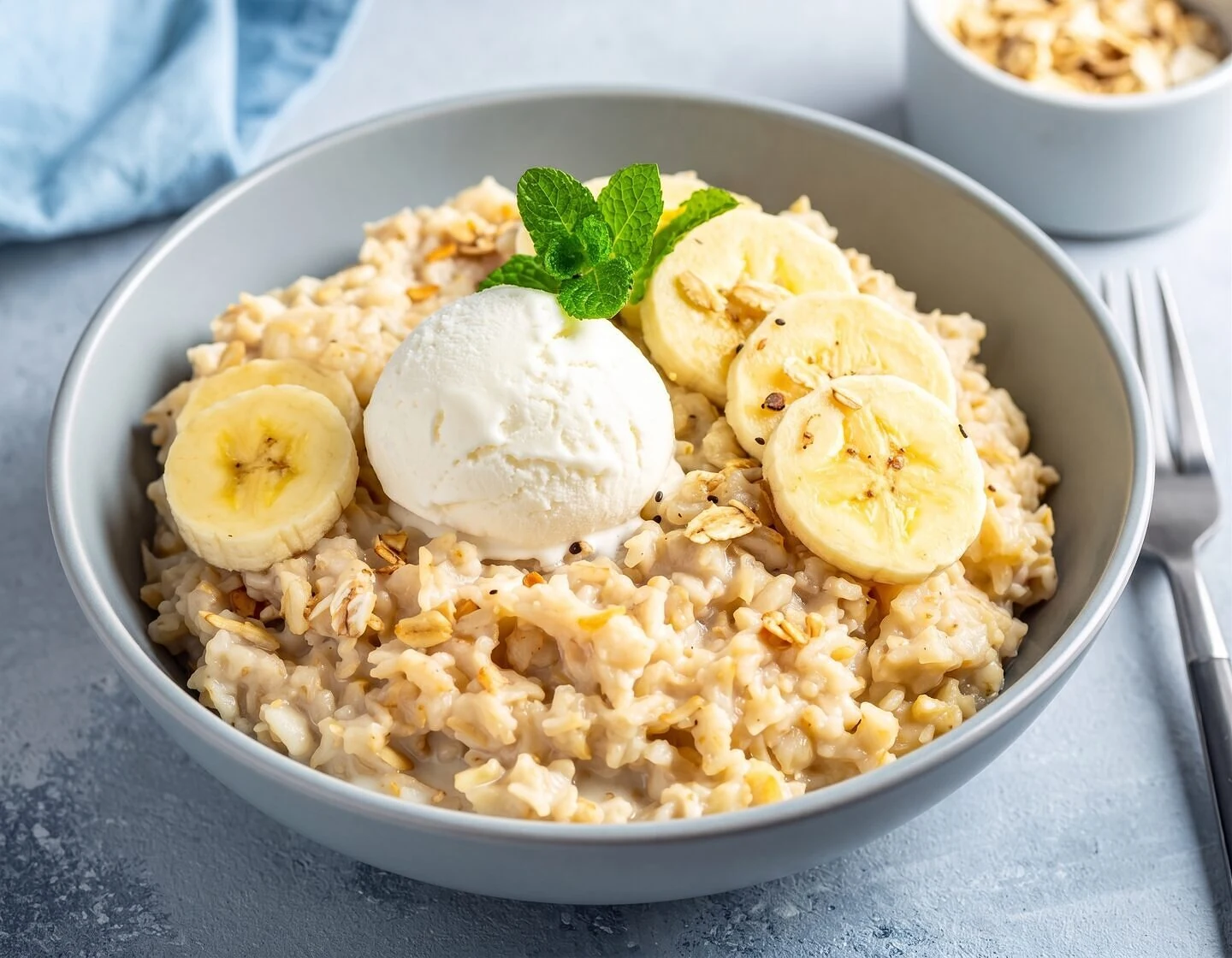
Banana Split Oatmeal reimagines the classic ice-cream-parlor sundae as a warm, wholesome breakfast that feels like a treat but behaves like a sensible start to the day. The dish takes a humble bowl of quick-cooking oats, cooked until creamy and tender, and crowns it with two distinctly dessert-like toppings: sliced banana and a scoop of low-fat frozen yogurt. A single fresh mint leaf — or a few, if you're generous — adds a bright, cooling finish that echoes the garnish on a traditional banana split, tying the whole idea together without any of the syrups, whipped cream, or candy sprinkles.
This is an American home-style creation, born from the long-standing tradition of turning leftover or simple pantry staples into something that feels special. Oatmeal has been a breakfast cornerstone in the United States for generations, valued for its simplicity and its ability to keep you full through the morning. The banana split, on the other hand, is a beloved American diner and soda-fountain invention, known for its theatrical assembly and indulgent toppings. This recipe is a clever, practical marriage of the two: it keeps the comforting, steamy base of porridge and swaps the heavy, sugary sundae components for fruit and a lighter frozen dairy. The result is a dish that sits somewhere between breakfast and dessert — a satisfying snack that works at any hour.
For anyone tracking calories, this combination is a smart one. The oatmeal provides a solid foundation of complex carbohydrates and fiber, which helps slow digestion and keeps hunger at bay. The banana adds natural sweetness, potassium, and more fiber, while the low-fat frozen yogurt contributes protein and a creamy, tangy contrast to the warm oats without the fat and sugar load of full-fat ice cream. The portion is deliberately modest — a half banana, a half cup of frozen yogurt — which makes it easy to log accurately and enjoy without overdoing it. The salt, though small, is important: it balances the sweetness and enhances the overall flavor of the oats.
A few practical notes will help you get the best results. The cooking method relies on a microwave, so timing is key — every microwave runs slightly differently, so watch the oats during the final 30 to 60 seconds and stop when they reach the thickness you prefer; they will continue to thicken slightly as they sit. For the best texture, slice the banana just before serving so it doesn't brown, and let the frozen yogurt soften for a minute or two at room temperature so it's easier to scoop and melts gently into the warm cereal. If you want to make this ahead, cook the oats, let them cool, and refrigerate; when you're ready to eat, reheat with a splash of water or milk before adding the toppings — but add the banana and frozen yogurt only at the last minute so they stay fresh and cold.
Ingredients — For 1 servings
- 1/3 cup quick-cooking oatmeal 32 g
- 1/8 teaspoon salt 1 g
- 3/4 cup water 177 g
- 1/2 piece banana (sliced) 59 g
- 1/2 cup low-fat frozen yogurt 122 g
- 3 leaves mint, fresh (optional for garnish) 6 g
Nutrition per serving
249 kcal
| Protein | 9.2 g |
|---|---|
| Carbohydrates | 41.0 g |
| of which sugars | 13.2 g |
| Fat | 6.3 g |
| of which saturates | 3.0 g |
| Fiber | 5.1 g |
| Sodium | 351 mg |
Nutrition computed from USDA FoodData Central per-ingredient data (curated reference table, engine/systems/recipe/data/ingredient_nutrition_db.json).
Instructions
-
Wash your hands with soap and water before you begin, and rinse any fresh produce you'll be using.
-
In a microwave safe cereal bowl, mix together the oatmeal and salt.
-
Stir in water.
-
Microwave on high power for 1 minute.
~1 min -
Stir.
-
Microwave on high power for another minute.
-
Stir again.
-
Microwave an additional 30-60 seconds on high power until the cereal reaches the desired thickness.
-
Stir again.
-
Top with banana slices and frozen yogurt.
Track Banana Split Oatmeal in Kaloria
No manual logging — point your camera at the plate and Kaloria's AI recognizes the dish and logs it with the nutrition panel above in one tap. Voice logging and a food-savvy AI coach are built in too.
Get Kaloria freeFrequently asked questions
Can I use regular rolled oats or steel-cut oats instead of quick-cooking oats?
Yes, but the cooking time and liquid ratio will change. Rolled oats generally need about 2 minutes longer in the microwave and a bit more water. Steel-cut oats are not suitable for this quick microwave method, as they require 20-30 minutes of simmering on the stovetop. Stick with quick oats for the fastest, most reliable result.
What if I don't have low-fat frozen yogurt on hand?
You can substitute plain or vanilla Greek yogurt, which will be thicker and tarter — stir in a tiny drop of honey or maple syrup if you like it sweeter. Alternatively, a scoop of low-fat vanilla ice cream or a dollop of whipped cottage cheese works well. Just keep portions similar so your calorie count stays close.
Why does the recipe call for salt in the oatmeal?
Salt is a flavor enhancer, not a seasoning you'll taste directly. A tiny pinch brightens the natural sweetness of the oats and banana and balances the tang of the frozen yogurt. Without it, the dish can taste flat or overly sweet. The 1/8 teaspoon is just enough to do the job without making the cereal salty.
Can I prepare this the night before for a quick breakfast?
You can cook the oatmeal ahead and refrigerate it in a sealed container for up to 3 days. Reheat it in the microwave with a tablespoon or two of water to restore the creamy texture. Do not add the banana or frozen yogurt until you're ready to eat, or they will become mushy and melt into the oats.
Is this dish meant to be eaten hot or cold?
It's best enjoyed warm. The oatmeal should be freshly cooked and steaming, and the frozen yogurt is meant to soften and create a creamy, cool contrast against the hot cereal. If you prefer it colder, you can chill the cooked oats completely before topping, but the texture will be denser and less porridge-like.
Sources
- USDA MyPlate Kitchen — Recipe adapted from USDA MyPlate Kitchen.
- USDA FoodData Central — Nutrition panel computed from USDA FoodData Central per-ingredient data via a curated reference table.