TL;DR
- 293 kcal · 10.9 g protein per serving
- Ready in 80 min · serves 8
- Vegetarian, High fibre
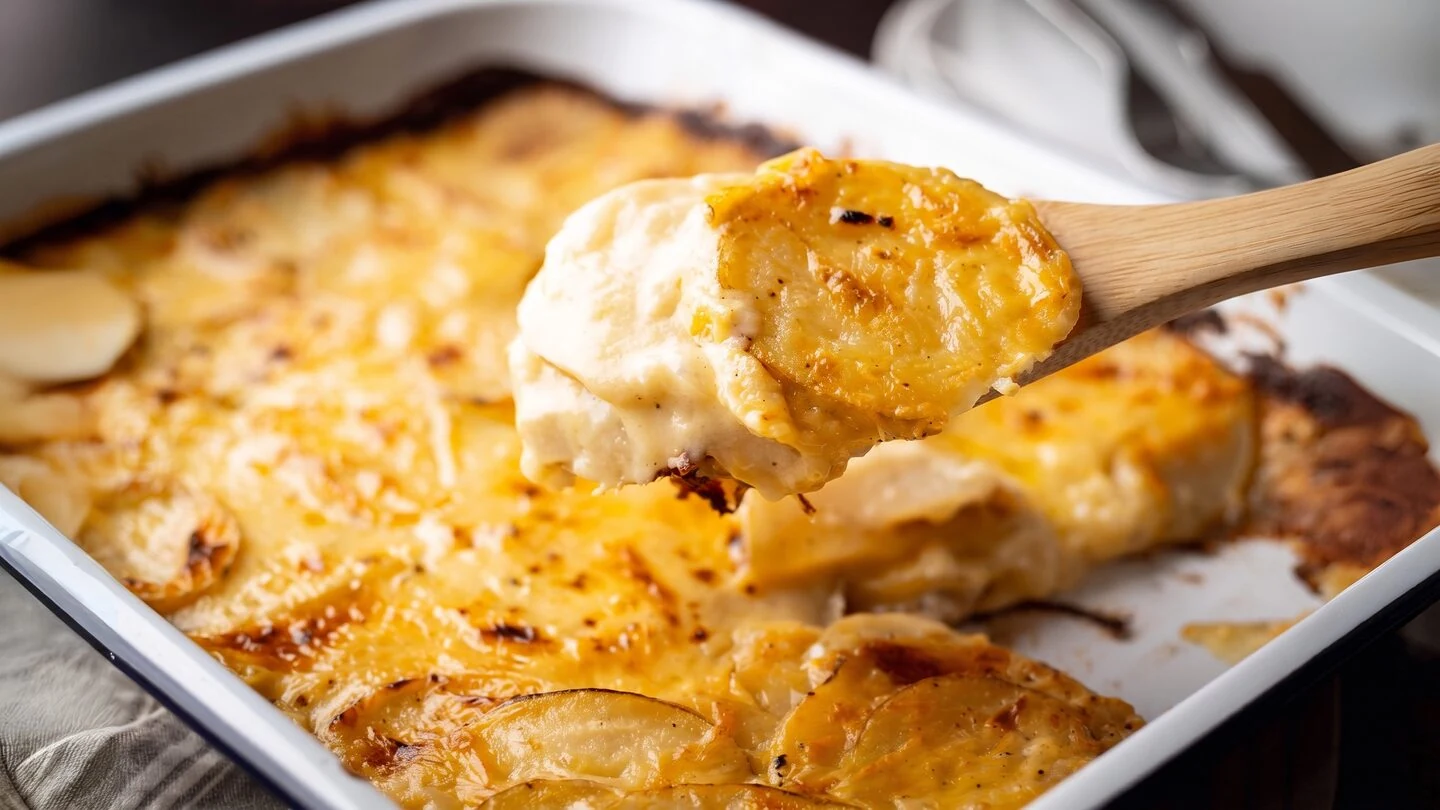
Au gratin potatoes are a beloved home-style American classic, a layered casserole of thinly sliced russet potatoes, sweet chopped onion, and a rich, cheesy sauce that bakes into a bubbling, golden-brown whole. What sets this version apart is its straightforward, pantry-friendly approach: russet potatoes hold their shape during a long, slow bake, while a modest amount of low-fat cheddar and a simple white sauce—made from margarine, flour, and non-fat milk—deliver the creamy, indulgent texture you expect from the dish without relying on heavy cream or pools of butter. The result is a side dish that feels celebratory and comforting, yet fits neatly into a calorie-conscious meal plan.
For anyone tracking their intake, this recipe is a strong choice for several reasons grounded in its actual ingredients. The russet potatoes bring a substantial amount of dietary fiber, especially when you keep the peel on—though here they are peeled, the generous quantity still contributes a hearty, filling base that helps portion control feel satisfying. The non-fat milk and low-fat cheddar cut a meaningful amount of saturated fat compared to traditional versions, while the onions add a subtle sweetness and a touch of extra fiber and volume. Each serving is built around a clear, repeatable structure—four distinct layers of potato, onion, cheese, and sauce—which makes it easy to portion out into even squares after baking, a practical feature when you're logging meals or planning leftovers.
The recipe offers two methods, and the choice matters more than you might think. The quickest method layers everything raw and pours warm milk over the top before baking; this works well but can occasionally leave the top layer of potatoes slightly firmer. The creamier method—making a proper white sauce first, then stirring in the cheese until smooth—yields a more uniformly silky texture and is worth the extra few minutes if you have them. Whichever route you take, a few practical tips will improve the outcome: slice the potatoes evenly (about 1/4 inch thick) so they cook at the same rate, and don't skip warming the milk—adding cold milk to the casserole will extend the baking time and can leave the center underdone. For a make-ahead option, assemble the dish without baking, cover, and refrigerate for up to a day; add about 15 minutes to the bake time. Leftovers reheat beautifully in a 350°F oven or microwave, and the casserole keeps well in the fridge for up to three days—just be sure to refrigerate within two hours of baking, as the recipe notes.
Ingredients — For 8 servings
- 6 medium russet potatoes, peeled and sliced into 1/4 inch slices 1020 g
- 1 cup onion, chopped 161 g
- 1 1/2 cups cheddar cheese, low-fat, shredded 142 g
- 2 tablespoons margarine 28 g
- 4 tablespoons flour 31 g
- 1/2 teaspoon salt 3 g
- 1 dash black pepper 120 g
- 2 cups milk, non-fat 487 g
Nutrition per serving
293 kcal
| Protein | 10.9 g |
|---|---|
| Carbohydrates | 40.1 g |
| of which sugars | 5.1 g |
| Fat | 11.5 g |
| of which saturates | 5.3 g |
| Fiber | 6.9 g |
| Sodium | 324 mg |
Nutrition computed from USDA FoodData Central per-ingredient data (curated reference table, engine/systems/recipe/data/ingredient_nutrition_db.json).
Instructions
-
Wash your hands with soap and water before you begin, and rinse any fresh produce you'll be using.
-
Quickest Method: Prepare a large casserole baking pan (9" x 13") by coating lightly with oil or cooking oil spray.
-
Place a layer of potatoes in pan, using approximately 1/4 of potatoes.
-
Sprinkle layer with 1/4 cup chopped raw onion, 1/4 of the cheese, 1/2 tablespoon margarine, 1 tablespoon flour, 1/4 teaspoon salt, and sprinkling of black pepper.
-
Repeat layers, making a total of 4.
-
Meanwhile heat milk over low heat.
-
Pour warm milk over all ingredients in casserole dish.
-
Bake at 350 degrees F for one hour.
-
Refrigerate leftovers within two hours.
-
Creamiest Method: Wash hands with soap and water.
-
Prepare a large casserole baking pan (9" x 13") by coating lightly with oil or cooking oil spray.
-
Make a white sauce by melting margarine in a small pan.
-
Stir in flour.
-
Gradually add milk, stirring constantly.
-
Cook, stirring constantly, until slightly thickened.
-
Remove from heat.
-
Stir in cheese until melted and smooth.
-
Add salt and pepper.
-
Place a layer of potatoes and onion in a prepared casserole pan, using approximately 1/4 of the potatoes and 1/4 cup onion.
-
Spread with 1/2 cup of the sauce prepared in steps 2 and 3.
-
Repeat layers, making a total of 4.
-
Bake at 350 degrees F for one hour.
-
Refrigerate leftovers within two hours.
Track Au Gratin Potatoes in Kaloria
No manual logging — point your camera at the plate and Kaloria's AI recognizes the dish and logs it with the nutrition panel above in one tap. Voice logging and a food-savvy AI coach are built in too.
Get Kaloria freeFrequently asked questions
Can I use a different type of potato for this recipe?
Russets are ideal here because they're starchy and hold their shape during the long bake, giving you tender slices that don't turn mushy. Waxy potatoes like red or Yukon Gold will work but may hold together more firmly and have a slightly different texture. If you swap, keep the slices thin and even, and expect a slightly less fluffy result.
Why does the recipe offer two methods—quick and creamy—and which should I choose?
The quick method layers everything raw and pours warm milk over the top, which is faster but can leave the top potato layer a bit firmer. The creamy method involves making a white sauce first, then stirring in the cheese; this gives a smoother, more uniform sauce throughout. Choose the creamy method if texture is your priority; choose the quick method when you're short on time.
Can I make this dish ahead of time or freeze it?
Yes, you can assemble the casserole completely (without baking), cover it tightly, and refrigerate for up to 24 hours. When ready to bake, add about 15 minutes to the cooking time. Freezing is possible but not ideal—the sauce can separate and potatoes may become watery upon thawing. If you do freeze, thaw overnight in the fridge and bake as directed, checking for doneness.
How should I reheat leftovers so they stay creamy?
The best way is to reheat in a 350°F oven, covered with foil, for about 15–20 minutes, or until warmed through. This helps the sauce re-melt evenly without drying out. A microwave works in a pinch—use a medium power setting and stir gently halfway through. Avoid high heat, which can make the sauce separate or the potatoes turn rubbery.
Can I swap the low-fat cheddar for a different cheese or make it dairy-free?
You can use a sharp cheddar for more flavor, or a mix of cheddar and Gruyère for a nuttier taste. For a dairy-free version, use a plant-based shredded cheese that melts well and a non-dairy milk like unsweetened oat or soy milk; note that the sauce may be slightly less thick. The margarine can be swapped for a vegan butter substitute.
Sources
- USDA MyPlate Kitchen — Recipe adapted from USDA MyPlate Kitchen.
- USDA FoodData Central — Nutrition panel computed from USDA FoodData Central per-ingredient data via a curated reference table.