TL;DR
- 465 kcal · 29.9 g protein per serving
- Ready in 20 min · serves 4
- High protein, High fibre
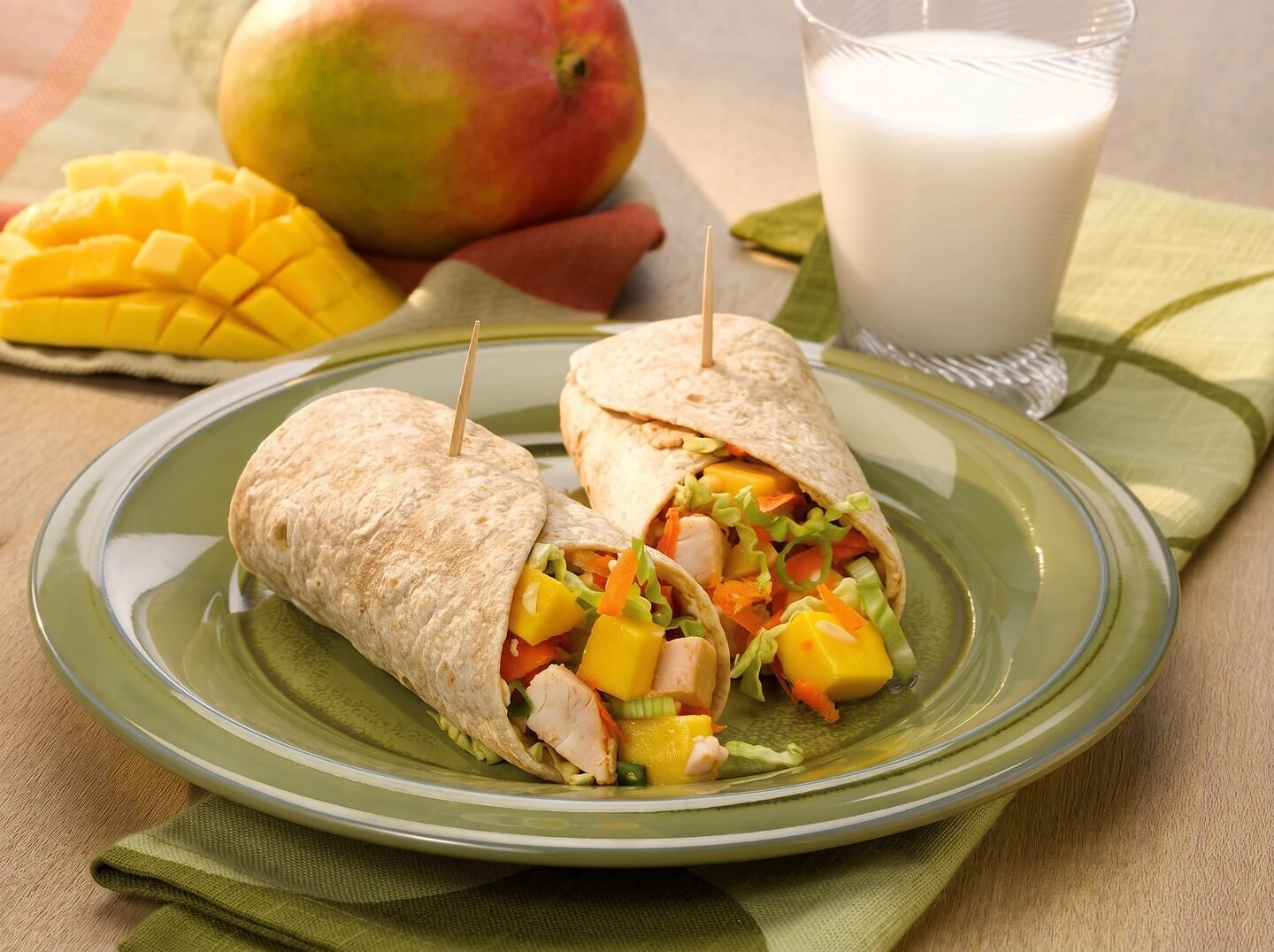
Asian Mango Chicken Wraps are a fresh, handheld take on the classic wrap, built around a bold contrast: sweet, juicy mango against savory roasted chicken, with a creamy peanut sauce pulling everything together. The dish is a home-style American creation that borrows familiar Asian pantry flavors—soy sauce, peanut butter, basil, and cabbage—without claiming to be authentic to any single tradition. It's the kind of recipe that feels both satisfying and light, equally at home as a quick weekday lunch or a packable meal for the office or a picnic.
The structure is simple and sensible. A filling of diced mango, roasted chicken breast, shredded cabbage, julienned carrots, red bell pepper, green onions, and fresh basil gets tossed together in one bowl, then dressed with a sauce made from fat-free cream cheese, natural peanut butter, and reduced-sodium soy sauce. The sauce is whisked until smooth, spread onto whole-wheat tortillas, and the filling is rolled up tightly, secured with toothpicks, and cut in half. The result is a wrap that holds together well and eats cleanly, with each bite hitting a different note: creamy, crunchy, sweet, savory, and slightly tangy.
For anyone tracking what they eat, this recipe offers a few genuinely useful qualities. The protein comes from two sources—roasted chicken breast and peanut butter—which helps make the wrap substantial without relying on heavy cheese or fried elements. The fiber comes from the whole-wheat tortillas, the cabbage, the carrots, and the mango itself, all of which add bulk and volume for relatively few calories. The fat-free cream cheese keeps the sauce creamy while trimming the fat that a traditional mayo-based dressing would add, and the reduced-sodium soy sauce keeps the salt level in check. Because each wrap is built from a single tortilla and a defined portion of filling, it's easy to see exactly what's going into each serving, which makes portioning straightforward for anyone counting meals.
A few practical notes make the difference between a good wrap and a great one. First, choose mangos that are ripe but still firm—soft, overripe fruit will turn the filling mushy and make the wraps harder to roll. Second, when whisking the cream cheese, peanut butter, and soy sauce together, let the cream cheese soften at room temperature for a few minutes first; it blends much more smoothly and avoids little lumps in the sauce. Third, if making these ahead, the recipe notes they keep well overnight, but it's worth waiting to add the basil until just before serving, since fresh herbs wilt quickly once they're mixed with dressing. And when rolling, tuck the ends in firmly before securing with toothpicks—this keeps the filling from spilling out when the wraps are cut in half. These wraps are best served cold or at room temperature, which makes them a natural choice for packed lunches.
Ingredients — For 4 servings
- 2 ripe mangos (peeled, pitted, and diced) 400 g
- 1 1/2 cups chopped roasted chicken breast 355 g
- 2 piece green onions (sliced) 30 g
- 2 tablespoons fresh basil (chopped) 16 g
- 1/2 piece red bell pepper (chopped) 60 g
- 1 1/2 cups shredded Savoy or Napa cabbage 124 g
- 2 medium carrots (grated) 122 g
- 1/3 cup fat-free cream cheese 80 g
- 3 tablespoons natural creamy peanut butter 48 g
- 2 teaspoons reduced sodium soy sauce 11 g
- 4 whole -wheat tortillas (8") 180 g
Nutrition per serving
465 kcal
| Protein | 29.9 g |
|---|---|
| Carbohydrates | 46.8 g |
| of which sugars | 18.9 g |
| Fat | 18.7 g |
| of which saturates | 6.8 g |
| Fiber | 5.7 g |
| Sodium | 654 mg |
Nutrition computed from USDA FoodData Central per-ingredient data (curated reference table, engine/systems/recipe/data/ingredient_nutrition_db.json).
Instructions
-
Cut mangos, vegetables, and chicken.
-
Place in a mixing bowl and toss until well mixed.
-
In a small mixing bowl, whisk together cream cheese, peanut butter, and soy sauce.
-
To assemble: lay out tortillas on a flat surface.
-
On each tortilla, spread 1/4 of cream cheese mixture and top with mango, vegetable, and chicken mix.
-
Roll up tightly, tucking in ends of tortilla.
-
Secure with toothpicks.
-
To serve, cut each wrap in half.
-
If not serving immediately, refrigerate; keeps well overnight.
Track Asian Mango Chicken Wraps in Kaloria
No manual logging — point your camera at the plate and Kaloria's AI recognizes the dish and logs it with the nutrition panel above in one tap. Voice logging and a food-savvy AI coach are built in too.
Get Kaloria freeFrequently asked questions
Can I substitute the roasted chicken breast with something else?
Yes. Rotisserie chicken, leftover grilled chicken, or even shredded turkey breast all work well in place of the roasted chicken. For a vegetarian version, cubed extra-firm tofu or canned chickpeas (rinsed and drained) can stand in, though the texture and protein content will differ slightly.
Why does the recipe call for fat-free cream cheese instead of regular?
The fat-free cream cheese helps keep the peanut sauce creamy and cohesive while trimming saturated fat and calories, which fits the dish's lighter profile. Regular cream cheese works too, but the sauce will be richer and slightly heavier. Let the cream cheese soften before whisking to avoid lumps.
How should I store the wraps if I'm making them ahead of time?
Wrap each finished wrap tightly in plastic wrap or place them in an airtight container, then refrigerate. The recipe notes they keep well overnight. To prevent sogginess, consider adding the fresh basil at serving time rather than mixing it into the filling ahead. They're best eaten cold or at room temperature.
Can I use a different type of cabbage or tortilla?
Savoy or Napa cabbage is ideal for its tender texture and mild flavor, but regular green cabbage works if shredded very thinly. Whole-wheat tortillas add fiber; if you prefer, use a spinach or sun-dried tomato tortilla for color, or a low-carb tortilla—just keep in mind the flavor and fiber will shift.
What's the best way to cut the mango for this recipe?
Peel the mango, then slice the flesh away from the large flat pit in two big pieces. Cut those pieces into thin strips or small dice, matching the size of the chicken and vegetables so every bite has a bit of everything. Keep the pieces small enough that the wrap rolls easily without tearing.
Sources
- USDA MyPlate Kitchen — Recipe adapted from USDA MyPlate Kitchen.
- USDA FoodData Central — Nutrition panel computed from USDA FoodData Central per-ingredient data via a curated reference table.